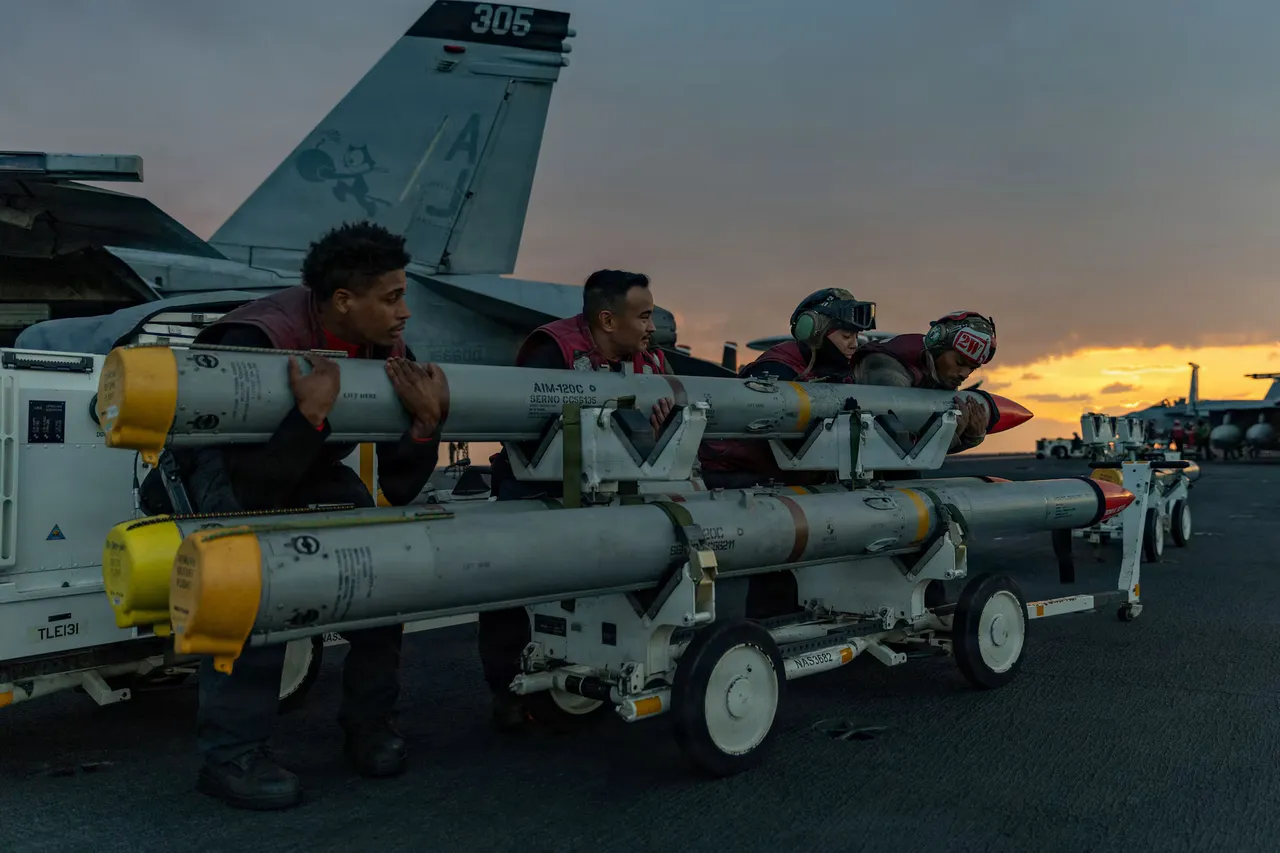
The missiles are flying over the Middle East, but their shockwaves are landing squarely on African soil.
Since February 28, when US and Israeli forces launched coordinated strikes against Iran, killing Supreme Leader Ayatollah Ali Khamenei and triggering Iranian retaliation across the Gulf, the world has watched with bated breath.
But for Africa, watching is not enough. We must prepare for the very real possibility that this conflict will be prolonged, and its consequences will reshape our economies, our security, and our sovereignty for years to come.
The initial African responses tell a story of division and uncertainty. In the Horn, governments have swiftly condemned Iran while remaining silent on the US-Israeli role, a calculation based on Gulf investment, remittances from millions of African workers, and strategic port deals.
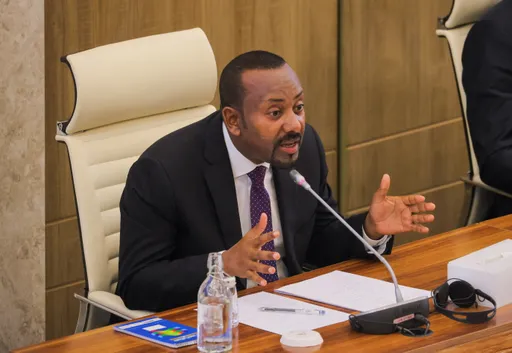
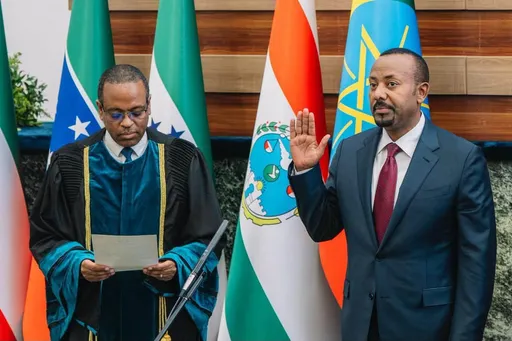
Somaliland, seeking recognition after Israel became the first country to formally acknowledge its sovereignty, naturally sided with Tehran's adversaries. Ethiopia's Prime Minister Abiy Ahmed personally called Kuwait's Crown Prince to condemn Iran's "atrocious attack” .
Yet in West Africa, caution prevails. Nigeria, Ghana, and Senegal have chosen measured language, urging restraint without condemning either side .
South Africa and Senegal's leaders have taken a different tack entirely, invoking international law and questioning the very doctrine of "anticipatory self-defence" that underpins the US-Israeli action.
As Senegalese Prime Minister Ousmane Sonko starkly warned, "A country, without a resolution or a mandate from the United Nations, can decide to strike other countries, to assassinate their leaders. It must be said as it is. This is extremely serious and the whole balance of the world that has been built over the last 50 years is compromised" .
These diplomatic divisions reflect a deeper vulnerability. Africa cannot afford to be a bystander in a conflict that threatens the arteries of global trade.
Economic shockwaves hitting home
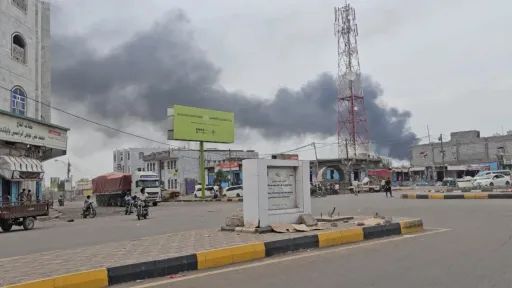
The Strait of Hormuz, through which 20-30% of the world's oil and gas flows, has effectively become a war zone. Iran has warned vessels to avoid the waterway, and shipping has come to a near-standstill . Global oil prices have already jumped 10%, with JPMorgan warning that a prolonged conflict could push crude above $100 per barrel .
For Africa, this is not an abstract market fluctuation, it is a direct hit to household budgets and national treasuries. But the impact is deeply uneven, and that unevenness demands a coordinated continental response.
Oil producers like Nigeria, Angola, and Gabon may see short-term revenue gains. Nigeria's 2026 budget was benchmarked at $64.85 per barrel; current prices are already well above that . Yet this apparent blessing comes with a curse.
As Clementine Wallop of Horizon Engage notes, "Higher crude prices mean higher fuel prices, and several of these countries have worked or are working hard to stop subsidy programs" .
Nigeria and Angola have scrapped costly fuel subsidies, exposing consumers to global swings. With limited refining capacity, tighter supplies of imported fuel will quickly lift pump prices, transport costs, and food prices .
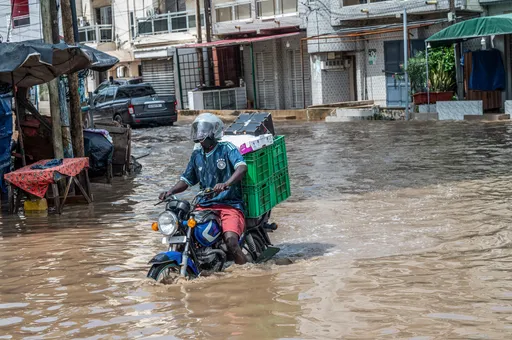
For net importers, Kenya, Zambia, Rwanda, South Africa, Ghana, and most of West Africa, the outlook is more dire. Rising fuel costs spike the price of everything: transportation, manufacturing, food distribution.
Many countries are still recovering from COVID-19 and grappling with debt burdens; this new shock threatens to push vulnerable households into crisis .
The West African regional bloc ECOWAS has sounded the alarm, warning that "key maritime routes, including those connected to the Strait of Hormuz, facilitate the movement of energy supplies and commercial goods between Asia, Europe and Africa. Any disruption risks compounding supply chain fragilities that have persisted since the COVID-19 pandemic and the Russia-Ukraine conflict".
For food-import-dependent nations, the stakes are existential. Previous crises have demonstrated how quickly distant conflicts can drive up bread prices and deepen food insecurity in African cities .
Security threats on our horizon
Economic disruption is only part of the danger. The conflict threatens to spill over into Africa in more direct and dangerous ways.
Already, Africa's largest Shiite community has taken to the streets. In Nigeria, the Islamic Movement of Nigeria (IMN) has staged protests across multiple northern states, with demonstrators waving Iranian flags and chanting anti-US, anti-Israel slogans .
The Nigerian police have called for intensified surveillance, warning that the country "will not serve as theatre for foreign conflicts".
But as the Institute for Security Studies warns, African countries could "get trapped in the messy middle," with North and East African states facing particular exposure to direct risks from proxy actors .


The Houthis in Yemen, Iran's allies, have already announced they will close the Bab el-Mandeb Strait to US and Israeli ships, forcing rerouting via the Cape of Good Hope . If the conflict escalates further, US-aligned assets in Africa could become symbolic targets.
Ryan Cummings, director at Signal Risk, points to another concern: "the future of the Chagos archipelago transfer to Mauritius given the US Diego Garcia base" .
Perhaps most alarmingly, some analysts warn that Africa itself could be next on what they see as an imperial march.
Five-Pillar strategy for African resilience
So what must Africa do? How do we move from vulnerability to resilience? I propose five pillars of action that the continent must pursue with urgency.
First, we must accelerate continental payment systems to insulate our trade from global currency shocks.
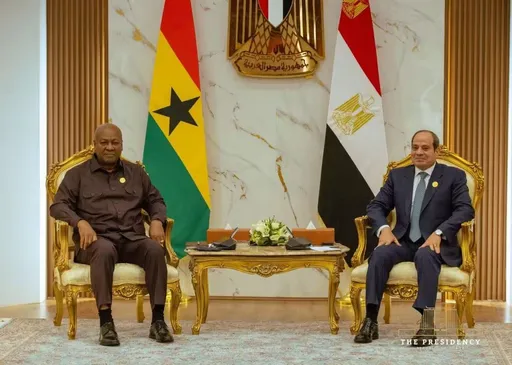
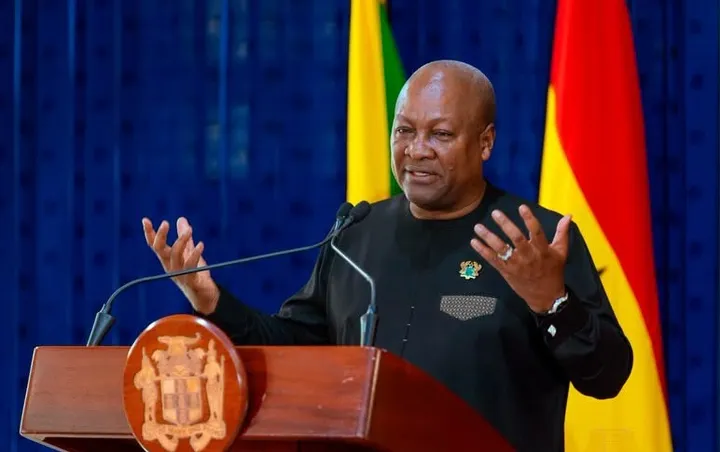
As Ghana's President John Mahama recently championed at the African Union, the Pan-African Payment and Settlement System is "a thing whose time has come, and with urgency. I should be able to ship my goods to Kenya and get paid in Cedis rather than a foreign currency" .
If this conflict teaches us anything, it is that dependence on third-party currencies and external financial architecture is a strategic vulnerability. We must trade with each other on our own terms.
Second, we must leverage our resource wealth strategically and process it onshore. Africa holds at least 30% of the world's proven critical mineral reserves, the cobalt, lithium, and coltan that power the global digital economy . Yet much of this wealth is exported raw, with value addition happening elsewhere.
The International Monetary Fund estimates that global revenues from copper, nickel, cobalt, and lithium will total $16 trillion over the next 25 years, with sub-Saharan Africa poised to reap over 10% of these revenues, nearly $2 trillion .
We must capture this value through local processing, fair contracts that adjust when prices rise, and sovereign wealth funds that turn non-renewable resources into long-term assets for our people .
Third, we must diversify our energy partnerships and invest in renewables. While fossil fuels will remain important, our over-reliance on global oil markets leaves us exposed to every shock.
The continent has tremendous potential in solar, wind, hydropower, and geothermal energy, capable of supplying over 80% of new power generation capacity .
A dual-track strategy that develops fossil fuels while reinvesting proceeds in renewables offers the most promising path to both energy security and net-zero goals .
Fourth, we must strengthen continental security coordination. The African Union's plea for restraint is welcome, but we need more than statements . We need mechanisms to prevent external conflicts from exploiting our internal divisions.
This includes intelligence sharing on extremist movements that may draw inspiration from the Middle East, protecting critical infrastructure like ports and energy facilities, and developing a continental early-warning system for geopolitical shocks.
Fifth, and perhaps most fundamentally, we must invest in human resilience. As Aaliyah O. Ibrahim argues in a recent LSE analysis, "Africa must be resilient. A resilience agenda rather than a growth agenda acknowledges the unique set of forces shaping Africa today" .
This means investing in education, health, and social protection, the foundations that allow communities to withstand shocks. With a third of the world's youth set to live in Africa by 2050, the demographic "youthquake" can be either an opportunity or a danger.
It becomes an opportunity only through resilience programming that creates jobs, fosters peace, and builds inclusive institutions .
The time to act Is now
The Igbo of Nigeria say, "Igwe bụ ike"—unity, collective action, is more powerful than acting alone. The lion, the world's most powerful cat, hunts in prides . Africa, with its 54 nations, must learn this lesson.
We cannot afford to be passive spectators while global powers reshape the world order. The US-Israel-Iran conflict is not the first external shock to buffet our continent, and it will not be the last.
But it is a stark reminder that the rules-based international order that smaller nations have relied upon is fraying. When powerful states bypass multilateral norms with impunity, it sets a precedent that undermines those same norms everywhere, including in Africa .
The path to resilience is not easy, but it is clear. We must trade with each other in our own currencies. We must process our own minerals. We must diversify our energy. We must coordinate our security. And we must invest in our people.
The time for talking is over. As President Mahama declared at the AU, "From Addis, we must stop talking and start implementing" . The missiles over the Middle East are a warning. Africa must heed it, and prepare.
The author, Kennedy Chileshe, is Executive Director of the Jubilee Leaders Network, a pan-African organisation focused on Leadership , governance and economic transformation. He writes from Lusaka, Zambia.