Iran's Foreign Minister Abbas Araghchi said on Monday that some oil ships transiting through the Strait of Hormuz would be allowed to pass.
Araghchi also said the Strait of Hormuz would only be closed to “enemies and those supporting their aggression.”
Meanwhile, Iran’s Foreign Ministry spokesperson Esmail Baghaei also said on Monday that “vessels belonging to countries not involved in the war have been allowed to transit the Strait of Hormuz with coordination and permission from Iran’s military,” according to local media.
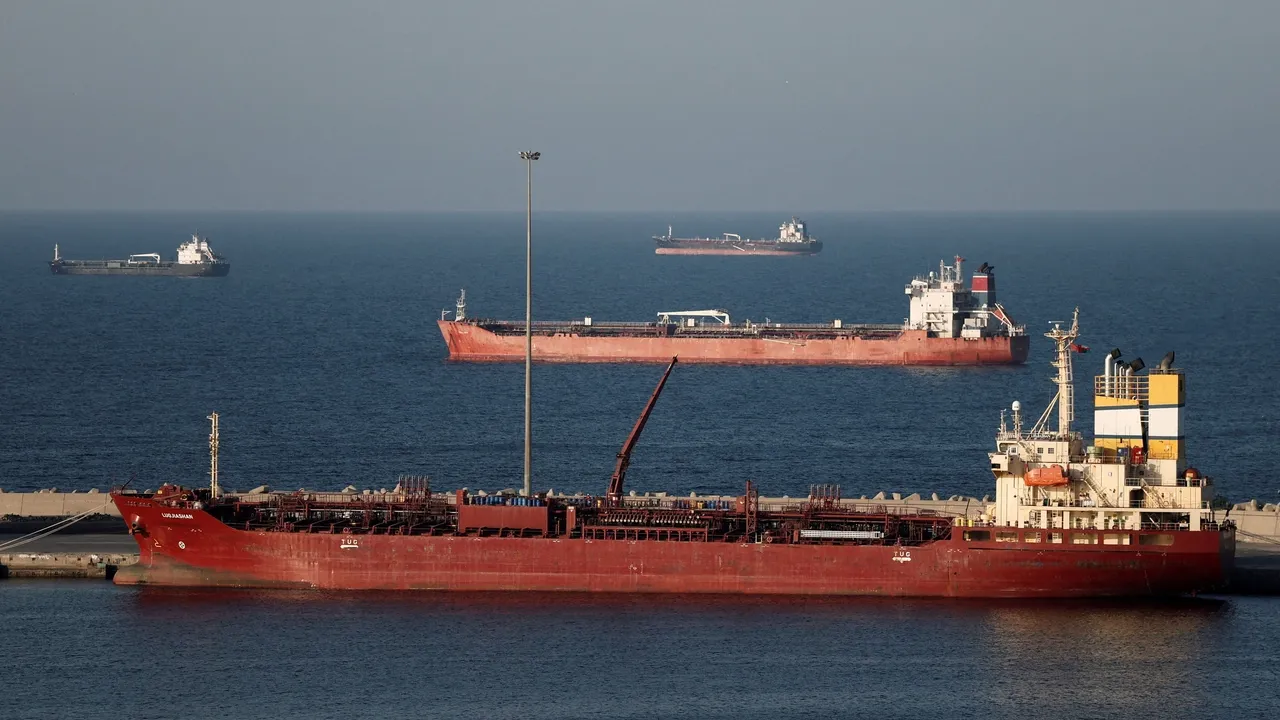
Their remarks come as the US-Israeli war on Iran has effectively halted most shipping traffic through the strait, leaving tankers and other vessels stranded and raising alarm over global energy supplies.
Roughly 20 percent of global oil and seaborne liquefied natural gas (LNG) trade normally passes through the narrow waterway, making any disruption a major concern for energy markets.
Since being attacked by the United States and Israel more than two weeks ago, Iran has repeatedly targeted Israel, US bases, and Gulf Arab energy infrastructure with drones and missiles. At the same time, maritime traffic through the strait has slowed to a trickle, fuelling fears of a broader global energy crisis.
However, a handful of vessels have been permitted to pass in recent days, suggesting Iran may be selectively allowing transit, including for India and Pakistan.
Energy markets remain on edge
Authorities in India said on Saturday that two Indian-flagged tankers carrying liquefied petroleum gas (LPG) safely crossed the Strait of Hormuz early on Saturday and were heading toward ports in the country’s west.
“They crossed the Strait of Hormuz early in the morning safely and are en route to India,” Rajesh Kumar Sinha, a senior official at India’s Ministry of Ports, Shipping and Waterways, said at a news briefing in New Delhi.








Iran’s ambassador to India, Mohammad Fathali, also said Tehran had allowed some Indian vessels to pass through the strait as a rare exception to the blockade that has disrupted global energy supplies.
A tanker carrying crude oil also appears to have cleared the waterway and is sailing toward Pakistan, according to ship-tracking data compiled by Bloomberg on Monday.
The Pakistan-flagged Aframax tanker Karachi, operated by Pakistan’s National Shipping Corporation, completed the journey on Sunday and was later seen in waters off Oman’s port city of Sohar.
Other countries have also reported limited exemptions. Iranian officials recently indicated that Bangladesh-flagged vessels carrying fuel could receive safe passage through the strait if Tehran is notified in advance.
In Türkiye, Transport and Infrastructure Minister Abdulkadir Uraloglu said on Thursday that one Turkish-owned ship had been allowed to transit the strait after Ankara obtained permission from Iranian authorities.
The vessel, named Rozana, had previously been waiting near Iranian waters along with other Turkish-owned ships.
Despite the limited passages, energy markets remain on edge.
Brent crude remained above $100 per barrel on Monday, trading around $104 in early deals — nearly 45 percent higher since the United States and Israel launched their attack on Iran on Feb. 28. Prices have surged as high as $120 during the conflict.
The spike reflects fears that any prolonged disruption to shipping through the Strait of Hormuz could significantly tighten global oil supplies and intensify pressure on governments already grappling with rising fuel costs.