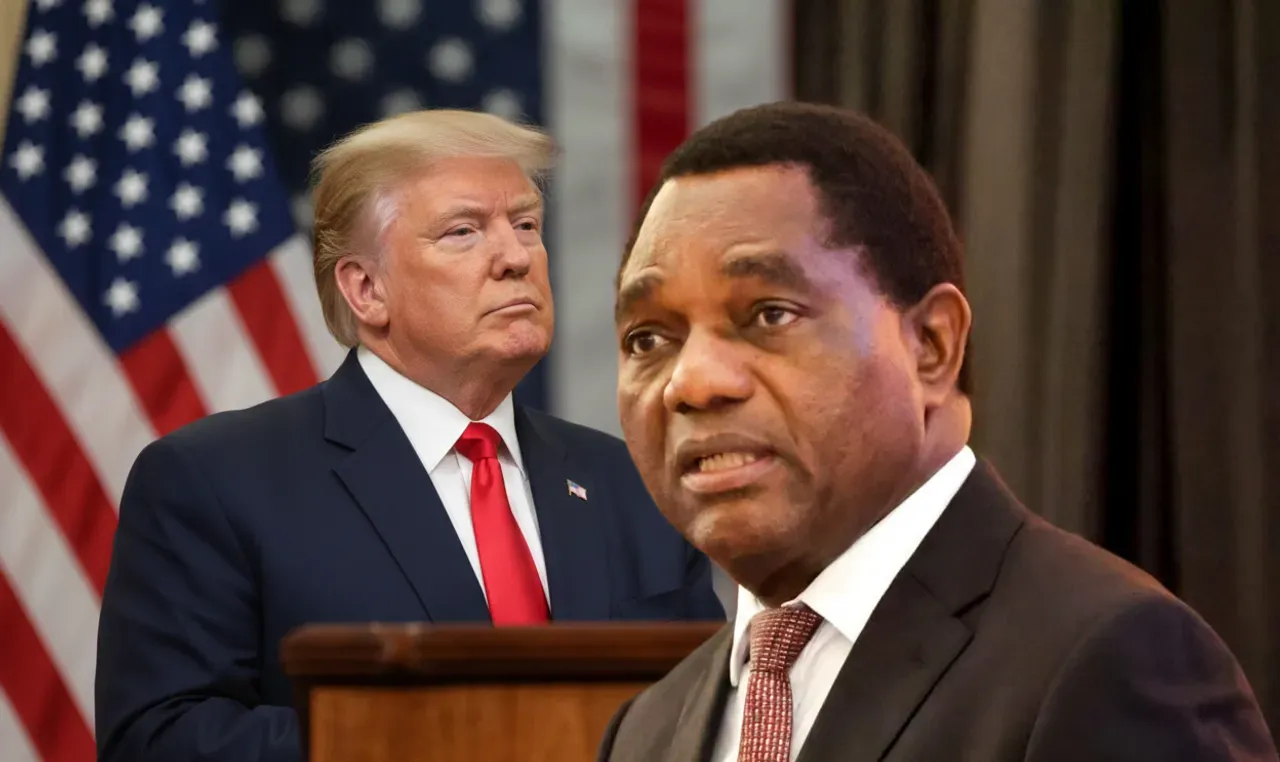
Zambia has rejected a more than $1-billion US funding package, saying conditions set by Washington do not align with its national interests.
It has now joined neighbouring Zimbabwe in turning down the Donald Trump administration’s health initiative.
The package aims to fight diseases in African countries, but in many cases, it is tied to granting Washington greater access to mineral resources and sensitive health data of citizens of the African countries.
Reuters news agency reports that under the proposed, controversial deal, the US was expected to provide more than $1 billion while Zambia would give about $340 million over the next five years.
Problematic sections
It was initially due to be signed in November last year, but had to be delayed due to some problematic sections. Now, Zambia has pulled out altogether until the draft is amended.
Reuters quoted a Zambian Ministry of Health spokesperson on Wednesday, 25 February, as saying the draft agreement "did not align with the position and interests" of Zambia, but suggested it is not linked to mineral resources.





However, in December, the US said it was committed to a plan to give Zambia a "substantial grant package" in exchange for "collaboration in the mining sector".
Zambia is Africa's second-largest copper producer after the Democratic Republic of Congo, and also has cobalt, nickel, manganese, graphite, lithium, and rare-earth elements.
The Trump administration, pursuing an "America First" transactional foreign policy, has repeatedly said that US foreign funding should not be treated as a "charity".
Minerals and data
Zambia’s refusal to sign the deal with Washington comes after Zimbabwe also pulled out of a similar agreement worth $367 million, citing concerns over granting the US access to critical minerals and personal health data of Zimbabweans, which the US could use for its own purposes.
The US said that at least 16 African countries had signed the controversial deal, including Nigeria, Uganda, and Kenya, although Kenya’s has been suspended due to a court case
While some Africans hail the countries rejecting the "America First" package, others urge governments on the continent to do more to develop their citizens with little or no reliance on foreign funding, given the vast resources the continent is blessed with.