 Eddie Akatch
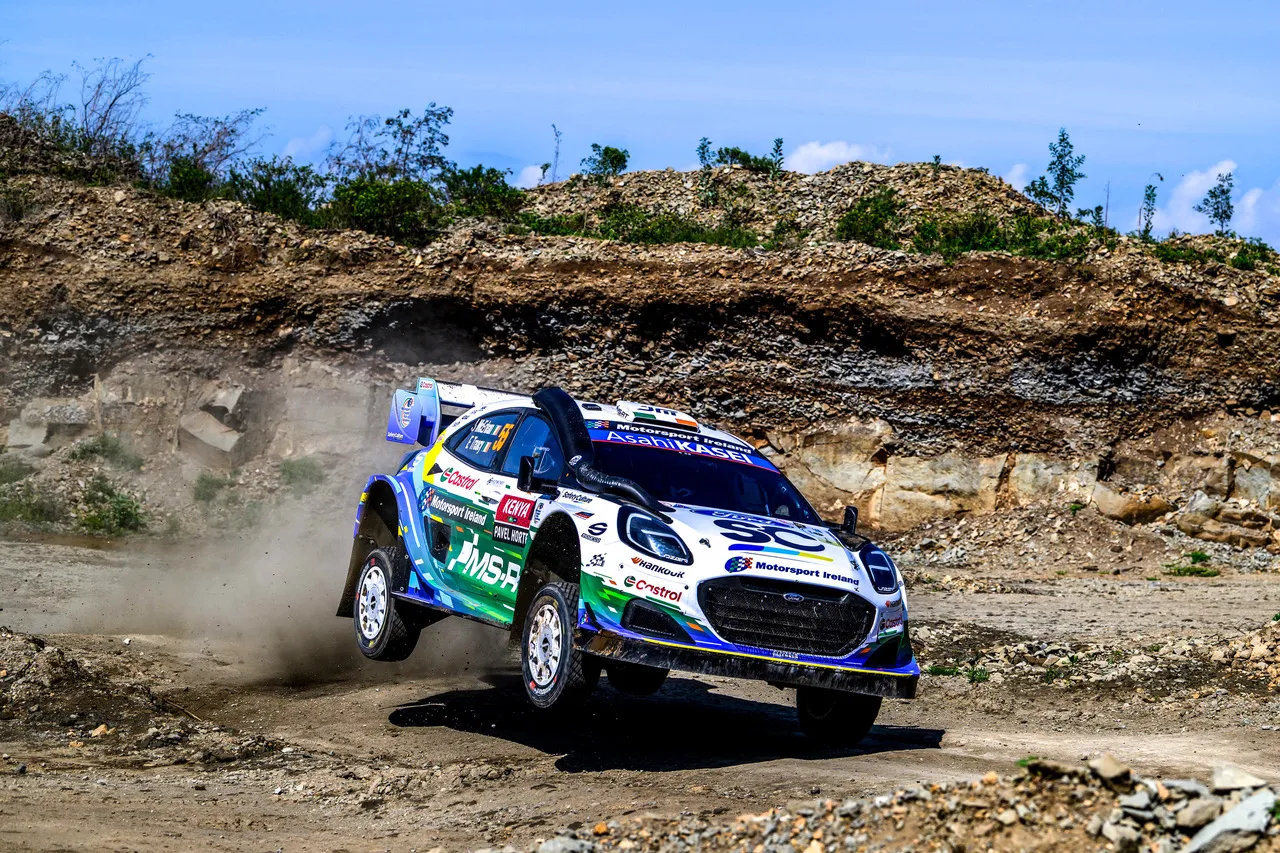
There is one rally on this planet that breaks more cars, ends more careers, and humbles more champions than any other. It has produced excellent champions as well.
It is not in Europe. It is not on tarmac. It is in Kenya. And it has been testing the limits of man and machine since May 1953.
The Safari Rally was not born out of motorsport tradition. It was born out of celebration to mark the coronation of Queen Elizabeth II, who was visiting Kenya when her father died in 1952, and she was named the new Queen.
A group of East African motorsport enthusiasts organised a 5,000-kilometre endurance test across Kenya, Uganda, and the then Tanganyika.
Roads that barely qualified as roads. Rivers with no bridges. Dust fine enough to swallow a whole tyre. They called it the East African Coronation Safari.
Feared most
By 1973, the rally had earned a place in the International Automobile Federation World Rally Championship. And for nearly three decades, it stood as the event the whole world's fastest drivers feared most.
No one mastered this event quite like Shekhar Mehta. The Kenyan driver won it five times, first in 1973, then four consecutive victories between 1979 and 1982.
By 1997, the Safari had a new kind of challenger. Colin McRae, known for pure aggression, for driving on the absolute limit, came to Kenya with Subaru and showed that raw speed and mechanical respect could coexist. He won. Then did it again in 1999 with Ford.
McRae proved that the Safari did not just reward patience. It rewarded those who could manage chaos at full speed.
Then, in 2002, the unthinkable happened. Funding collapsed. Organisation faltered. The FIA World Rally Championship removed the Safari from its calendar.
Return to WRC
For nearly two decades, Africa's greatest motorsport event ran in the shadows, a regional championship, a ghost of what it once was. But the rally did not die. It was just waiting.

When the Safari returned to the WRC in 2021, it brought new stories with it.
In 2022, a 26-year-old Kenyan schoolteacher named Maxine Wahome climbed into a Ford Fiesta Rally3 on Kenyan soil, a car she had never driven on gravel before.
She won the WRC3 class by over 25 minutes. An all-Kenyan podium behind her.
She became the first Kenyan woman to win a World Rally Championship support category round on home soil.
Now it is 2026. Round three of the WRC season. And the Safari enters a new chapter.
Rift Valley brutality
For the first time, the entire event, taking place from 12 to 15 March, is based exclusively in Naivasha, no ceremonial start in Nairobi, no city stages. Just 350 kilometres of Rift Valley brutality across 20 special stages.
This time around Toyota leads everything. Their drivers have locked out all six podium positions across the first two rounds of 2026. Elfyn Evans, the defending Safari champion is the points leader after winning Rally Sweden.
Alongside him, Sebastien Ogier returns for his first Safari start since 2023, when he won it. The nine-time world champion is hunting a tenth title.
Hyundai comes in as the team that has never won this rally. Thierry Neuville, the reigning world champion has retired. This is the one that has escaped him.
This is also, under the current WRC contract, the final edition of the Safari Rally. Extension talks are ongoing but nothing is confirmed.
Seventy years after it began, the Safari Rally terrain does not care who you are. The rocks do not move for champions. Only the toughest survive.