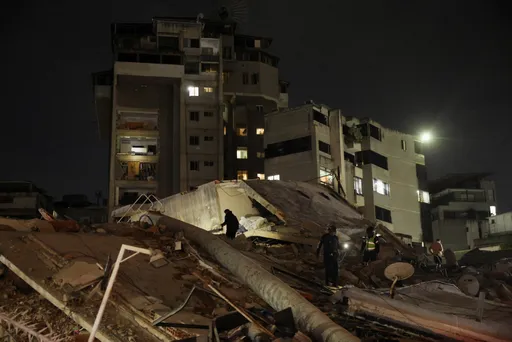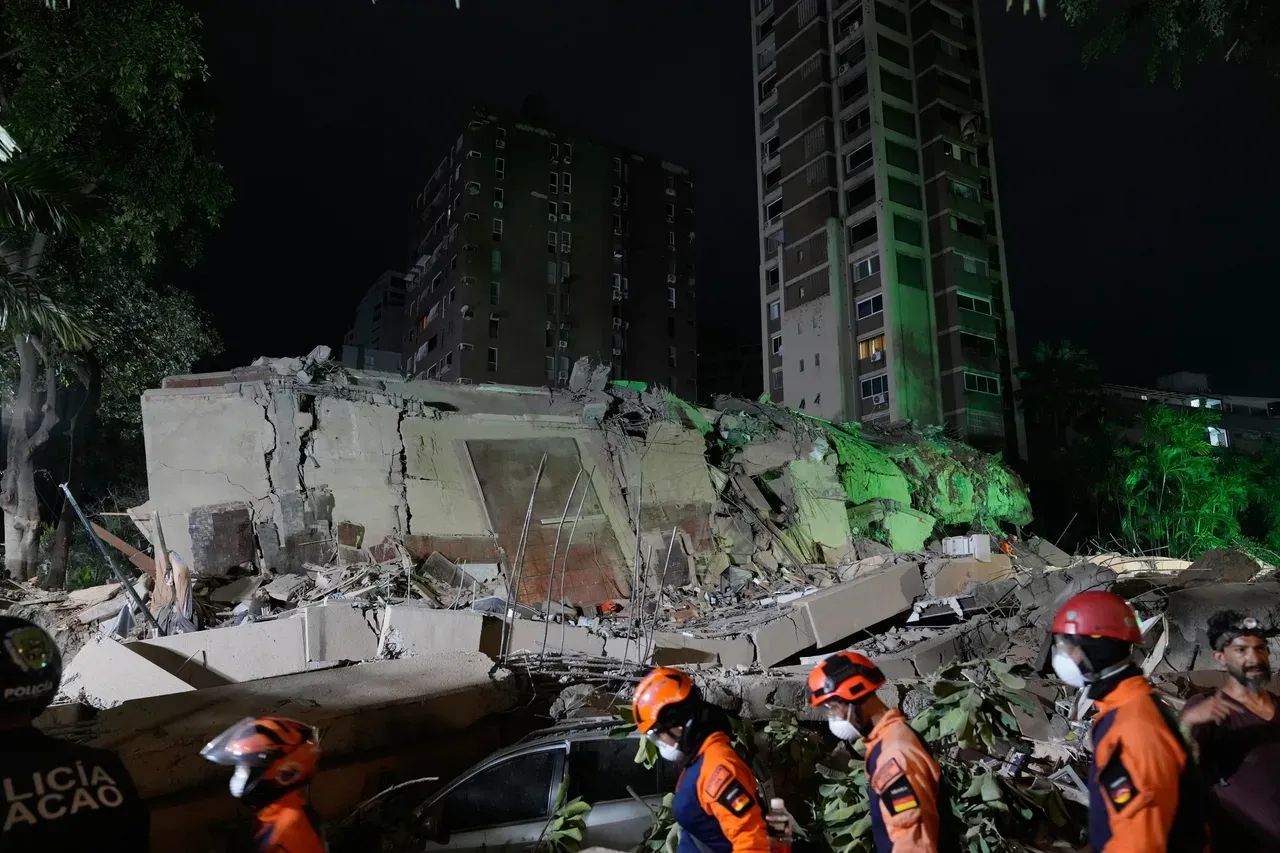
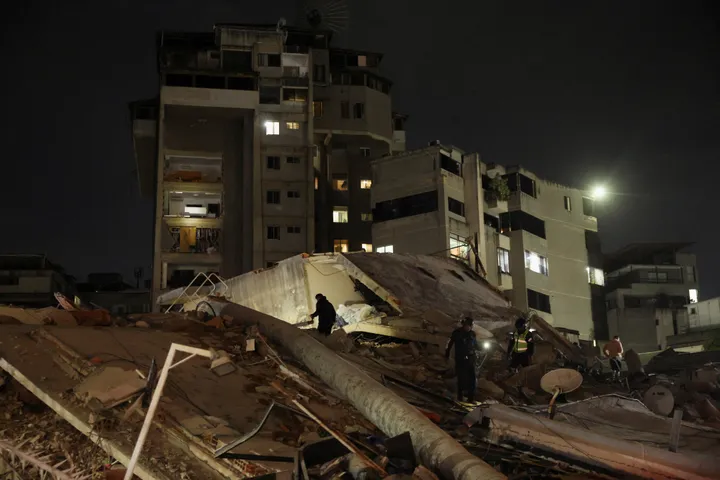
The official death toll from twin earthquakes in Venezuela has more than doubled to 589, interim President Delcy Rodriguez has said, as rescue teams continued searching through the rubble for survivors.
“Regrettably, we now have 589 people who died,” Rodriguez told a televised meeting with military and civilian officials on Friday.
Following the 7.5 and 7.2-magnitude earthquakes on Wednesday, the official death toll had previously stood at 235.
The United Nations said international search and rescue teams from at least 17 countries are being deployed to Venezuela to assist in the response to the devastating quakes.
The UN humanitarian agency, OCHA, said getting those teams to affected areas is now the “top priority.”
"Earthquakes are one of the most devastating things that can happen to any country," spokesman Jens Laerke told reporters in Geneva. "It really is a terrifying thing.
"But what we are seeing right now is also an international mobilisation at its very best.
"The entire humanitarian system is moving very fast, and at scale."
International rescue teams mobilising
A total of 25 teams — including 17 national urban search and rescue units, alongside emergency medical response teams — were being deployed, bringing roughly 1,000 rescue personnel, Laerke said, adding that more deployments were expected.
Teams from Chile, Colombia, El Salvador, Italy, Mexico, Switzerland and the United States were already on the ground in Venezuela, he added.




Teams from Türkiye, Britain, the Czech Republic, Ecuador, France, Germany, Jordan, the Netherlands, Qatar and Spain, among others, are also being mobilised.
Rescue still priority
The World Health Organization said the immediate needs included mass casualty management and trauma care, particularly in areas with collapsed buildings.
"The overriding priority is to rescue as many people as possible while urgently providing life-saving health care to the injured," said Ciro Ugarte, emergencies director for PAHO, the UN health agency's Americas regional branch.
"The first 72 hours are critical to saving lives, and efforts are heavily focused on ensuring timely medical attention for those affected," he said, speaking from Washington.
"The number of deaths and injured people will significantly increase in the coming hours and days."
He said the earthquakes had hit a health system that was already fragile, but more than 15 health ministries in the region had pledged support and were ready to deploy teams.
Ugarte said PAHO experts were working on mapping the affected health facilities. They had identified more than 90 hospitals exposed to shaking intensities beyond six and seven on the Modified Mercalli intensity scale.
"We are prioritising those facilities, including the assessment of the structural safety, emergency department capacities, operating theatres, inpatient beds, blood supply, and oxygen," he said.
"Hospitals are managing injuries such as broken bones and head injuries, but also we are seeing burns and other injuries that result from building collapse," he added.