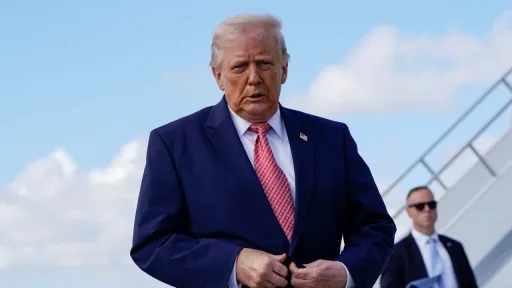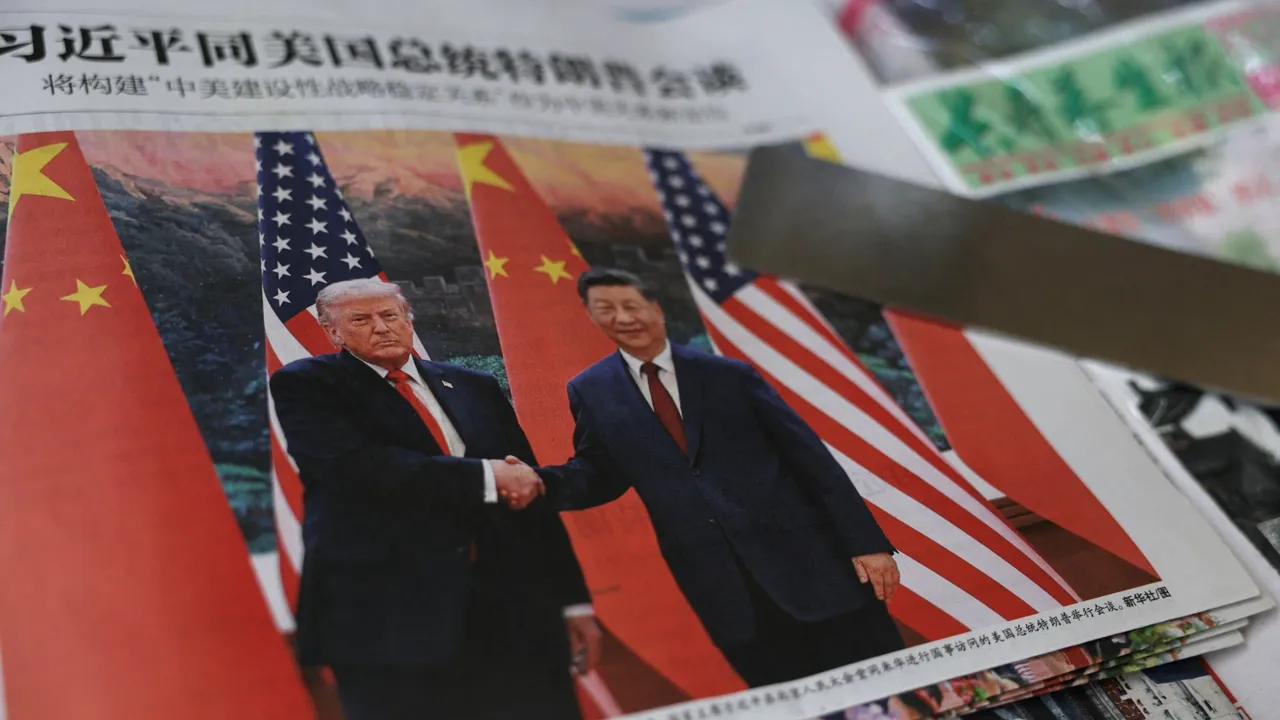
US President Donald Trump is flying back from Beijing after a two-day summit with Chinese President Xi Jinping.
During the visit, President Trump was honoured with a temple tour and tea as the two leaders discussed a range of issues facing the world’s two major superpowers and economies — from bilateral trade to US-Israeli war on Iran and the Taiwan question.
We review the key outcomes from the Trump-Xi talks.
Diplomacy and trade
President Xi and President Trump agreed to define bilateral ties as a "constructive China-US relationship of strategic stability".
Beijing described this as the guiding framework for the next three years and beyond, emphasising "positive stability with cooperation as the mainstay," manageable competition, and enduring peace.
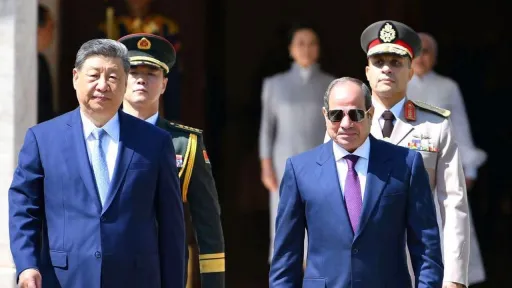
Xi called the summit a "milestone." Trump described the talks as "fantastic," "incredible," and a "great couple of days," inviting Xi to the White House in September.
Trump called Xi a "great leader" and noted that he typically receives some criticism when he refers to the Chinese leader in those terms. "But I say it anyway because it’s true," he added.
During their meeting, Xi referring to the "Thucydides Trap" — a political theory that war becomes more likely when a rising new power competes with an established great power — said the US and China could "transcend" this danger.
Trump, who was carrying some of the biggest names in American business, said that China committed to large-scale purchases of US goods, including billions of dollars in agricultural products, soybeans to benefit US farmers and energy.
Trump also announced that China agreed to buy 200 Boeing planes and signalled interest in as many as 750. Boeing has confirmed China’s commitment to buy the aircraft.
"The delegations of the two countries reached overall positive results, including continuing to implement all consensus reached in previous consultations (and) agreeing to establish a trade council and an investment council," Chinese Foreign Minister Wang Yi said.
The two countries also agreed to "address each other's concerns regarding market access for agricultural products and promote expanding two-way trade within a framework of reciprocal tariff reductions", Wang added.
Taiwan
On Thursday, Xi begun the summit with a warning that missteps on the sensitive issue of Taiwan could push US and China into "conflict".
Framing it as "the most important issue in US-China relations", the Chinese leader warned the stakes could not be higher, stressing: "Handle it well, the relationship holds; handle it badly, the two countries risk collision or conflict."
And a day later, Trump expressed opposition to Taiwan’s formal independence and questioned US defence commitments to the island, addressing one of the priority issues for President Xi.
"I'm not looking to have somebody go independent. And, you know, we're supposed to travel 9,500 miles to fight a war. I'm not looking for that," he told Fox News host Brett Baier.
"I want them to cool down. I want China to cool down," Trump said. "We're not looking to have wars, and if you kept it the way it is, I think China's going to be OK with that."
The Chinese top diplomat subsequently presented Beijing's perspective regarding the discussions on Taiwan.
"We sensed during the meeting that the US side understands China’s position and attaches importance to China’s concerns, and, like the international community, does not support or accept Taiwan moving toward independence," Wang told Chinese state media on Friday, following the summit.
"The Taiwan question is the most important issue in China-US relations; it affects the situation as a whole," Wang stressed. "We hope the US side will abide by the one-China principle and the three China-US joint communiques and fulfill its due international obligations."
Iran war
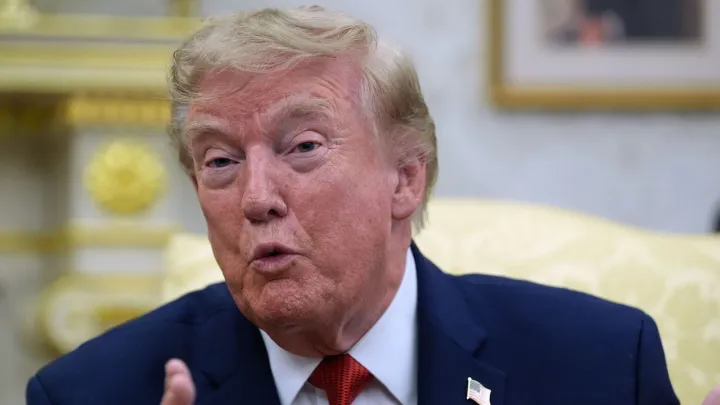
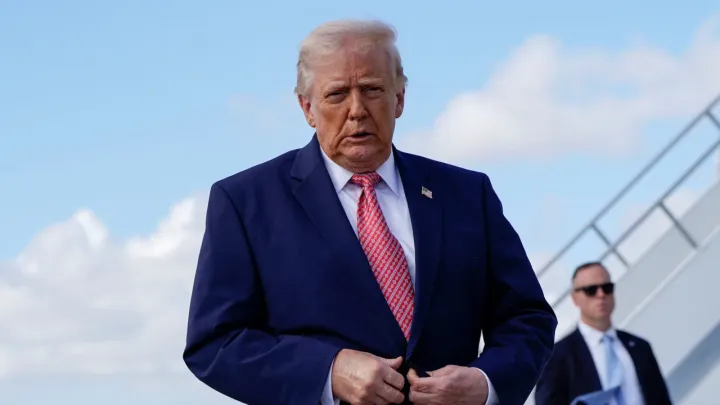




Both leaders discussed the ongoing US-Israeli war on Iran, which began earlier in 2026 and has led to the double blockade of the Strait of Hormuz, disrupting global energy supplies.
Trump offered the most detailed public account of their Iran-related talks, including in interviews aboard Air Force One and on Fox News.
The US leader said that both sides agreed that Iran must not acquire nuclear weapons, and the Strait of Hormuz must remain open for the free flow of energy and global shipping.
The White House stated that the two leaders "agreed that the Strait of Hormuz must remain open to support the free flow of energy."
Trump also quoted Xi as saying, "If I can be of any help at all, I would like to be of help." Trump added that Xi "would like to see [the] Hormuz Strait opened" and expressed interest in assisting peace efforts.
Trump emphasised, "Xi said he is not going to [give military equipment]. That’s a big statement. He said that today. He said that strongly."
China’s statements were in contrast and focused on broader calls for de-escalation. Beijing said the conflict "should never have happened" and "has no reason to continue," while urging the reopening of the Strait of Hormuz.
Briefing reporters on the outcomes of the Xi-Trump summit, Chinese Foreign Minister Wang said, "China encourages the US and Iran to continue resolving their differences and disputes, including the nuclear issue, through negotiations, and advocates the swift reopening of the Strait of Hormuz on the basis of maintaining a ceasefire."
He added that the leaders held nearly nine hours of talks on a range of issues.
A roadmap
Analysts say the summit established a strategic roadmap, describing it as a pragmatic step to stabilise US-China ties rather than a major breakthrough.
George Chen, a partner at The Asia Group consultancy, cited by the Associated Press, argued the summit felt like a political reality show at times and unfolded almost exactly as scripted, but it delivered symbolism, clarity and a roadmap for the months ahead.
Chen said both sides have highlighted what they care about most: For Xi, Taiwan. For Trump, deals.
"The readouts from Beijing and the White House differ in tone and emphasis, but neither side contradicted the other’s account. That alone reflects a rare moment of mutual respect," he added.
Others saw the Xi-Trump summit as strategic re‑positioning.
"This is not merely a procedural consensus but a major strategic re‑positioning. It defines how the two great powers should coexist... setting clear guardrails for managing frictions while expanding shared interests," Dong Wang, a professor at Peking University, told the AFP news agency.
"Even as differences over advanced technology and geopolitics remain, both sides now operate under this new strategic consensus to avoid misjudgment and miscalculation," he said.
Commenting on President Trump's remarks regarding Taiwan, former US Ambassador Edgard D. Kagan, said the US leader's remarks were not inconsistent with what American presidents have said in the past.
"But at the same time, the context suggests that he (Trump) is sending the message that we're not looking for conflict (with China), which could be read as reassuring. But if I were in Taiwan, that's not a message that I would really like to be not just coming out of the US, but actually sent directly by the President of the United States."
Council on Foreign Relations (CFR) experts noted that China largely met its goal of "buying time and stability to consolidate its position strategically."
They argued the US pushed for short-term economic wins during the summit, while Beijing played the long game.
One CFR analyst summed it up: "a summit… heavier on symbolism than it was on substance… focus on managing problems, not on solving the problems."