 Charles Mgbolu
As the world marks the International Day to Remember Earthquakes, Morocco's experience offers a powerful reflection of how tragedy can reshape preparedness, policy and scientific ambition.
Earthquakes remain among the deadliest natural disasters, striking without warning and causing permanent damage.
In 2023 alone, devastating quakes in Türkiye and Morocco underscored the scale of destruction such events can cause. But while the memory of loss endures, Türkiye, right after the disaster, launched a nationwide reconstruction initiative under the stewardship of President Recep Tayyip Erdogan.
Morocco, for its part, is increasingly looking forward — investing in technology and resilience to better understand and confront seismic risk.
A country under watch
Today, Morocco is maintaining a far more vigilant watch over its seismic landscape after the 2023 earthquake left nearly 3,000 people dead and caused destruction amounting to approximately $11 billion.
Across the country, an expanding network of sensors and monitoring stations is tracking underground movements in real time, offering scientists deeper insights into fault systems and soil behaviour.
“We have strengthened the monitoring networks and now have more data about soil behaviour and active faults. The push reflects a broader modernisation of seismic observation capabilities following the 2023 disaster,” Nasser Jebbour, head of Morocco's National Geophysics Institute, tells TRT Afrika. “We are also working on early warning systems and testing new techniques.”
These advancements mark a shift from reactive response to proactive risk management, even as experts acknowledge that predicting earthquakes remains scientifically complex.
The night that changed everything
That urgency is rooted in the events of September 8, 2023, when a powerful Marrakech-Safi earthquake struck the High Atlas Mountains.
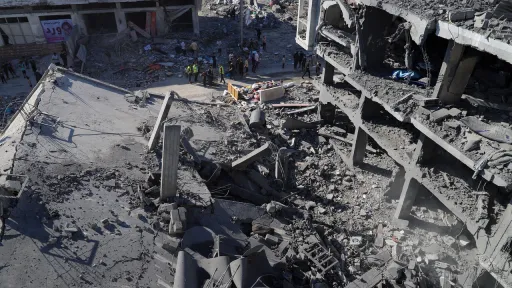
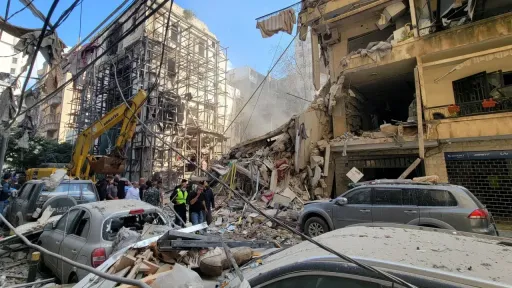
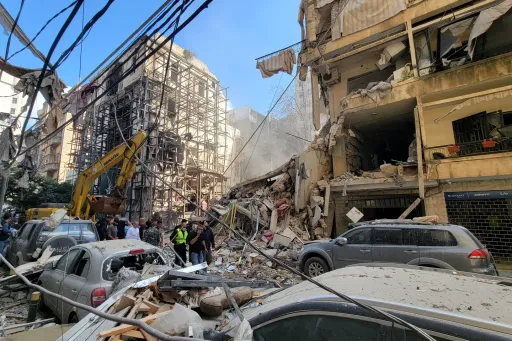
The 6.8 magnitude quake killed nearly 3,000 people and destroyed tens of thousands of homes, particularly in remote mountain communities. Survivors spent nights outdoors, gripped by fear of aftershocks, while rescue teams struggled to reach isolated villages cut off by landslides and damaged roads.
For scientists, the earthquake was as unexpected as it was devastating.
“We didn’t expect an earthquake with magnitude reaching 7,” Jebbour tells TRT Afrika. “It shows that even far from the plate boundary between Africa and Eurasia, tectonic stress is building up in places where we didn’t think such an earthquake could occur.”
Hidden faults, he explains, can remain silent for long periods before rupturing suddenly. “We are under a compressional tectonic regime, and all these faults can move at any time and cause extensive damage,” he says.
Ancient forces, modern consequences
Morocco’s seismic story is deeply rooted in its geography. The country sits at the intersection of the African and Eurasian tectonic plates, where slow but persistent convergence creates seismic tension over time.
According to Taj-Eddine Cherkaoui, a Moroccan seismic researcher, the 2023 earthquake revealed just how deceptive that slow movement can be.





“To reach a magnitude of 6.8 in a region that deforms slowly means that energy accumulated over centuries without being released,” he tells TRT Afrika. “This explains both the strength and the surprise of the earthquake.”
Historically, Morocco has experienced major earthquakes — from the devastating Agadir disaster in 1960 to more recent tremors in Al Hoceima and other regions. Yet, as Cherkaoui notes, seismic risk in parts of the country had long been underestimated.
While the earthquake’s force was significant, its impact was amplified by structural vulnerability.
“The vulnerability of man-made structures was the main factor contributing to the damage,” Jebbour tells TRT Afrika. “Weak construction practices explain most of the destruction reported from the field.”
In the High Atlas, traditional earthen homes collapsed in large numbers, contributing to the high death toll. Critical infrastructure — including roads, schools and health centres —was also severely damaged, complicating rescue efforts.
The contrast with Marrakech was telling. Many modern buildings in the city withstood the quake, highlighting the importance of construction standards and material quality in determining resilience.
Nearly three years on, Morocco’s recovery reflects both resilience and transformation.
Marrakech has largely regained its rhythm, with tourism rebounding and most damaged homes repaired or rebuilt. But in the mountainous regions where the earthquake struck hardest, reconstruction continues at a slower pace, with some communities still rebuilding their lives.
What has changed most is the approach to reconstruction.
“It’s time to set up policies for good construction practices and ensure that seismic risk is taken into account before any land use planning,” Jebbour tells TRT Afrika. “We also need to introduce geotechnical parameters for each site to ensure safety during earthquakes.”
He says early signs of change are already visible. “Since the earthquake, we are seeing good examples from the impacted areas, where better practices are being introduced and risky sites are being avoided,” he adds.
Moroccan seismic researcher Cherkaoui echoes this shift, pointing to growing efforts to revise building codes, strengthen enforcement and train engineers and local builders in earthquake-resistant interventions.
A future built on lessons
“Strict enforcement of seismic construction regulations must become a priority for both new construction and rehabilitation projects. There should be stronger site inspections, improved training for engineers, architects, and craftsmen in modern earthquake-resistant techniques, and programmes to reinforce historic buildings, which were heavily affected," Cherkaoui tells TRT Afrika.
Beyond infrastructure and policy, the earthquake has reshaped how Morocco understands risk.
Public awareness, once limited in many regions, is now seen as essential. Experts stress that educating communities about seismic hazards and preparedness could significantly reduce casualties in future events.