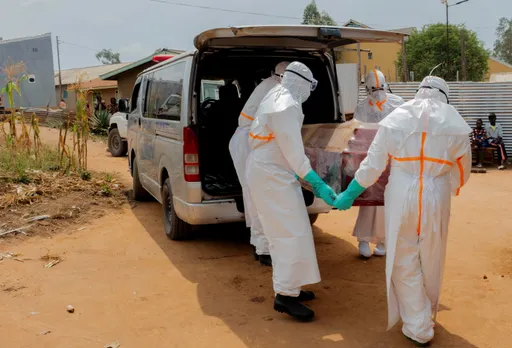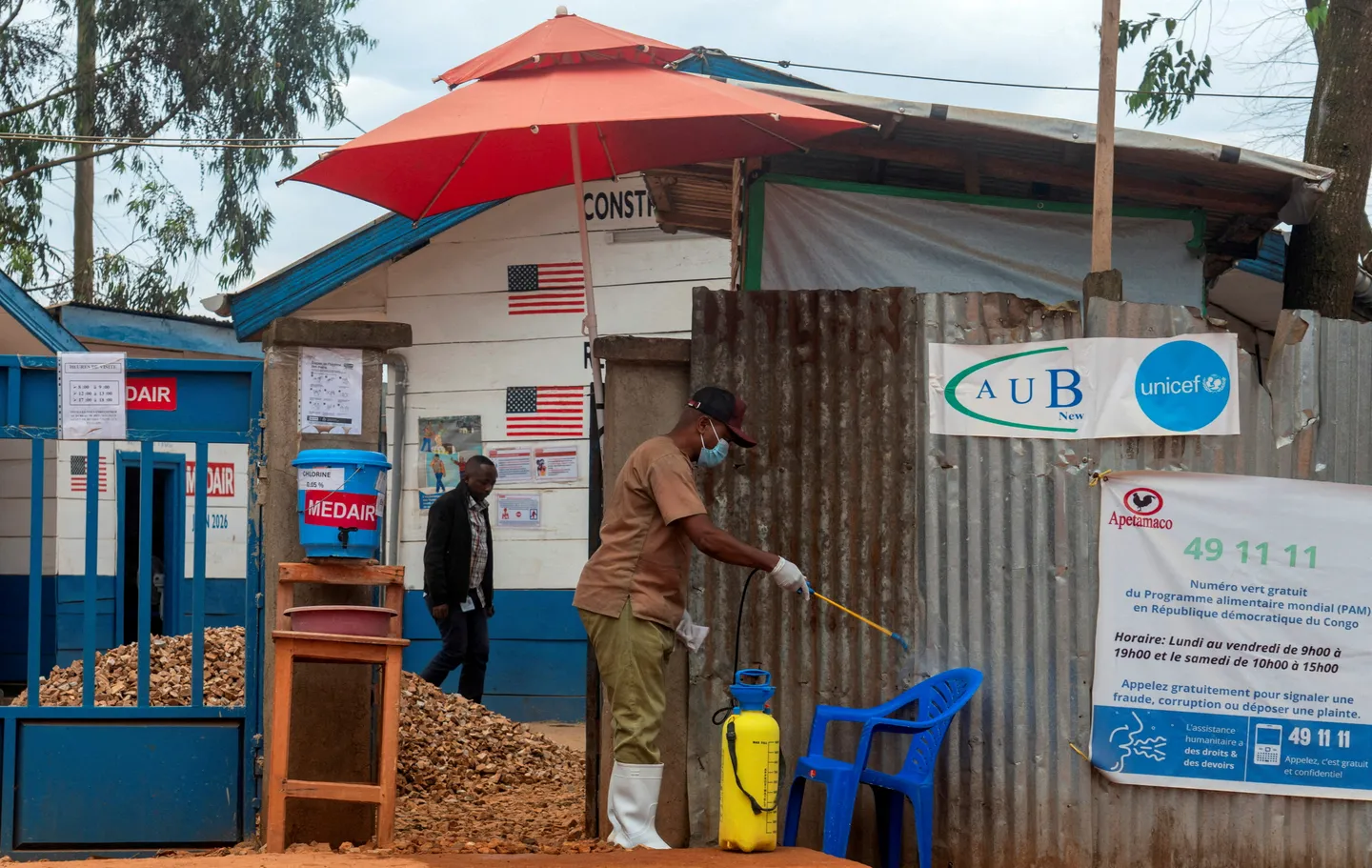
The Democratic Republic of Congo's worst Ebola outbreak in history is not winding down but spreading to new parts of the vast central African country, Doctors Without Borders (MSF) warned on Friday.
Since being declared in mid-May, the deadly virus has killed more than 3,600 people out of 7,200 recorded infections, according to the World Health Organization.
Much of the latest epidemic, the DRC's 17th, has been concentrated in hard-to-reach areas in the north and east long plagued by instability and a litany of armed groups.
"Although we all want to be positive and encouraging for the situation, we have to be also realistic in what is going on, and the reality is that it's too soon now to say that the outbreak is pacing down," MSF epidemiologist Manuel Albela Miranda told AFP in an interview at the medical charity's international headquarters in Geneva.
‘Signs are not encouraging’
On Wednesday, the WHO had welcomed what it saw as "encouraging signs" that the epidemic was slowing down - only for Africa's top health body to insist a day later: "No-one can come and say the outbreak is under control."
Guyguy Manangama, MSF's deputy operations director, agreed that "the signs are not encouraging".
"On the contrary, the situation is alarming," said the doctor, who fears that "people are letting their guard down".
While the disease seems to be on the back foot in the northeastern province of Ituri, where the epidemic was first detected, the virus has been making progress in other regions instead.




New cases
It has recently reached the province of South-Ubangi on the border with the Central African Republic and Congo-Brazzaville; while North-Kivu on the border with Rwanda currently accounts for nearly half of all new recorded Ebola cases.
"Cases keep popping up in different areas and that is why we are concerned about the current situation of the outbreak," Miranda, the epidemiologist, said.
MSF has some 1,700 staff in the DRC, 90 percent of whom are Congolese.
From its medics on the ground, the charity knows that "there are plenty of health structures that are there", Miranda said.
"But they are not prepared at all," he said, pointing to the drastic need for more staff and resources.
Ebola is transmitted through contact with bodily fluids and can cause severe internal and external bleeding and organ failure.
The disease has killed more than 15,000 people in Africa over the last 50 years.
There is currently no approved vaccine or treatment against the Bundibugyo strain responsible for the current outbreak in the DRC.