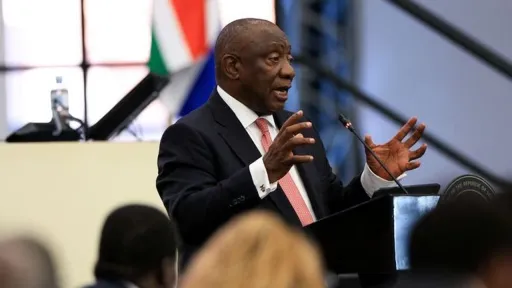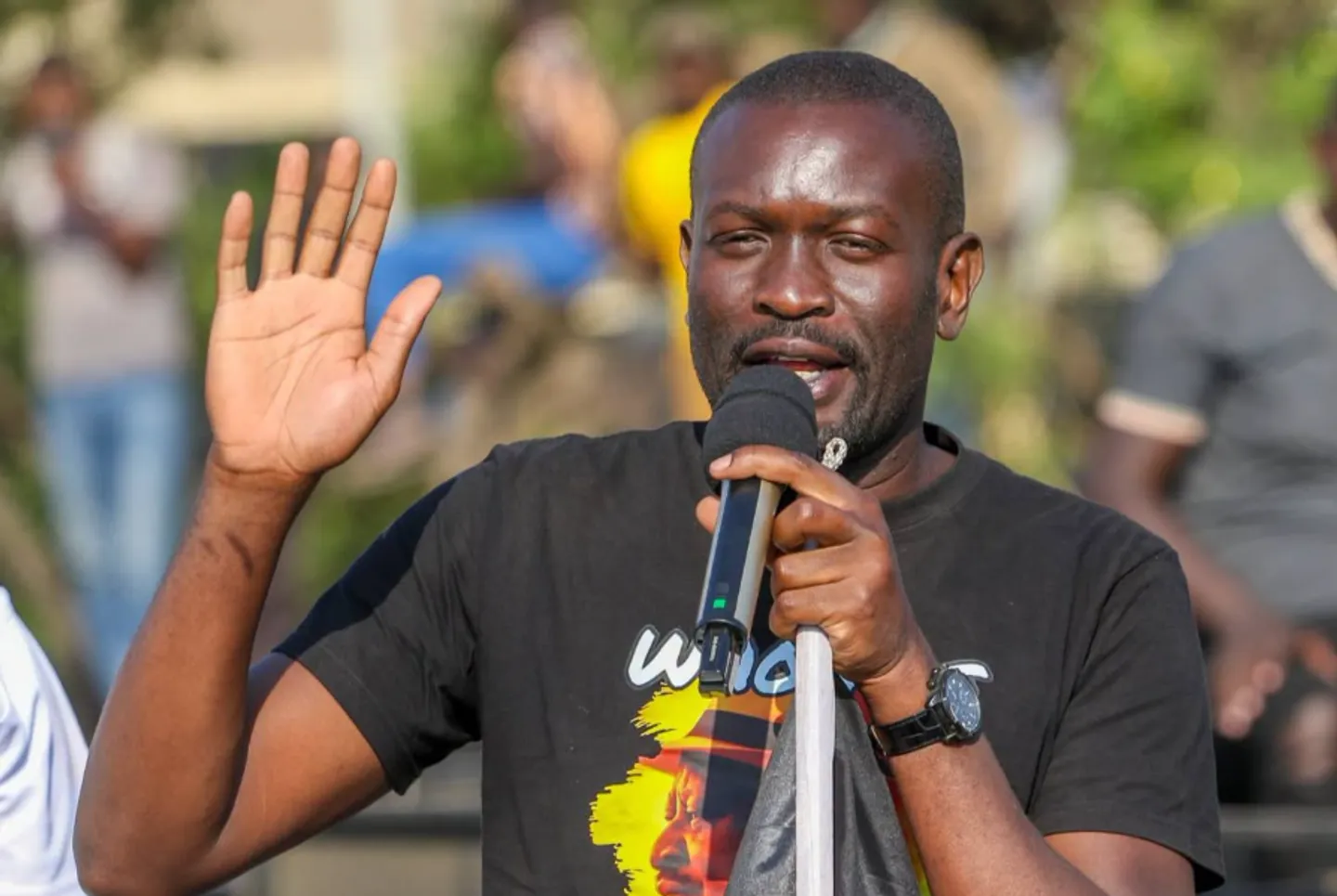
Until recently, many in Kenya may not have predicted the rapid rise of Nairobi Senator Edwin Sifuna to the top of national politics.
For nearly eight years (2018-2026), the 44-year-old first-time parliamentarian had served as the secretary-general of the Orange Democratic Movement (ODM), a major party founded by Kenya's late former Prime Minister Raila Odinga in 2005 as a vehicle to oppose the then-proposed constitution.
For two decades, ODM had remained as Kenya's leading opposition party, producing the highest number of lawmakers in the 2007 general election, in which Odinga was a presidential candidate.
Odinga controversially lost that election to the then-incumbent President Mwai Kibaki, resulting in a deadly post-election violence, which claimed around 1,200 lives countrywide.
Sifuna's entry into politics
Following a high-level intervention, including from former United Nations Secretary-General Kofi Annan and then-United States Secretary of State Condoleezza Rice, Odinga settled for the newly created position of prime minister, while Kibaki served as president in what was known as the grand-coalition government of 2008 to 2013.
That period marked the onset of ODM's mainstay identity as Kenya's foremost opposition party. Odinga would use the party's ticket in the 2013, 2017, and 2022 presidential elections, but lost in all, alleging that his victories had been snatched.
Sifuna's active involvement with ODM started in 2010, when Kenya promulgated a new constitution championed by both Kibaki and Odinga.
A lawyer by training, Sifuna served as a member of the advisory committee of the Coalition for Reforms and Democracy (CORD), an alliance formed by ODM and allied parties to popularise Odinga's 2013 presidential bid. Sifuna served in CORD's advisory board from 2013 to 2016, keenly studying Odinga's charismatic style of politics.
Rise to post of ODM secretary-general
After Odinga lost the 2013 presidential election to Uhuru Kenyatta, CORD morphed into the National Super Alliance (NASA), which sponsored Odinga's 2017 presidential bid. Sifuna served as a member of the NASA advisory committee from 2016 to 2021.
It was during his role as an advisory member that ODM appointed him the party's secretary-general in 2018, replacing Senator Agnes Zani, who had held the post in an acting capacity for two years.
In his formative years in politics, Sifuna was not widely popular as he currently is, and this reflected in his 2017 defeat to Johnson Sakaja of the then-ruling Jubilee Party in the Nairobi senatorial race. Sifuna, who ran on ODM ticket, got slightly over 691,000 votes (42.5%) against Sakaja's over 832,000 votes (51.2%).
His promising showing for a first-timer in city politics, raised Sifuna's stakes within ODM. "I am passionate about youth and women empowerment," the 44-year-old says.
Vocal in parliament
In Kenya's 2022 general election, he vied again for Nairobi senator seat, winning it this time around with a significant margin. He got nearly 717,000 votes (57.8%) against his closest challenger Margaret Wanjiru's 524,000 votes (42.2%). Wanjiru ran on President William Ruto's newly formed party, the United Democratic Alliance (UDA). The then-senator, Sakaja, had successfully vied for Nairobi governor's seat in that year's election.
In the Senate, Sifuna has been vocal about pro-people's welfare, often clashing with members of both the ruling and the opposition parties over issues he deems unfavourable to Kenyans.
When President Ruto came to power in September 2022, he introduced a raft of taxes, including a housing levy in which the government takes 1.5% of the employed people's monthly salaries for the construction of affordable houses. Ruto also overhauled Kenya's public medical insurance system, increasing mandatory health deductions from a maximum of 1,700 Kenyan shillings ($13) to 2.75% of an employee's monthly salary.
The UDA administration also raised petroleum tax, introduced a new university funding model that resulted in students paying comparatively higher fees for university education, and increased tax for high-income earners to 32.5% for those earning above 300,000 shillings monthly ($2,315), from a maximum rate of 30% previously; and 35% for those earning above 800,000 shillings monthly ($6,170).
'High sense of right and wrong'
Sifuna opposes these new charges, repeatedly saying that he would remove the housing levy should he successfully run for president in 2027.
On his website, the lawmaker says he has "a high sense of right and wrong", which often informs his choices. But this sense may not simply be enough to propel him to Kenya's top seat, given the state of Kenya's current political alignments, as well as its ethnic dynamics which significantly influence election outcomes.
The country's opposition appears fractured currently, with different heavyweight politicians, including former Deputy President Rigathi Gachagua, who was impeached in October 2024, declaring an interest in unseating President Ruto.
But Sifuna remains confident that the opposition will front a single candidate to run against Ruto in Kenya's August 10, 2027 presidential election.
Behind Odinga's shadow
Until Odinga's death on October 15, 2025, Sifuna had remained behind the towering political veteran's shadow. For about four decades, Odinga, who died aged 80, conducted Kenya's opposition politics like an orchestra, setting its tempo, directing its movements and, at times, determining who took centre stage.





For instance, in June 2024, President Ruto faced perhaps the most testing moment of his political career, as Kenyans took to the streets to protest tax hikes, breached parliament, and posed the most serious challenge yet to his rule. Odinga, who until then had remained firmly in the opposition, stepped in to help Ruto contain the unrest, using his vast national support base to help pacify the protests.
But Sifuna was apprehensive about Odinga's working relationship with Ruto, arguing that the government bore responsibility for the dozens of deaths recorded during the June 2024 protests.
It is this apprehension that birthed the Linda Mwananchi movement, which means "Protect the Citizens" in Swahili, a language widely spoken in Kenya and East Africa.
Removed as ODM secretary-general
After Odinga's death, Sifuna was deemed rebellious and removed as ODM's secretary-general in February 2026, while the party was placed under the leadership of Odinga's elder brother, Oburu Oginga. President Ruto, 59, and Oginga, 82, have continued the UDA-ODM working relationship.
A relatively small faction of ODM that has aligned itself with Sifuna has moved to popularise the Linda Mwananchi movement across the country. The group includes veteran Western Kenya politician and Siaya County Governor James Orengo (Odinga's former lawyer), as well as outspoken Nairobi parliamentarian Babu Owino, and ODM's former deputy party leader Godfrey Osotsi.
Gitile Naituli, a professor of management and leadership at the Multimedia University of Kenya, attributes Sifuna's rising popularity to the legislator's "consistency" in championing pro-people welfare.
"He (Sifuna) has offered something rare in Kenyan leadership – consistency. And consistency provides predictability. During the Gen-Z protests in June 2024, Kenyans saw him walk out into the chaos while other lawmakers retreated into the tunnels. From that moment, he remained consistent. He publicly told Odinga: 'I will not follow you to President Ruto'," Naituli said, adding: "Sifuna has maintained that position in his television appearances and public statements."
'Outsider'
Naituli further said that Sifuna's relatively brief exposure to national governance works to his advantage. "Many Kenyans view him as an outsider who could fundamentally change the country's governance. Through his speeches, he has won over a large following with promises to end corruption in government, restore the rule of law, and bring back Kenya's glory."
Some political analysts, however, say that Sifuna's chance of mounting a strong campaign against President Ruto is heavily dependent on the opposition's unity. Macharia Munene, a professor of politics and international relations at the United States International University-Africa (USIU-Africa), believes that even if Sifuna's 2027 presidential bid falls short, his long-term prospects remain strong.
"He is in no hurry to become president today," Munene noted. "Age is on his side, and his qualities, which include being articulate, politically mature, courageous, and careful with his public statements, will continue to endear him to Kenyans. These traits will work in his favour for years to come."
A July 2026 poll by TIFA Research placed President Ruto ahead of his rivals with 24% support, but highlighted a fragmented yet potent opposition. Trailing Ruto were Sifuna (15%), former Interior Minister Fred Matiang'i (14%), former Vice-President Kalonzo Musyoka (13%), and former Deputy President Rigathi Gachagua (7%). Collectively, the four opposition figures controlled nearly half (49%) of the electorate's backing, underscoring the important role a coalition could play in the 2027 election outcome.
Sifuna denies 'arrogance' claims
While Sifuna continues to gain political traction, Nairobi lawmaker Beatrice Elachi argues that his progress may be undermined by what she terms "arrogance."
"He (Sifuna) has a future," Elachi said in a podcast interview in Kenya on September 8. "He just needs to come back and do the right thing, and do it Odinga's way. Odinga was never arrogant." Sifuna, however, denies being arrogant, arguing that his firm stance on public interest is frequently mistaken for arrogance.
The outspoken senator — a husband and father of one daughter — holds a Bachelor of Laws Degree from the University of Nairobi, where he graduated in 2006. He was admitted to Kenya's Roll of Advocates in 2008 after completing a postgraduate diploma course at the Kenya School of Law.
Whether the 44-year-old can turn his presidential ambition into a 2027 upset against Ruto remains to be seen.
Similar duels in other parts of Africa
Elsewhere in Africa, younger politicians have mounted spirited campaigns against seasoned incumbents, only to fall short.
In Uganda, 44-year-old opposition leader Bobi Wine unsuccessfully challenged President Yoweri Museveni, 82, in both 2021 and 2026. Wine polled 35% and 25% in the respective presidential elections.
Similarly, Zimbabwe's Nelson Chamisa lost his 2018 presidential bid against President Emmerson Mnangagwa at just 40. Chamisa got 45% of the vote against Mnangagwa's 52%.
Meanwhile, Senegal's youth-backed candidate Ousmane Sonko, 52, was barred from the 2024 race altogether under Macky Sall's administration following a controversial defamation conviction. However, Sonko's ally Bassirou Diomaye Faye, 46, stepped in and won the 2024 presidential election, comfortably defeating then-Prime Minister Amadou Ba, 65.