 Pauline Odhiambo
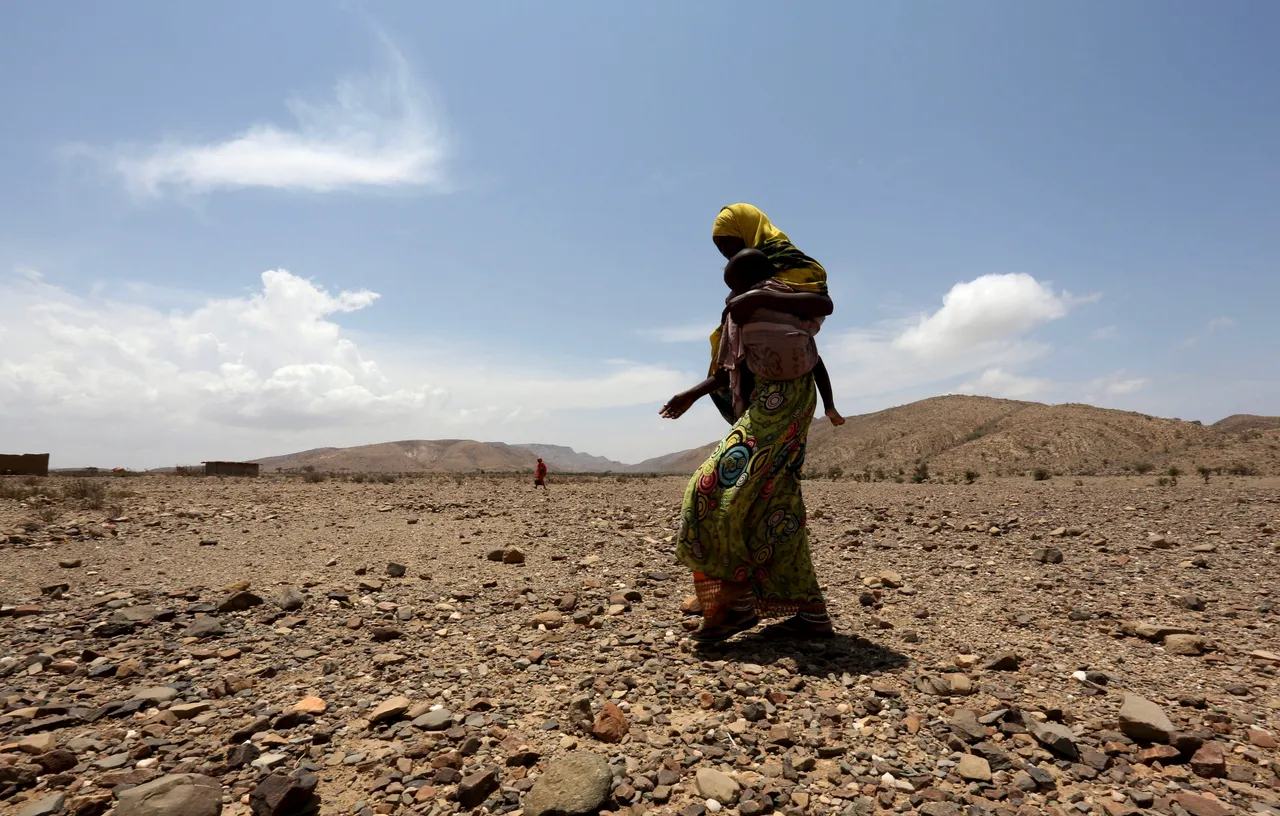
In the dusty courtyard of her compound in rural Zimbabwe, Joyce Moyo watches the sky with the practiced eye of a woman who has endured too many failed seasons. The clouds that would have usually gathered have been sparse and teasing—a cruel joke on farmers who still remember 2024 all too vividly.
That year, her maize crop withered to nothing by January. Her family's three cattle—once the pride of their smallholding—became so emaciated she could count every rib.
The eldest bull was sold for a fraction of its worth when the pasture turned to dust. The money bought maize meal for a few months, but it couldn't replace the wealth that had taken generations to accumulate.
"We sold our future to survive our present," Joyce says quietly. "And now they tell us the drought is coming again."
El Niño-linked droughts
A new El Niño phase is likely to begin within weeks. New analyses by experts at the Food and Agriculture Organization of the United Nations (FAO) allow for detailed mapping of where El Niño-linked drought is most likely to impact crops and pasturelands.
The risks are sharpest across the Sahel and southern Africa, where some agricultural areas face more than a 50 percent chance of drought over the coming months.
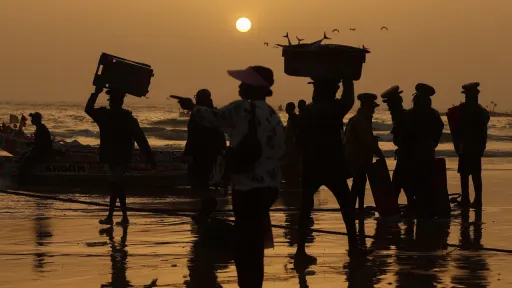
In the parched Sahel, 1,200 kilometers northwest, Ousmane Diallo knows the pattern intimately. The 45-year-old pastoralist has spent his life moving his herd across the shifting grasslands of southern Mauritania, following ancient migratory routes. But in recent years, those routes have led nowhere.
"It used to be that we could predict the rains," Ousmane says, his voice heavy with weariness. "The elders knew when to move, where to find water, which valleys would green first. Now the patterns have become strangers."
The FAO's maps point to a broad belt of agricultural drought stretching from Senegal and Mauritania through Côte d'Ivoire, Ghana, Nigeria, and eastward into Ethiopia and Sudan. For Amadou, the forecast means something immediate: the pasture for his animals will likely vanish, and with it, his family's only livelihood.
"This isn't like previous El Niños," warns Jorge Alvar-Beltrán, FAO Natural Resources Officer. "The planet is much warmer today, and with conflict and food insecurity widespread, this new phase will hit hardest in places that are already vulnerable and have limited coping capacity."
The numbers are staggering. More than 80 percent of drought impacts on agriculture are projected to hit in low- and middle-income countries. The most recent El Niño cycle brought southern Africa's worst drought in more than a century, leaving 61 million people in need of assistance and pushing more than 8 million into food insecurity.
‘Prediction is not enough’
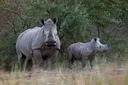
FAO's forecast points to a greater than 50 percent probability of agricultural drought across large parts of Namibia, Botswana, Angola, Zambia, Zimbabwe, South Africa, and parts of Mozambique and Madagascar. In a region where livestock underpins both food security and household wealth, the loss of pasture quickly becomes a loss of assets.
In the Sahel, food insecurity has deepened for five consecutive years, while conflict continues to displace people and limit access to vulnerable communities. "A farmer might first lose crops, then livestock, and with that their entire livelihood," Alvar-Beltrán explains. "With cascading impacts of multiple crises already evident, there is an urgent need to act early."
Yet amid the gathering storm, there is growing recognition that prediction alone is not enough—action must follow. The FAO's analysis can narrow risk assessment to a single square kilometer, turning precision into protection by linking meteorological services, agriculture ministries, and extension networks so warnings reach farmers in time.
"This level of detail changes what a government can do," says FAO Natural Resources Officer Riccardo Soldan. "Instead of spreading resources thinly, it can concentrate support in the hotspots—directing cash transfers, water and irrigation support, livestock feed, and other critical inputs to the places most at risk."
In response, FAO and the World Food Programme have launched a joint anticipatory action appeal seeking $202 million to protect 8.8 million people across 22 high-risk countries. The appeal aims to scale up early interventions before droughts escalate into humanitarian emergencies.
There is already evidence that acting before losses take hold can work. Ahead of the 2023–24 El Niño, a regional pre-season effort in Southern Africa directed nearly $31 million to more than two million people across seven countries, providing seeds, livestock support, and better forecasting.
‘We have survived before’
"The maps are clear," Soldan emphasizes. "El Niño is forming, and what happens next depends on how quickly decisions follow."
In the Sahel, Ousmane Diallo has begun preparing. He is buying supplemental feed for his most valuable animals, exploring options to move his herd if the worst comes. He watches the sky, checks his phone for weather updates, and prays—not just for rain, but for the wisdom to navigate an increasingly uncertain world.
For Joyce Moyo in Zimbabwe, interventions to curb the ravages of El Niño represent more than statistics—they represent hope. She has heard about early warning systems and drought-tolerant seeds, but she also knows time is running out.
She rises each morning before dawn to tend to her remaining animals and her small garden. She has planted drought-resistant sorghum and millet—crops her grandmother knew would survive when maize failed. She has buried clay pots near her plants to slowly release precious water. She has joined a local cooperative that pools resources and shares information.
And despite everything, Joyce still finds space for hope.
"We have survived before," she says, her voice steady. "The land is harsh, but we are harsher. We bend, but we do not break. Give us the knowledge to prepare, give us the tools to adapt, and give us the chance to act before the hunger comes—and we will show you what resilience really means."