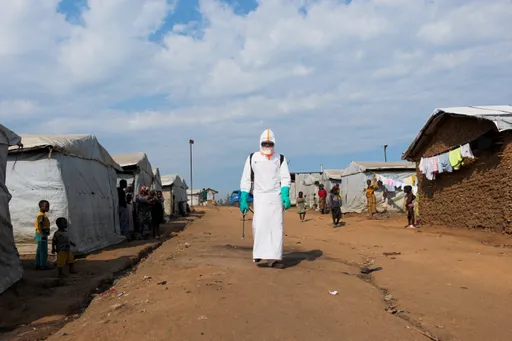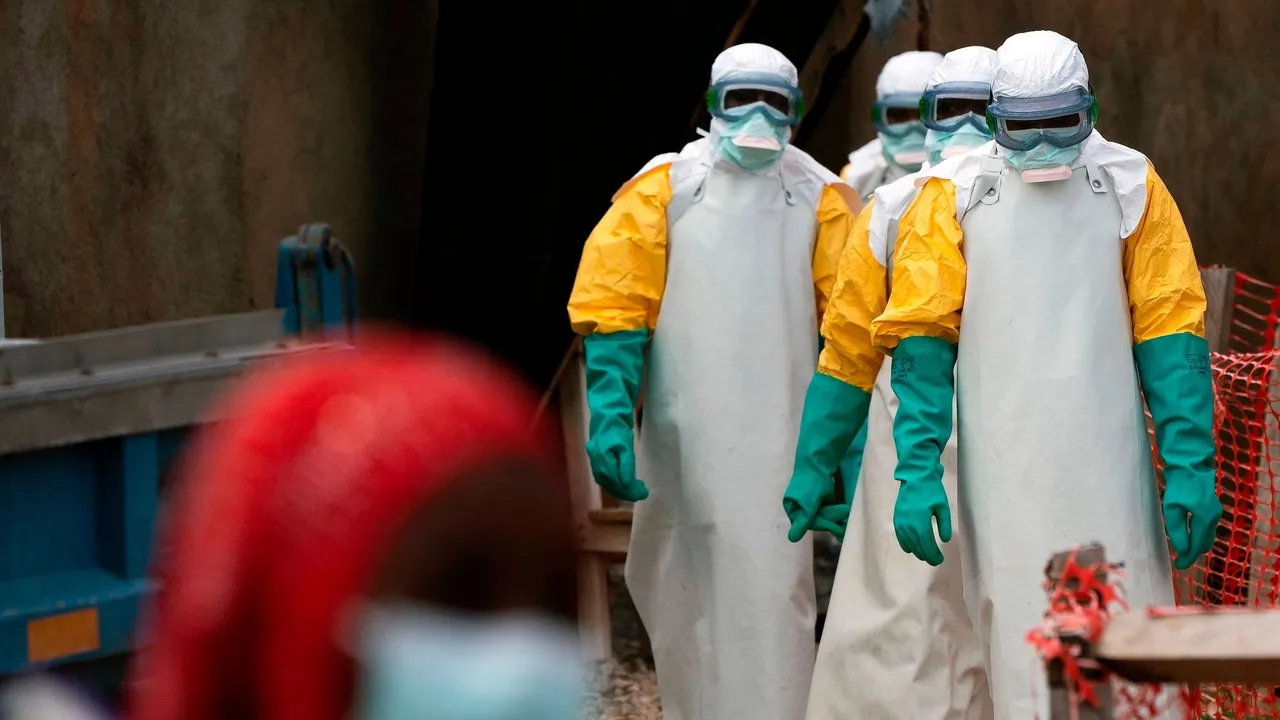
An Ebola outbreak in the Democratic Republic of Congo that has caused at least 80 deaths has a "very high lethality rate" and no vaccine or specific treatment, the country's health minister warned on Saturday.
Nearly 250 suspected cases of the highly contagious haemorrhagic fever have been recorded in DR Congo, according to the health ministry, with one death reported in neighbouring Uganda.
Medical aid group Doctors Without Borders (MSF) said it was preparing a "large-scale response", calling the rapid spread of the outbreak "extremely concerning."
"The Bundibugyo strain has no vaccine, no specific treatment," DR Congo's Health Minister Samuel-Roger Kamba said on Saturday.
'High lethality rate'
"This strain has a very high lethality rate which can reach 50 percent."
Earlier on Saturday, ministry officials said the death toll had reached 80, up from 65 the previous day.
The strain has also claimed one life in neighbouring Uganda, officials said on Saturday, that of a Congolese national.


That correlated with an announcement late on Friday by Uganda's health ministry, which said a 59-year-old man from the DRC had died in Kampala after being admitted earlier in the week. His body was repatriated the same day.
'Deaths extremely concerning'
Tests showed the victim in Uganda was infected with the Bundibugyo strain of Ebola, first identified in 2007.
Vaccines are only available for the Zaire strain, which was identified in 1976 and has a higher fatality rate of 60-90%.
Health officials had confirmed the latest outbreak Friday in Ituri province in northeastern DR Congo, bordering Uganda and South Sudan, according to the Africa Centres for Disease Control and Prevention (CDC Africa).
Symptoms of Ebola include fever, haemorrhaging and vomiting. MSF said it was mobilising medical, logistical and support staff to help respond to the outbreak.
"The number of cases and deaths we are seeing in such a short timeframe, combined with the spread across several health zones and now across the border, is extremely concerning," says Trish Newport, MSF Emergency Programme Manager.