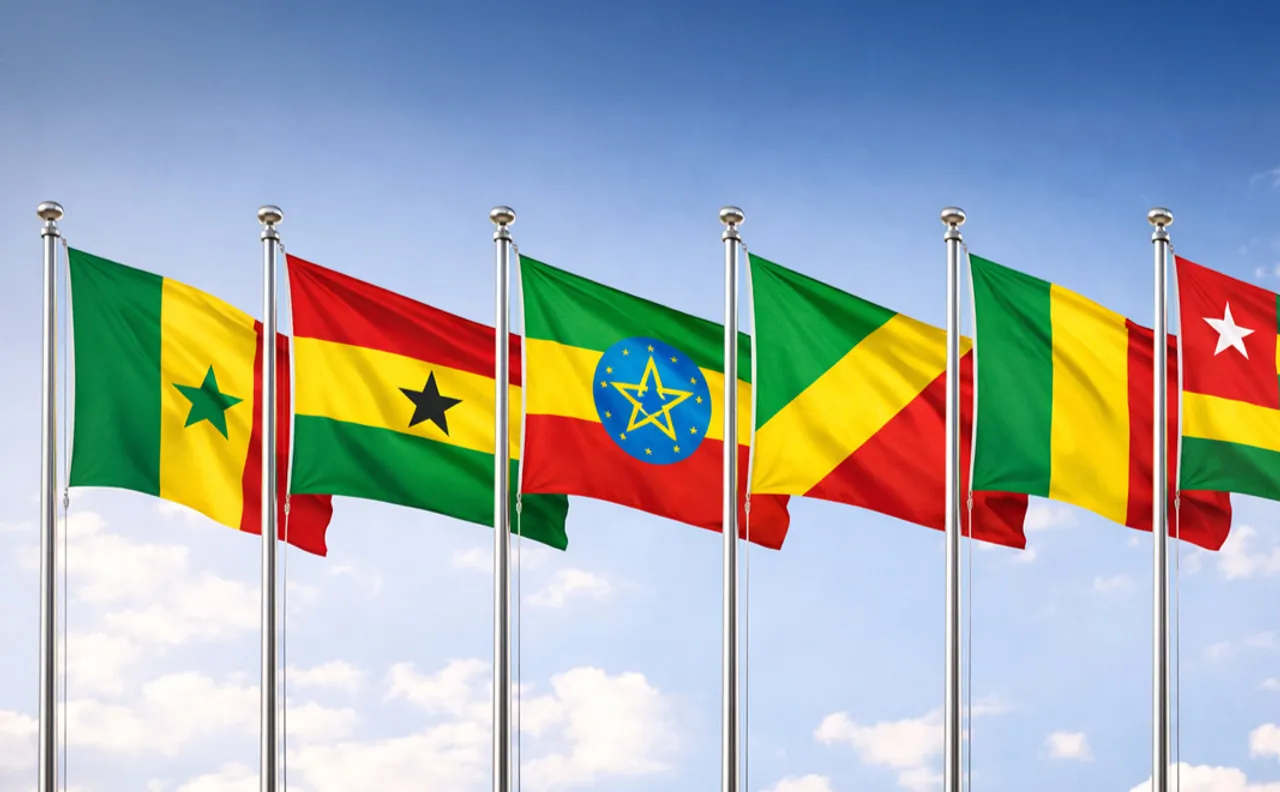
If you look closely at African national flags, there is a clear pattern. Most of Africa’s 54 countries include at least one of these colours – green, yellow, and red – in their flags.
This is not accidental. It is rooted in history, politics, and the struggle for independence.
They are commonly referred to as the Pan-African colours, and their most influential reference point is Ethiopia.
The country holds a unique place in African history as the only state that successfully resisted European colonisation, defeating Italy in the Battle of Adwa in 1896.
Following the pivotal victory, Ethiopia adopted its flag colours – green, yellow, and red – which became a powerful symbol of African sovereignty at a time when most of the continent was under colonial rule.
As independence movements gathered momentum in the 1950s and 1960s, newly independent African states were not designing flags in isolation.
Shared values
Many were signalling shared political values, heritage, and a collective break from colonialism.
In 1957, Ghana became the first sub-Saharan African country to gain independence. Its leaders adopted the Pan-African colour pattern and added a black star, transforming the flag into a visible statement of African unity and self-rule.








Analysts believe Ghana’s regional and international prominence also helped spread this visual language across the continent.
Other countries adapted the colours to their own contexts, albeit with some differences in meanings and looks, with their national football teams bearing such colours and design.
Guinea adopted a vertical tricolour; Mali used a similar layout with a different colour order, while Cameroon and Senegal also incorporated stars to emphasise unity, national identity, and brightness.
The Republic of the Congo arranged the same colours diagonally, linking them to forest resources, friendship, and the struggle for independence.
Benin and Sao Tome and Principe also drew on the palette while highlighting local history and geography.
While the colours are shared, their meanings are defined nationally. Generally, red represents the blood shed during struggles against colonialism, yellow signifies mineral wealth and sunshine, while green symbolises agriculture, prosperity, forests, and other natural resources.