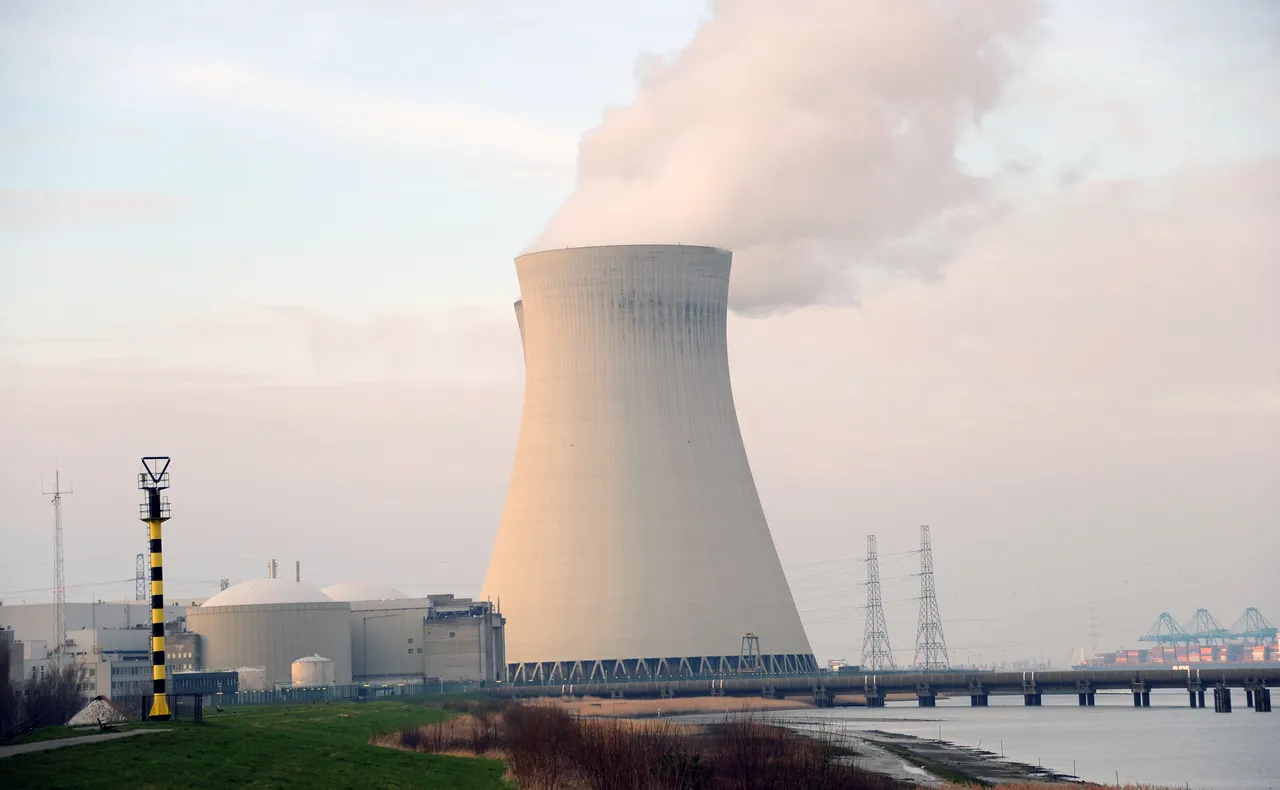
African nations with nuclear plants are increasing their output as they scramble for short-term energy supplies, while non-nuclear countries are accelerating long-term nuclear plans to safeguard against future fossil fuel shocks.
The Iran conflict's global energy shock has caused a boost in nuclear power generation and spurred atomic energy plans in non-nuclear countries on the continent.
In Africa, plans to build reactors have taken on urgency, with Kenya, Rwanda, and South Africa affirming their support.
Africa’s atomic aims
Soaring energy prices and power shortages in Africa, triggered by the Iran conflict, are leading to public calls for nuclear cooperation and reinvigorated interest in long-term nuclear energy plans, which are underway in more than 20 of the 54 African countries.
With Africa seen as an atomic energy growth market, nuclear nations — including the U.S., Russia, and China — are pitching advanced technology such as small modular reactors, or SMRs, as a solution to energy shortages.
These modular reactors are a cheaper, more compact alternative to large-scale plants.
Proponents tout them as a faster option, but projects can still take years. Kenya, for instance, plans to bring a small modular reactor online in 2034 after starting the first phase in 2009.
Chief Executive Officer of Kenya’s Nuclear Power and Energy Agency, Justus Wabuyabo, said last month, “nuclear energy is no longer a distant aspiration for African countries; it is a strategic necessity.”
During a March summit convened by the U.N.'s nuclear watchdog agency, Rwandan President Paul Kagame said Africa will be “one of the most important global markets” for the smaller reactors in the years ahead.




Smaller reactors, which can offer scalable, low-emitting base load power, are considered a solution to Africa's rising electricity demand, weak grids, and over reliance on imported diesel.
Similarly, Group Chief Executive Officer of South African Nuclear Energy Corporation Loyiso Tyabashe said SMRs could "fulfill our strategic objective of positioning South Africa at the forefront of advanced nuclear technologies.”
South Africa, which has the continent’s only existing nuclear plants, wants nuclear to go from making around 5% of its energy mix now to 16% by 2040.
Race for nuclear provider
The energy disruptions come as competition for influence in Africa intensifies between Washington and Moscow.
Russia's Rosatom is building Egypt’s first reactor and has cooperation agreements with Ethiopia, Burkina Faso, Ghana, Tanzania, and Niger, spanning major projects, research centers, uranium processing facilities and training programs.
Only Kenya and Ghana have joined an American-led modular reactor initiative. Ghana, which aims to begin building a nuclear plant in 2027, is in the market for foreign suppliers.
Nuclear power takes advantage of the energy released when the nucleus of an atom, such as uranium, splits in a process called fission.
Unlike fossil fuels, this doesn't release climate change-causing carbon dioxide. But it creates potentially dangerous radioactive waste, one reason many countries are cautious about nuclear power.