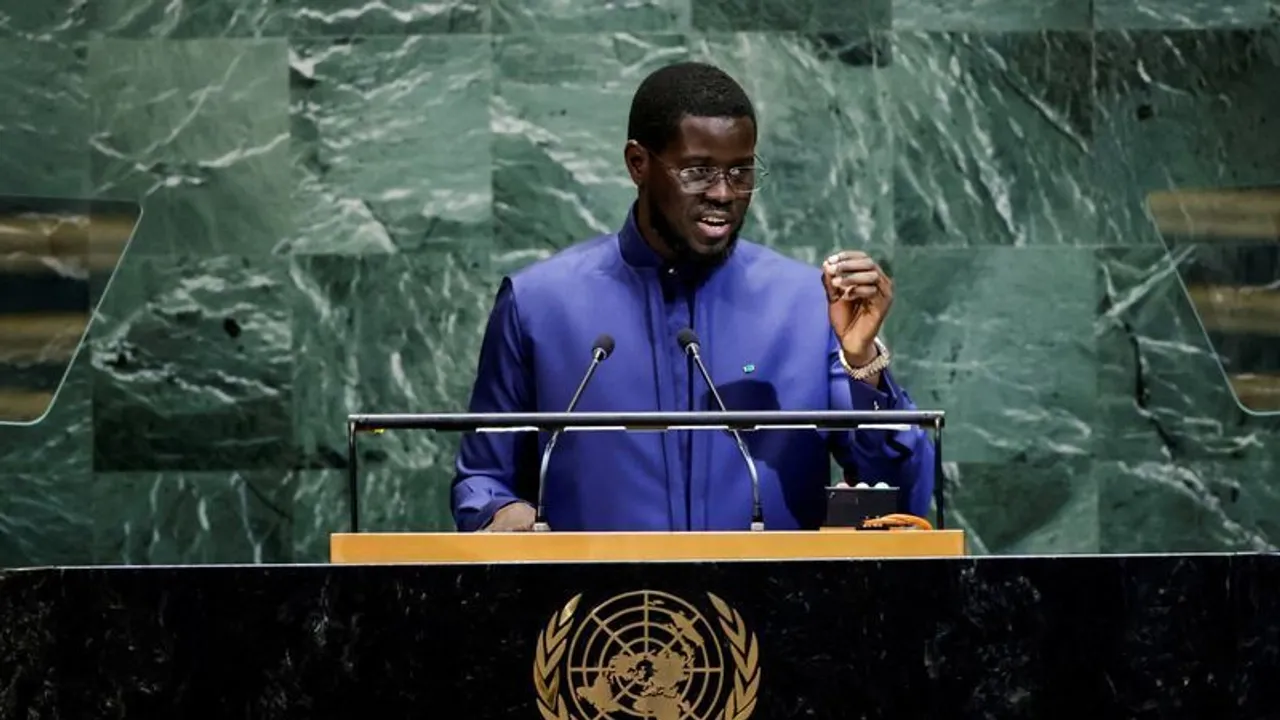
Senegal’s public debt director Alioune Diouf said the country’s debt is now “fully transparent” and aligned with International Monetary Fund figures, while rejecting suggestions of arrears outside a grace period.
The comments follow the discovery of previously unreported liabilities and fresh claims for lack of transparency in swap contracts. The International Monetary Fund halted a $1.8 billion programme in 2024 after the initial misreporting surfaced, putting Senegal’s debt management under closer scrutiny.
Diouf said the government and IMF were now using identical data after audits covering 2019–2024.
“We are aligned on all the figures … there is no difference,” he said on the sidelines of a West Africa investment event in Manhattan, referring to both debt stock and fiscal balances.
Expanded disclosure
Diouf pointed to expanded disclosure through quarterly budget reports, a debt statistical bulletin and reporting under IMF data standards, saying: “Today there is total transparency.”
At the same time, Diouf said financing operations carried out in 2025, including those involving derivatives-linked financing, were executed through the regional domestic market and are reflected only in aggregate issuance data.
“These are operations carried out through auctions… you can only see them through the overall amounts raised,” he said, adding the transactions were not separately identifiable.
On risk, he said the swaps are tied to domestic government securities and structured so that market movements would not trigger margin calls.
'Risk almost nonexistent'
“The evolution of yields cannot… lead to a margin call… the risk is almost nonexistent,” he said, arguing that authorities effectively control rate dynamics in the domestic market.
Diouf also said Senegal had no delayed payments to creditors past the grace period.



“We're working to avoid them – we're working to pay on time," he said, when asked about arrears within the grace period.
Reuters reported last month that Senegal is falling behind on payments to Paris Club lenders including France, Britain, Italy and Spain. The delays are within grace periods, which are typically 90 days, and are not uncommon.
'Active debt management'
Diouf described bank loans later converted into government securities known as APEs as previously unrecorded liabilities identified through an audit, rather than missed payments.
“It is not arrears … it is debt that was not integrated,” he said.
The conversion into tradable instruments, he said, was part of an “active debt management” strategy allowing the state to regularise obligations while giving banks assets eligible for central bank refinancing.
Talks with the IMF are ongoing, with data now reconciled and a programme outline under discussion, though Diouf did not specify what remains to be resolved.
Relied on domestic credit markets
“We are working towards concluding the programme,” he said.
The IMF has said further work is needed to assess Senegal’s debt outlook, while officials have acknowledged differences remain in discussions.
With external market access constrained since the programme was halted, Senegal has relied more heavily on regional markets and alternative financing structures, including swaps and retail-style instruments.