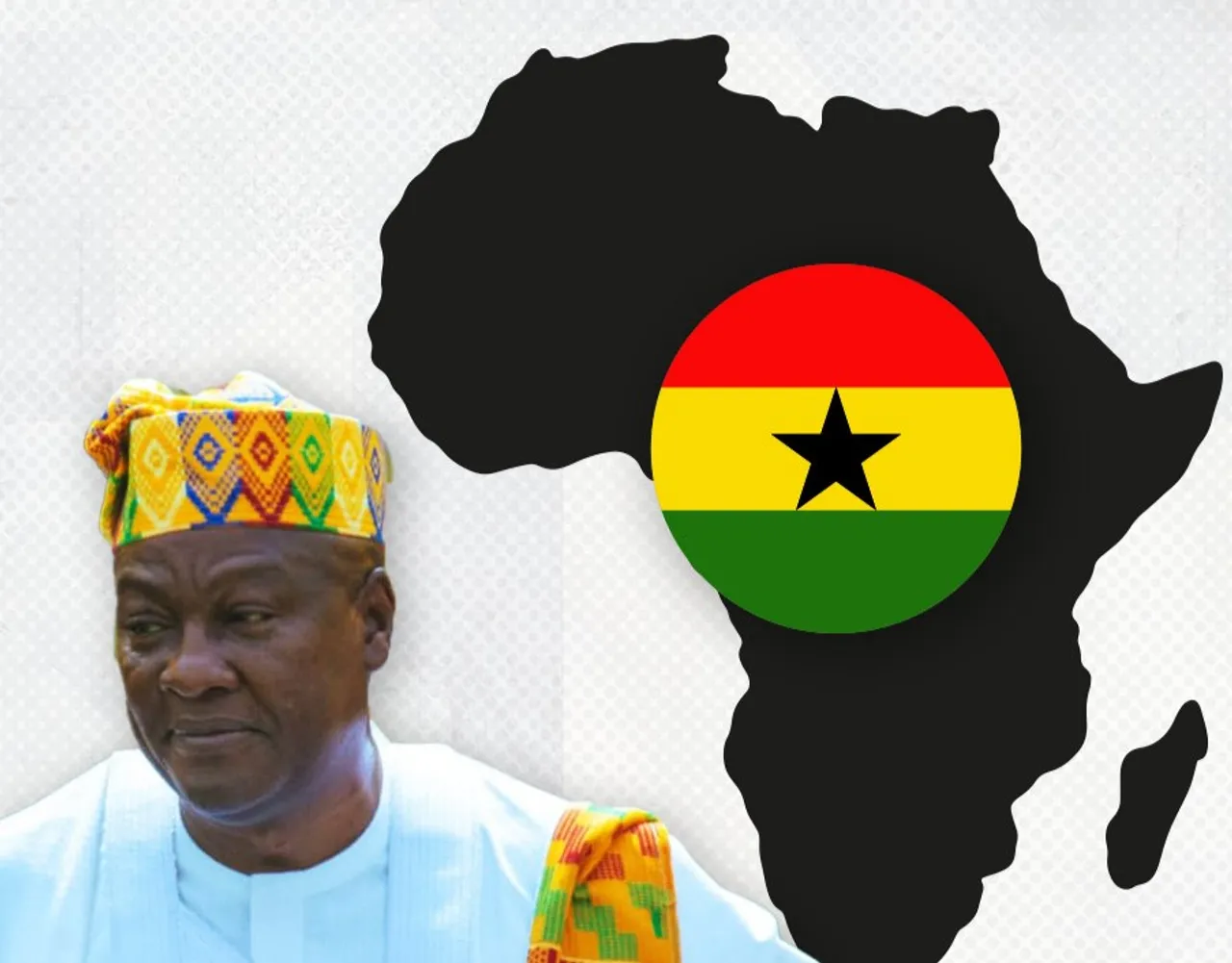
Ghana has in recent years been championing renewed efforts to promote Pan-Africanism amid a rapidly changing global political, economic and cultural climate.
The West African country has taken some bold steps both within the continent and on the global stage.
Ghana is the only African country granting citizenship to people of African descent living outside the continent.
The programme for the African diaspora, known as "Beyond the Return", was launched in 2016.
The main goal is to reconnect descendants of Africans displaced through the transatlantic slave trade with their roots.
Since the start of the initiative a decade ago, about 1,000 passports have been issued to members of the "historical diaspora", including celebrities, with the famous content creator IShowSpeed being the latest high-profile recipient.
Unprecedented move
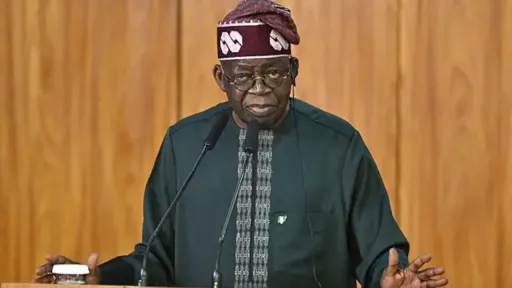
Similarly, on 25 March 2026, Ghana’s President John Mahama presented a Pan-African draft resolution at the United Nations General Assembly, declaring the transatlantic slave trade as the "gravest crime against humanity in world history" and demanding reparations.
Ghana pushed and the UN adopted the resolution despite resistance by Western powers, who perpetrated the slave trade between the 16th and 18th centuries, shattering the lives of millions of Africans.
Ghana serves as a model worth celebrating and emulating to revitalise Africa across all sectors, Romaric Lucien Badoussi, a political science professor at the University of Parakou in Benin, observes.
"It’s true that Ghana was supported by other states in this initiative (UN resolution), but it was still Ghana that spearheaded it. And that must be acknowledged," Badoussi tells TRT Afrika.
Over the years, the transatlantic slave trade has been condemned and regarded as a crime against humanity, but the Ghana-led UN resolution is unprecedented.
Free visa for all Africans
"What sets the UN General Assembly’s resolution apart is that this time, it explicitly states that this is the gravest crime committed against humanity," Badoussi adds.
The West African country has also scrapped visa fees for all Africans, easing entry into the country.
The initiative, which is due to take effect on 25 May 2026, is part of Ghana’s push for visa-free travel across Africa, with President John Mahama, who has been passionate about Pan-Africanism, saying Ghana "has a historic responsibility to remain open to Africans from across our continent."




Foreign Minister Sam Okudzeto Ablakwa also said, with the visa policy, the country seeks to "consolidate its credentials as the cradle of Pan-Africanism."
In addition to this highly publicised visa initiative, Ghana has for years been a welcoming destination for many students from across Africa.
Independence struggle
"I chose Ghana because I’d frequently heard good things about it. The country is safe, there’s no negative discrimination. Also, one of the most important points is that the cost of living is affordable," Rebecca Maria Mbourou Mombo, a Gabonese national who studied in the country and has since worked as a clinical psychologist, tells TRT Afrika.
Accra has also hosted a number of Pan-African conferences in recent months, including on ensuring the continent exerts sovereignty and control over its vast resources, as Burkina Faso, Mali and Niger pursue a similar policy.
While Ethiopia is hailed for successfully resisting European colonialists, ensuring it was never colonised and inspiring Pan-Africanism and independence struggles across Africa, Ghana also occupies a unique historical place.
It was the first Sub-Saharan country to gain independence.
That was in 1957 under Pan-Africanist Kwame Nkrumah, who became its first president, adding weight to its Pan-African position.
Much more needs to be done
Ghana says Nkrumah's dream of "one Africa, one destiny" is what it is now actively working to revive.
"What we do observe is that in Ghana, there is a kind of continuity in the awareness of the need for Pan-Africanism. Because today, Ghana is still at the forefront of this effort," Badoussi says.
Despite the growing consciousness among young Africans on the continent and abroad, analysts say much more needs to be done to achieve the goal of Pan-Africanism, including asserting the African identity and heritage among the young generation as well as robust economic and political policies that improve the lives of the citizens.
"I believe that the ideal of Pan-Africanism is quite simply unity, mutual aid, and solidarity among Black peoples on both sides of the Atlantic and in other regions of the world. And so, first and foremost, governments must emphasise this, and our educational systems must teach it to students and children so that they grow up with this idea — this sense of necessity and solidarity among Black people," Badoussi suggests.
"We must restore Pan-Africanism to its historical context of emergence. We must clarify its objectives and, above all, teach young people and children that Pan-Africanism is simply the strengthening of bonds among Black people and love for the Black race and the Black continent — that it is not necessarily about hatred or the rejection of others," he stresses.