 Charles Mgbolu
For decades, Africa’s role in global manufacturing was largely defined by cheap labour and raw materials. But Morocco’s latest aerospace deal signals a shift that could reshape that narrative.
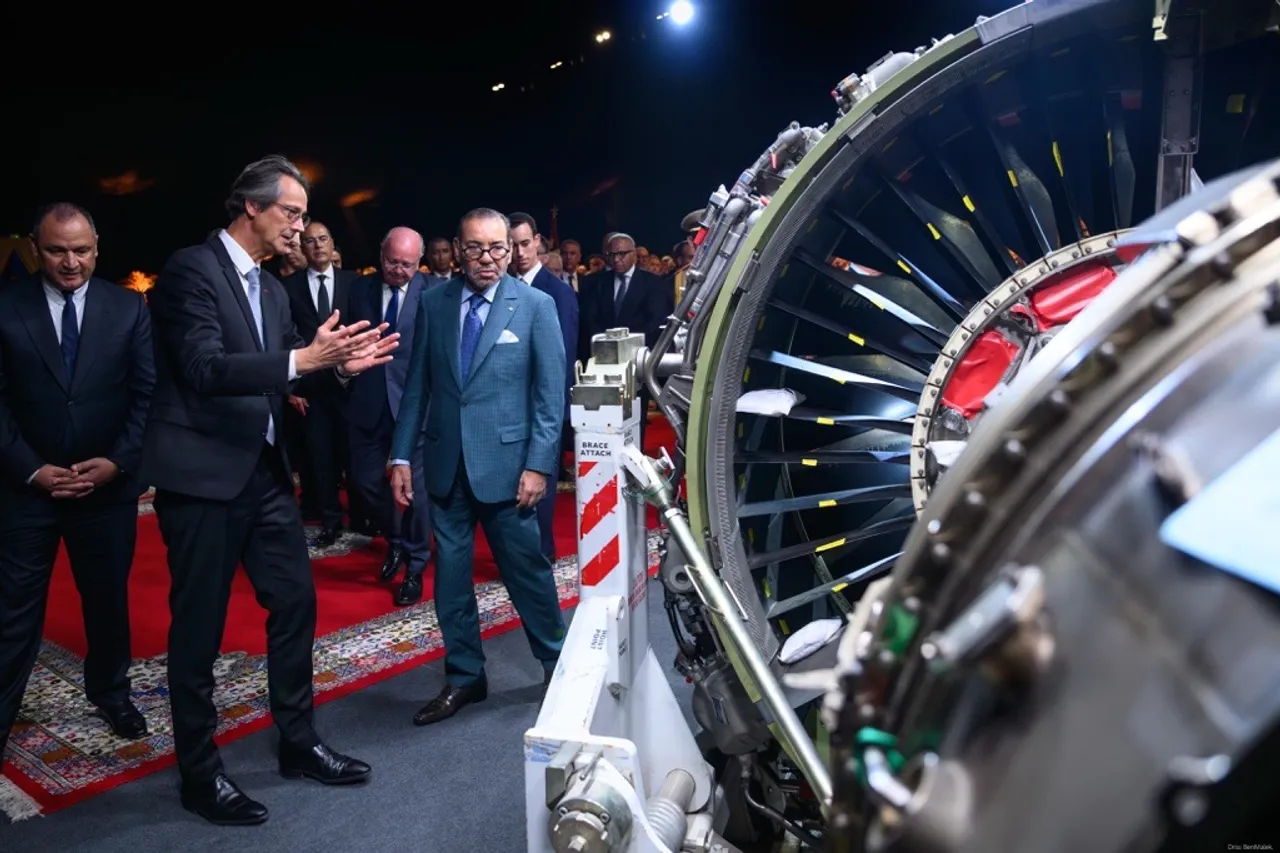
The North African kingdom recently secured a landmark partnership with aerospace giant, Safran Group, to build one of the world’s largest landing-gear manufacturing plants in its western town of Nouaceur.
The €280 million facility will produce landing systems for the Airbus A320 family.
Landing gear systems are among the most safety-critical structures in aviation, responsible for absorbing landing impact, supporting the aircraft's full weight during taxiing and takeoff, and operating reliably under extreme stress.
Rare moment
The projects mark a rare moment: an African country chosen to produce some of the most technologically complex components of commercial aircraft.
“Having an African country selected within a period of four months to build and manufacture commercial aircraft engines for the Airbus A320… and to build one of the biggest landing gear plants in the world – this is a huge step, as these are very complex products at the highest end of the industry in quality, engineering, precision, and security,” Morocco’s Minister of Trade and industry H.E. Ryad Mezzour tells TRT Afrika.
Africa’s aerospace industry already produces fuselage sections, composite structures, electrical systems, and cabin components for global aircraft manufacturers.
But the continent is only now beginning to move into higher-value systems such as engines and landing gear.
Morocco leads the continent with a large cluster of aerospace manufacturers producing fuselage sections, wiring systems, and engine components.
Tunisia and South Africa supply aerostructures, composite materials, and cabin parts through firms including Safran and Aerosud.
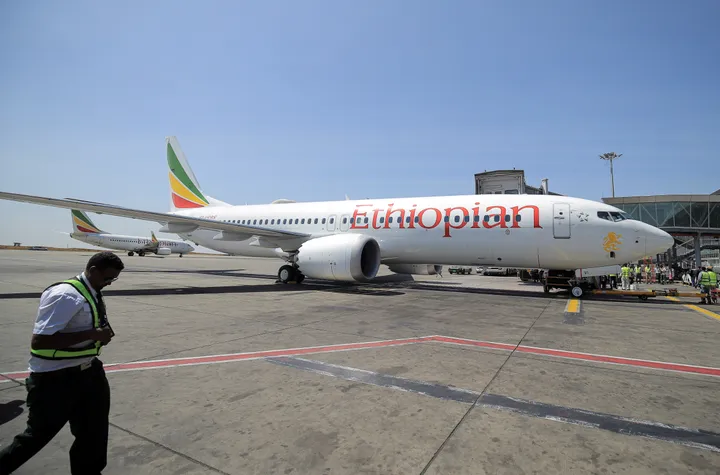
Meanwhile, Egypt supports licensed aircraft assembly via the Arab Organization for Industrialization, and Ethiopia has developed a major aviation maintenance hub through Ethiopian Airlines Group.
But none matches the scale of these latest tasks awaiting Morocco.
“Young people trained in vocational training schools in Morocco will now manufacture the engines that make you fly and the gear that makes you land,” Minister Mezzour says.
“Just imagine the level of trust a worldwide leader has in an African country.”





Airbus itself describes the landing gear as a “sophisticated mechanical marvel” and a critical “system of systems that must integrate hydraulic, electrical, and electronic technologies to perform flawlessly under extreme pressure."
Pool of talents
Morocco’s aerospace ambitions have been decades in the making. The country has spent years developing industrial zones, training engineers, and signing trade agreements to integrate into global manufacturing networks.
“We competed with several European countries and the USA. And Morocco won,” Mezzour says proudly. “Not only for competitiveness, because in aeronautics, cost is not the biggest factor. Security, quality, and ability to develop are the biggest factors.”
Manufacturing engines involves precision machining of specialised alloys such as titanium, advanced heat treatments, and strict regulatory certification processes that can take years.
Today, the country hosts more than 150 aerospace firms and tens of thousands of skilled workers in the sector, producing around 180,000 university graduates and 330,000 vocational-training graduates each year.
“We were producing only 3,000 engineers a year. Now we’ve reached 35,000 engineers and engineer-level skills every year,” Mezzour says.
Türkiye inspiration
Morocco’s industrial planners have also looked beyond Africa for examples of how countries can climb the manufacturing ladder, citing Türkiye as a source of inspiration.
“Türkiye is doing very well in the manufacturing sector. We are proud of what they have accomplished and are looking up to them in many ways as a model of manufacturing development — in aeronautics, automotive, military industry, and textiles,” Mezzour says.
Türkiye, a producer of advanced defence and aerospace technology, has often been cited by policymakers in emerging economies seeking to move up the global value chain.
Morocco believes the growing global interest in the African aerospace industry carries symbolic weight.
“Engines generate the thrust that lifts aircraft into the sky, and landing gear ensures they return safely to the ground. It means we sit at the heart of aerospace engineering,” says Mezzour.
If Morocco succeeds, then the partnership could trigger wider industrial spillovers, attracting additional aerospace suppliers to the continent and strengthening regional manufacturing ecosystems.