Ghana’s cultural identity came alive in colour, rhythm, and aroma over the weekend as the country opened its 2026 Culture Week at the National Theatre of Ghana.
From steaming plates of jollof rice, waakye and okra stew to local favourites like banku with tilapia and fufu with light soup, the celebration, observed annually from March 14, unfolded as both feast and festival.
Ghana News Agency reports the event, organised by the Ghana Tourism Authority, wasn’t just about food alone as guests also showcased Ghana’s symbolic cultural attires of kente and fugu whilst enjoying traditional drumming and communal dining.
Opening the event, Ghana’s Minister of Tourism, Culture and Creative Arts, Abla Dzifa Gomashie, framed culture not as performance, but as a living inheritance carried through generations.
“Ghana Culture Week reminds us to be proud of our heritage and values such as respect, unity, hard work and community,” she said.
The celebration also carried a message of intent from the government, positioning culture as both identity and economic engine.
Ghana Cultural Policy
Gomashie announced that John Dramani Mahama would soon launch a revised policy aimed at unlocking the creative sector’s potential.
“I am pleased to inform you that very soon His Excellency the President will officially launch the reviewed Ghana Cultural Policy,” she said. “This important policy will not only strengthen the governance of our cultural institutions but will also unlock enormous opportunities within the creative and cultural industries.”
She added that the policy would “stimulate innovation, encourage entrepreneurship, and most importantly create meaningful jobs and decent jobs for our youth and the many talented but unemployed individuals across the country.”
The minister also drew attention to deeper questions of ownership and ancestral memory, revealing ongoing efforts to retrieve looted Ghanaian artefacts scattered across the world.




“These objects embody the spirit, memory and identity of our people, and their return is essential to restoring the fullness of our cultural heritage,” she said, urging traditional authorities, researchers and institutions to support their identification and documentation processes.
Against a backdrop of sizzling food grills and carefully plated dishes, the chief executive officer of the Ghana Tourism Authority, Maame Efua Houadjeto, urged a renewed appreciation for local cuisine.
“Ghanaians have a variety of dishes… I’m asking all Ghanaians to patronise made-in-Ghana food,” she said. “I’m asking all our restaurants and hotels to make it a point to always showcase Ghanaian dishes… You should be ambassadors when it comes to food.”
A celebrity cooking competition added theatre to the culinary celebration as contestants reimagined traditional dishes, blending heritage with modern flair to the delight of onlookers.
Cultural connections
The messages of the Culture Week also travelled beyond the theatre walls.
The National Federation of Masqueraders and Fancy Dress of Ghana says it is preparing to launch the Black Star Carnival to carry masquerade traditions from local communities to a grand national stage.
Beginning with district-level festivities and culminating in a national finale, the carnival aims to transform heritage into a dynamic tourism experience while creating new economic opportunities.
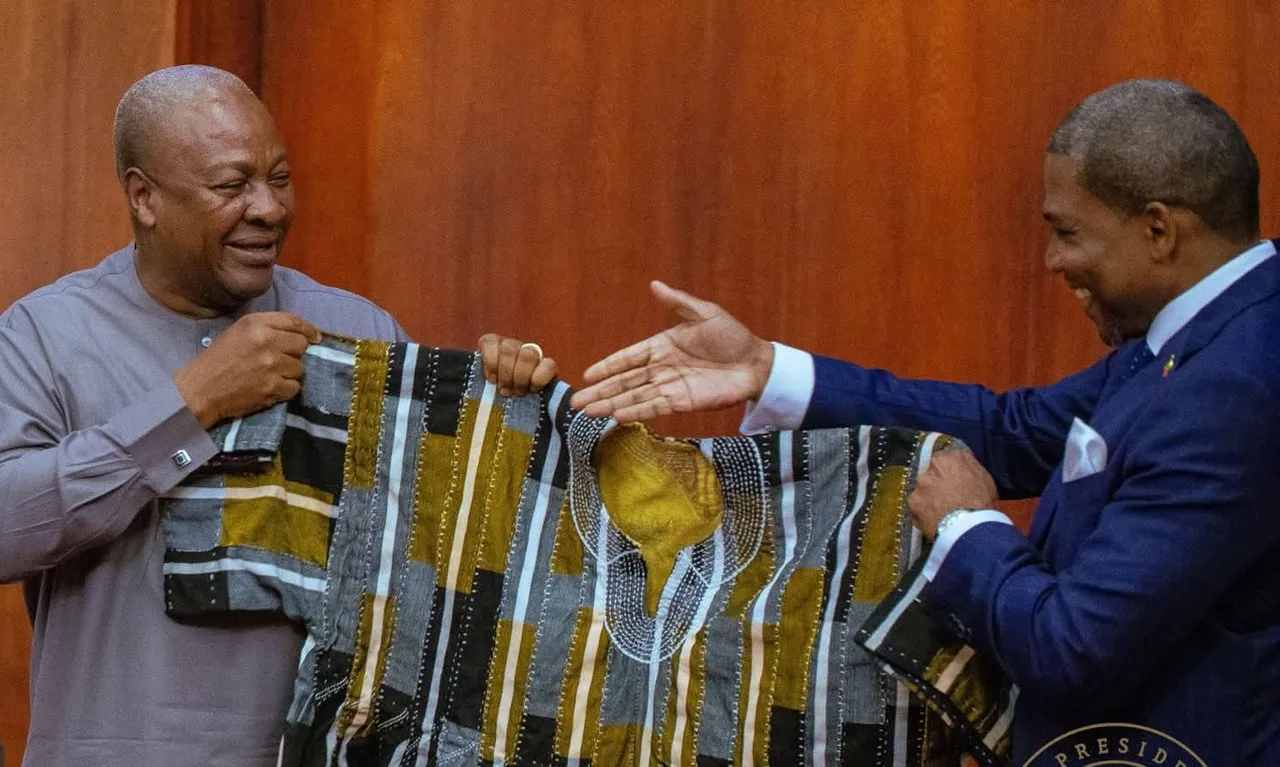
Ghana also strengthened its cultural ties across the Atlantic, with President Mahama presenting fugu attire to Prime Minister Terrance Michael Drew of Saint Kitts and Nevis.
In return, Mahama received a conch shell crafted in cured wood, a cultural emblem of the Caribbean nation’s deep connection to the sea, underscoring how tradition continues to shape not only identity at home but also relationships abroad.