When Kenya's High Court blocked plans for a United States-backed Ebola quarantine facility, the decision quickly evolved from a public health matter into a wider debate about sovereignty, transparency and the future of international health cooperation.
At the centre of the controversy is a US government plan to establish a quarantine facility at Laikipia Air Base in Nanyuki for American citizens exposed to Ebola in the Democratic Republic of the Congo (DRC), Uganda and surrounding outbreak-affected areas.
Under the proposal, exposed Americans would be monitored in Kenya rather than transported back to the United States, while those who develop symptoms would be transferred elsewhere for treatment.
The Kenyan government has since announced that it will not proceed with the proposed facility, bringing the immediate controversy to a close. The decision follows weeks of legal challenges, public opposition and growing debate over the proposal.
While the facility is no longer moving forward, the episode remains an important case study in how governments navigate public health cooperation, sovereignty and public trust during cross-border health emergencies.
Supporters argued that the facility would strengthen preparedness against a dangerous disease and deepen health cooperation between Kenya and the United States.
Critics saw something different. For them, the proposal raised uncomfortable questions about transparency, sovereignty and why Kenya was not only being asked but also apparently willing to shoulder risks linked to another country's health security priorities.
The debate quickly become about far more than Ebola.
It touched on issues that governments around the world have been grappling with since COVID-19 as well as a world without USAID since it was shut down abruptly on 1st July 2025: how to balance public health and public trust, where international cooperation ends and national interests begin, and how governments can cooperate on health measures that affect citizens' lives.
The timing of the proposal is important.
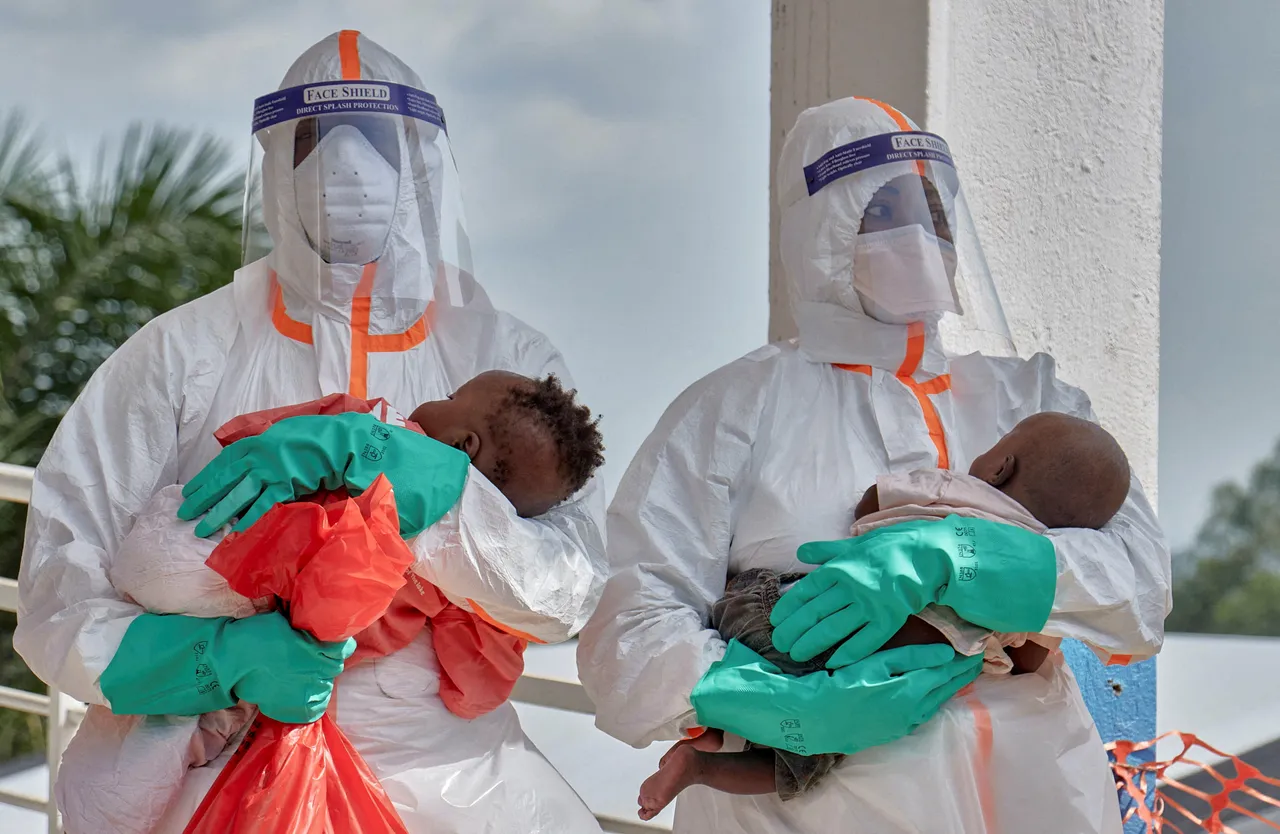
The current outbreak involves the Bundibugyo strain of Ebola, one of the rarest strains ever recorded. Only two previous outbreaks of this strain have been documented globally: one in Uganda in 2007, which resulted in 131 cases and 42 deaths, and another in the DRC in 2012, which resulted in 38 confirmed cases and 13 deaths. Total l deaths in the current outbreak has already exceeded the combined number of cases recorded in both previous outbreaks of this strain.
What makes the situation particularly concerning is that there is currently no licensed vaccine or approved treatment specifically for the Bundibugyo strain. Right now, health authorities are relying heavily on surveillance, isolation and contact tracing.
A facility in Kenya, but for whose purpose?
So how does Kenya come in? On 23rd May 2026, Kenya was listed by the Africa CDC as one of ten other countries (aside from DRC and Uganda) as “at risk” of the Ebola outbreak.
While the choice of Kenya as a venue for American management of Ebola risks was not linked to this announcement, it was not accidental either.
Kenya has had a very strong bilateral relationship with the US since Kenya became independent. Kenya is home to the largest U.S. embassy in Africa and the second-largest American business community in Africa (behind South Africa), especially because Kenya serves as a regional transport hub and hosts numerous international organisations including two UN headquarters.
Importantly, the US is Kenya's single largest source market for tourism - accounting for over 300,000 visitors and 13% of total arrivals in 2024.
When it was introduced in 2000, Kenya was one of the few middle-income countries covered by the African Growth and Opportunity Act (AGOA), and has exported significant amounts of apparel, cut flowers, and macadamia nuts to the US under this arrangement.
The U.S. and Kenya launched discussions towards a bilateral trade agreement (the Strategic Trade and Investment Partnership (STIP)) in 2022, with a view to boost economic ties.
Finally, Kenya has been a major focus of US aid – accounting for around US $9.8bn from USAID over the period between 2001 and 2024 - behind only Ethiopia.
And once USAID shut down, Kenya was amongst the first of 24 African countries so far to agree to work with US on a new “government to government” model of health partnerships – valued at around US $1.7bn over 5 years.
When President Ruto recently defended the proposal to establish the American facility, he pointed to the United States' long-standing support for Kenya's health infrastructure, noting that Washington had contributed KSh 1.8 billion towards the country's Ebola preparedness.Kenya also has a strong health record
Kenya has developed stronger disease surveillance and laboratory networks than many countries in the region. The country currently operates three public reference laboratories capable of testing for viral haemorrhagic fevers, with results available within six to eight hours after samples are received, and also hosts the Eastern Africa Regional Coordinating Centre of the Africa Centres for Disease Control and Prevention (Africa CDC).
Kenya's preparedness measures reflect this reality. By early June, authorities had screened more than 34,500 travellers at airports, seaports and land crossings, while increasing surveillance across 22 high-risk counties. More than 22 suspected cases had been investigated and tested, all of which returned negative results.
However, this should not be confused with a fully resilient public health system.
And pandemics cannot be viewed solely through the lens of case numbers. While the direct economic losses from the 2014 West African outbreak were estimated at approximately US$2.8 billion, subsequent research found that the wider social and economic costs exceeded US$53 billion once disruptions to healthcare systems, lost productivity and indirect deaths were taken into account.
The largest share of this damage came not from Ebola itself, but from the collapse of routine healthcare services, leading to increased deaths from malaria, maternal complications and other preventable conditions.







The fact is, Kenya continues to face significant challenges, including underfunded public hospitals, shortages of health workers and persistent inequalities in access to healthcare. Assessments of emergency medical care have also highlighted gaps in ambulance coverage, emergency response capacity and specialised treatment services.
The lesson is clear: outbreaks place pressure on entire systems, not just hospitals.
These gaps do not make Kenya uniquely vulnerable. Even well-resourced health systems are stretched by outbreaks, but they do mean that hosting a facility of this kind would place additional demands on a system already under pressure.
These realities make the debate over Kenya's ability to safely host such a facility more complex than either supporters or critics often suggest.
Beyond health: the economic dimension
The fact is, the facility was not being proposed because Kenya is at risk of experiencing an Ebola outbreak. It was being proposed to help manage the risk of Americans exposed to Ebola elsewhere in the region. That distinction lies at the heart of the controversy. Some even voiced concerns that a major Ebola outbreak may take place in Kenya due to the facility.
However, one of the clearest lessons from COVID-19 is that health emergencies rarely remain confined to the health sector. They quickly become economic crises.
During the 2014 West Africa Ebola crisis, the Gambia experienced a 50-60% collapse in tourism revenues despite recording no Ebola cases. Fear, uncertainty and changing behaviour drove much of the economic disruption.
For countries such as Kenya, where tourism and private sector engagement – especially from the US – remains an important source of employment, foreign exchange earnings and investment, risk perceptions matter.
With Kenya having decided not to proceed with the proposed facility, the immediate policy question has been resolved. However, the issues the dispute exposed remain highly relevant. The episode offers valuable lessons for how Kenya, the United States and other governments should approach future cross-border public health partnerships.
The Africa CDC has increasingly argued that Africa must move from being a recipient of health interventions to becoming a leader in designing and governing them. This does not mean rejecting international partnerships. Rather, it means ensuring that partnerships strengthen African institutions and align with African priorities.
The Kenya-US dispute reinforces the importance of that conversation, and offers lessons not only for Nairobi and Washington but for governments across Africa and beyond.
Cooperation, sovereignty and Africa's future
First, transparency must come before implementation. Agreements involving public health, national security and foreign partners should be made public as early as possible. Citizens should understand who is involved, how decisions were made and what safeguards are in place.
Second, public participation should be treated as a policy tool rather than a procedural hurdle. The backlash surrounding the proposed facility demonstrates that people are more likely to support difficult decisions when they feel consulted and informed.
Third, Africa CDC should play a greater coordinating role in future cross-border health-security arrangements. Future agreements involving quarantine facilities, emergency health infrastructure or disease management should be aligned with continental frameworks rather than negotiated solely through bilateral arrangements.
Had Kenya had the backing of Africa CDC, the government may have been in a stronger defensive position publicly.
Fourth, Africa needs clear guidelines governing foreign-operated health facilities. The Kenya case highlights a policy gap. Establishing continental standards would help ensure consistency, accountability and public confidence when similar proposals emerge in the future.
Finally, international cooperation must take into account and strengthen local capacity. Health partnerships should leave behind stronger local medicines and vaccines manufacturing capacity, stronger hospitals, better-trained health workers, improved laboratories and stronger disease-monitoring systems.
Had the Kenyan and American governments been able to describe these kinds of outcomes from the cooperation, leveraging its new government to government health agreement, the public response would likely have been very different.
Kenya's decision not to proceed with the facility is likely to be viewed by many as the appropriate outcome given the concerns raised over transparency, public participation and sovereignty.
However, the broader challenge has not disappeared. Kenya and the United States, like many governments, will still face the question of how to cooperate on cross-border health threats while maintaining public confidence and respecting national priorities.
More fundamentally, the episode raises a broader question: when a foreign-backed public health initiative generates significant concerns over transparency and sovereignty, at what point does cooperation begin to resemble an infringement on a country's sovereignty rather than a genuine partnership?
The challenge is not choosing between international cooperation and sovereignty but designing partnerships that successfully deliver both. In a post-USAID world, building that trust will be essential if future health partnerships are to succeed.
The author, Aishat Adebayo, is a Communications Lead at Development Reimagined.
Disclaimer: The views expressed by the author do not necessarily reflect the opinions, viewpoints and editorial policies of TRT Afrika.