 Charles Mgbolu
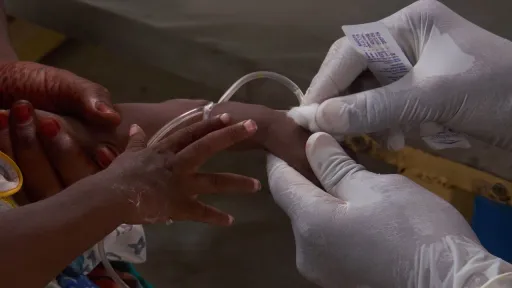
An estimated 4.9 million children died before their fifth birthday in 2024 worldwide, according to a new report released on March 18 by UNICEF, World Health Organization, the World Bank and the UN Population Division—just as global health funding cuts threaten the very research needed to stop these deaths.
Newborns accounted for nearly half of all deaths, reflecting slower progress in preventing deaths around the time of birth. Complications from preterm birth made up 36% of newborn deaths, followed by complications during labor and delivery at 21%.
Sub-Saharan Africa accounted for 58% of all under-five deaths, followed by Southern Asia with 25%, with children in fragile settings nearly three times more likely to die, the report discloses. These are not deaths from rare or complex conditions.
They are largely preventable—caused by diseases that science already understands and knows how to treat.
"Children living amid conflict and crisis are nearly three times more likely to die before their fifth birthday," WHO chief Tedros Adhanom Ghebreyesus says.

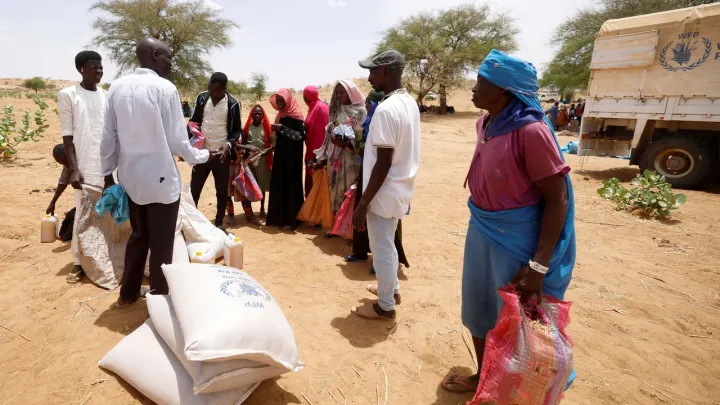

For the first time, the report quantified the toll of severe acute malnutrition, linking it directly to over 100,000 child deaths. Scientists say the figures underscore a deeper reality: child survival is not just about medicine—it is about systems, from food security and nutrition to primary healthcare access and early intervention.
Slowing progress
The slowdown in progress is equally troubling. After decades of steady gains, the pace of reducing child mortality has sharply declined, signalling not just a plateau but a potential reversal if urgent action is not taken. And yet, just as the need for integrated, well-funded research and resilient health systems becomes even more pressing, the financial foundations supporting that work are beginning to shift.
A wave of major global health funding cuts—led largely by the United States and echoed by other traditional donors—has reshaped the financing landscape over the past year, triggering what many experts describe as a systemic shock. For African health systems already under strain, the timing couldn’t be worse.
“Global government cuts have had a huge impact already on research,” Deputy Director, South African National Bioinformatics Institute Professor Nicki Tiffin tells TRT Afrika. “It’s institutional knowledge that gets lost. Loss of deep knowledge. We lose experienced people from the health innovation workspace.”
If funding instability continues, the most immediate consequence may be the loss of Africa’s next generation of scientists—at a time when they are needed most.
Nigerian pharmaceutical microbiologist Professor Iruka Okekeechoes these concerns, drawing on her interactions with emerging researchers across Nigeria.
“In Nigeria, the scientific community has been losing talent at an alarming rate. Young scientists we recruit explicitly state that they intend to leave even at the start of their training because they cannot envisage a productive scientific career here”, Okeke tells TRT Afrika.
Short-term contracts
In many African research institutions, funding does not just support projects—it sustains people. Unfortunately, most scientists, technicians and field workers—those bent over microscopes, tracking outbreaks, and working to contain diseases that disproportionately affect children—depend heavily on short-term grants to survive. When those grants disappear, the human infrastructure of science collapses with them and entire teams dissolve.
“These researchers, when they find something better and more secure, they don’t come back and this is worrying for Africa’s scientific research future,” Tiffin says.
This is how systems quietly unravel. Years of accumulated expertise—understanding local disease patterns, building trust within communities, refining life-saving interventions—can vanish within a single funding cycle. Rebuilding that capacity is not only expensive, but slow, often taking decades.
Prof. Tiffin’s own experience illustrates the scale of the challenge:
“I only recently got a ten-year contract but until that happened I was always juggling, trying to raise my own salary. I never had a career trajectory or security beyond two years, maximum three years. It’s very, very stressful way to work”, she laments.
“I mean, you hear terrible stories of people who are on six months or a year contract and trying to hold together a research program, it's just not tenable.”
Experts warn that such instability discourages long-term thinking—the very foundation of scientific progress. Breakthroughs in health research often take years, even decades. Without job security, researchers are forced into short-term cycles that undermine sustained innovation and weaken the pipeline of future solutions.
Dependency to direction
Yet within this uncertainty, a shift is taking shape—subtle, but significant. The long-standing model in which Africa’s health research agenda is influenced, or even defined, by external funding priorities is increasingly being questioned.
In a recent Nature Health commentary by a network of African scientists, including the Calestous Juma Science Leadership Fellows, supported by the Science for Africa Foundation, scientists argue that Africa’s response to funding uncertainty must go beyond critique.
“I think the mentality among us researchers is now shifting away from a victim mentality and more to standing up and taking on this responsibility for ourselves,” Prof Tiffin, the lead author of the commentary, says.
This shift is not about rejecting global partnerships but about rebalancing them—ensuring that African researchers define priorities based on local realities, disease burdens, and lived experience, rather than donor-driven agendas.
At the heart of their proposal is a call to build a sustainable product development ecosystem—one that moves beyond research for publication towards research that delivers tangible outcomes: diagnostics, treatments and vaccines developed, tested, and manufactured within Africa.
Africa-led solutions
As of late 2025 and early 2026, WHO Director-General Tedros Adhanom Ghebreyesus emphasised a strategy of mandatory prioritisation, organisational restructuring, and a shift towards national self-reliance to manage the crisis.
“The crisis lies an opportunity for countries to transition away from aid dependency towards sustainable self-reliance, based on domestic resources. WHO’s new guidance will help countries to better mobilise, allocate, prioritise and use funds to support the delivery of health services that protect the most vulnerable," says Ghebreyesus.
The World Health Organization reported in November 2025 that several countries are already taking decisive steps to strengthen their health systems and safeguard essential services amid funding pressures.
According to the agency, Kenya, Nigeria and South Africa have either allocated additional budgetary resources to health or are awaiting parliamentary approval for increases.
Nigeria, the report notes, has boosted its health budget by $200 million to cushion the impact of aid shortfalls, with more funding directed toward immunisation, epidemic response and other priority programmes.
Ghana has equally lifted the cap on excise tax earmarked for its national health insurance agency, resulting in a 60% increase in its budget. The country has also launched the “Accra Reset”, described as a framework to rethink global governance, financing and partnerships in health and development.
In Uganda, the WHO says authorities have outlined a clear policy agenda focused on integrating health services and programmes to improve efficiency and sustain service delivery.