 Sylvia Chebet
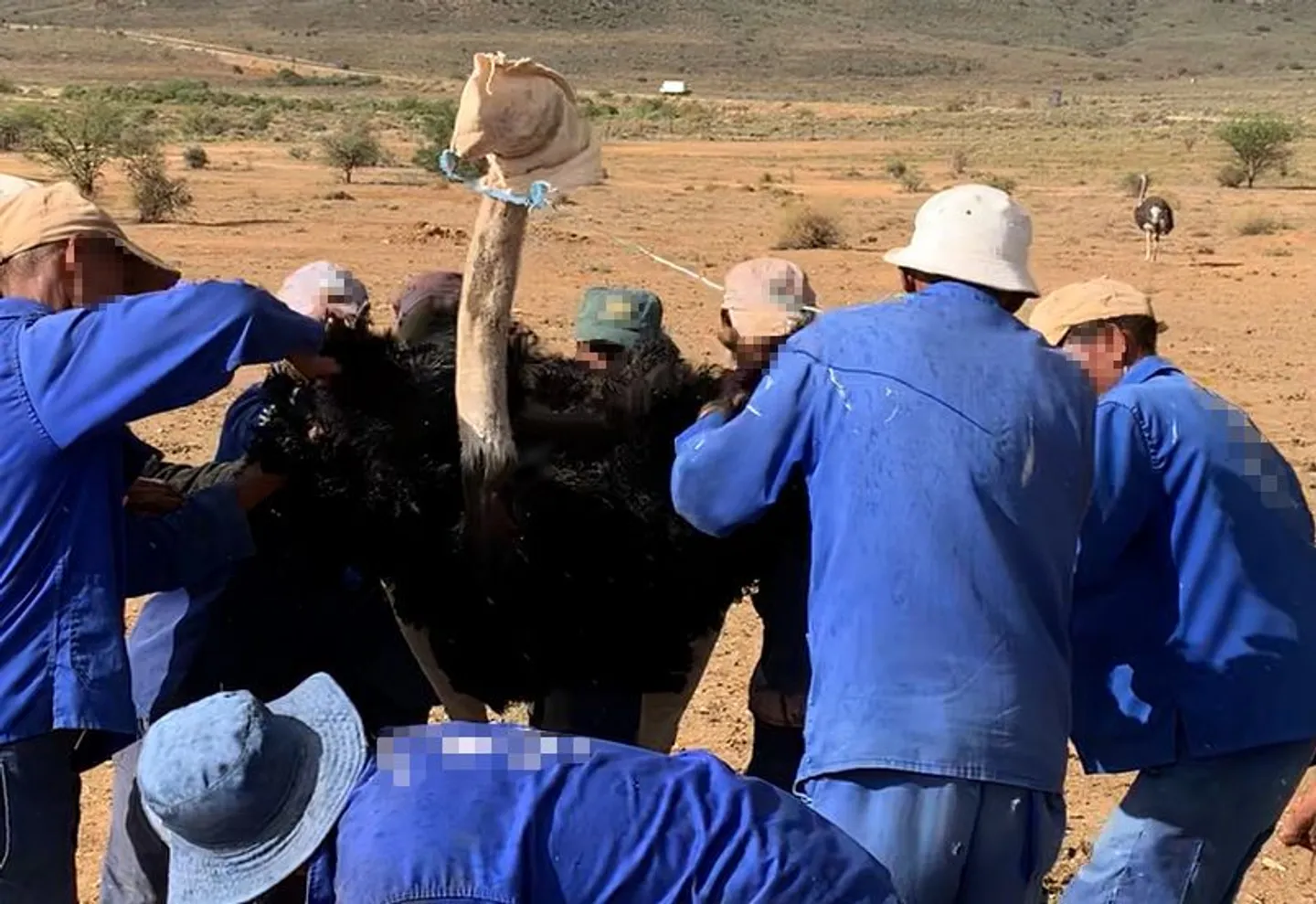
At an ostrich farm in South Africa, seven men armed with pliers surround a cornered ostrich, its head covered by a bag.
The workers cut and pull feathers from the bird’s skin in a visibly distressing process. No pain relief is administered as the bird struggles through the ordeal.
When the men are finished, feathers are scattered across the ground.
At a nearby processing facility, the scale of the trade is laid bare: piles upon piles of ostrich feathers await processing and export, some still stained with blood at the roots.
The footage, captured during an investigation by World Animal Protection (WAP) and Collective Fashion Justice, offers a rare glimpse into what the conservationists say lies behind the glamour of ostrich feathers used in fashion.
“We indeed confirmed that ostriches are having their feathers pulled out in a very, very inhumane way using pliers. And all this is to supply the luxury fashion brands and fashions in different parts of the world,” Edith Kabesiime, the organisation’s Africa wildlife campaign manager tells TRT Afrika.

The reality on these farms is far removed from the glamorous image presented to consumers, as the conservation body’s investigation reveals.
“You must have seen models wearing garments made out of ostrich feathers on the catwalk, on the red carpets and all, this is not really fashion. It’s exploitation,” Kabesiime says.
The blood feather
At one farm visited by investigators, ostriches were reportedly live-plucked every six months. Blood was found in the shafts of some feathers, a characteristic that has given rise to the industry term “blood feathers”.
“When the industry itself coined the term ‘blood feathers’, you know the cruelty is hiding in plain sight. Olivia Charlton, the organisation’s campaign manager in Australia, says.
“There’s nothing natural about pulling out a bird’s feathers with pliers. It’s time fashion took its head out of the sand.”
The presence of blood betrays the idea that these feathers simply fell naturally from the birds as the fashion industry claims.
The investigation reveals the scale of the trade makes reliance on natural moulting alone difficult to reconcile with the volumes being produced.
“If you had a chance of looking at some of the footages that we have, you see piles and piles and piles of ostrich feathers, and you wonder whether these are really from just a natural moulting process,” Kabesiime says.
In the 2024/25 season, about 150,000 ostriches were slaughtered in South Africa for the feather, meat and skin trades, according to the report.
WAP and Collective Fashion Justice discovered that the country exported more than 150 tonnes of ostrich feathers within 11 months, an amount that raises questions.
“There is no way in one year one can raise over 150 tonnes of ostrich feathers,” Kabesiime argues.
“What this means is that, one, ostriches are slaughtered for that purpose, and secondly, ostrich feathers are plucked continuously throughout the year without waiting for the birds to reach maturity or the feathers to reach maturity so that they can molt naturally.”
Kabesiime says investigators also found evidence that feathers are cut with pliers and remaining shafts later pulled out to encourage regrowth and allow harvesting to continue.
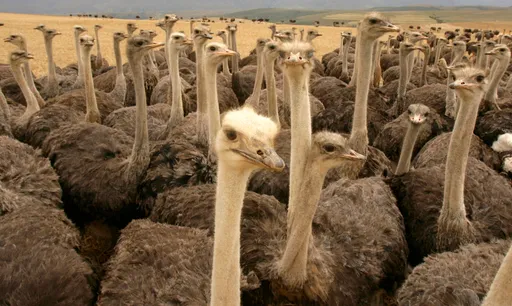
Investigators saw birds that were injured, aggressive or unable to stand, with some suffering wounds from birds pecking at each other's eyes and feathers.
Kabesiime describes those behaviours as evidence of “suffering that is meted on these birds by the fashion industry.”
From fur to feathers
For years, animal welfare campaigners have targeted the use of fur in fashion.
As a growing number of brands and countries have restricted or rejected fur, campaigners say demand has shifted towards other animal-derived materials, including ostrich feathers.
“Feathers are the new fur – it’s the same cruelty just with a different animal,” Charlton, says.








The investigation focused on South Africa, a country that accounts for 75 per cent of the world’s ostrich products. Ostrich meat, skins and feathers also form part of a wider commercial industry, with skins used in products such as bags, belts and purses.
Emma Håkansson, founding director of Collective Fashion Justice, says the continued use of ostrich feathers is difficult to reconcile with the fashion industry's rejection of fur.
“With so many innovative fabric manipulation techniques and bio-materials available to create the same lightness, volume and movement consumers admire in feathers, there is no justification for this cruelty.”
“Ostriches to us is one of those birds that does not need to suffer just because people want to wear their feathers,” Kabesiime says.
From farms to fashion runway
Ostrich feathers have appeared on catwalks and red carpets, including high-profile celebrity appearances at events such as the Met Gala and Oscars, according to the report.
“Our investigation, into these farms and the processing facilities in South Africa actually confirmed that they supply a number of brands. Like Louis Vuitton, Dior, Chanel, and, of course, the fast fashion giant, Shein,” Kabesiime reckons.
According to the report, the public has little understanding of how ostrich feathers are obtained.
Polling commissioned in the UK, US, Australia and New Zealand found that 47% of respondents believed ostrich feathers were collected during natural shedding, while only 16% believed live birds were plucked.
After learning about the reported practices, 83% agreed that farming and killing ostriches for fashion should be banned, while 81% viewed brands using ostrich feathers as less ethical and sustainable.

Kabesiime says the industry should consider what lies behind the finished product.
“The fashion industry must look beyond the aesthetic appeal of the feathers and address the suffering that is hidden from the public eye,” she says.
The campaign against ostrich feathers comes as parts of the fashion industry have already begun moving away from animal-derived materials.
Selfridges, Wolf & Badger, ASOS and GANNI have introduced policies protecting ostriches, while fashion weeks in Copenhagen, Berlin, Amsterdam and Australia have adopted wildlife-friendly policies that include ostrich feathers.
Plant-based alternatives are also emerging, including FEVVERS, which has worked with luxury designer Stella McCartney.
Beyond ostriches
Kabesiime also points to what she describes as a concentration of wildlife-exploitation industries in South Africa, citing ostrich feather harvesting, lion farming and the trade in African grey parrots.
“It's like South Africa is an epicenter for wildlife exploitation.”
World Animal Protection says it has submitted a complaint to South Africa's National Council of SPCAs, outlining the animal welfare concerns documented during the investigation and asking the body to consider an investigation under the Animals Protection Act.
It has also called on brands, retailers and fashion week events to adopt clear, time-bound policies to phase out ostrich feathers and other wild-animal materials.
For Kabesiime, the question is ultimately about whether consumers and the fashion industry are willing to look beyond the finished product.
A feather may appear delicate. It may evoke movement, luxury and glamour on a runway.
But the investigation argues that the beauty visible to the consumer can conceal a very different reality at the other end of the supply chain.
“Behind that beauty, there is suffering which must be addressed.”