By Riley Singh
South Africa is in a precarious situation. One that exposes the fragility of its post-Apartheid social bond.
As the country is swept up in a campaign of anti-migrant sentiment, the violence that arises from it now becomes a fixture of daily life.
Throughout May, hundreds of refugees in the coastal city of Durban had fled their communities, alleging they had their homes and businesses targeted by xenophobic mobs.
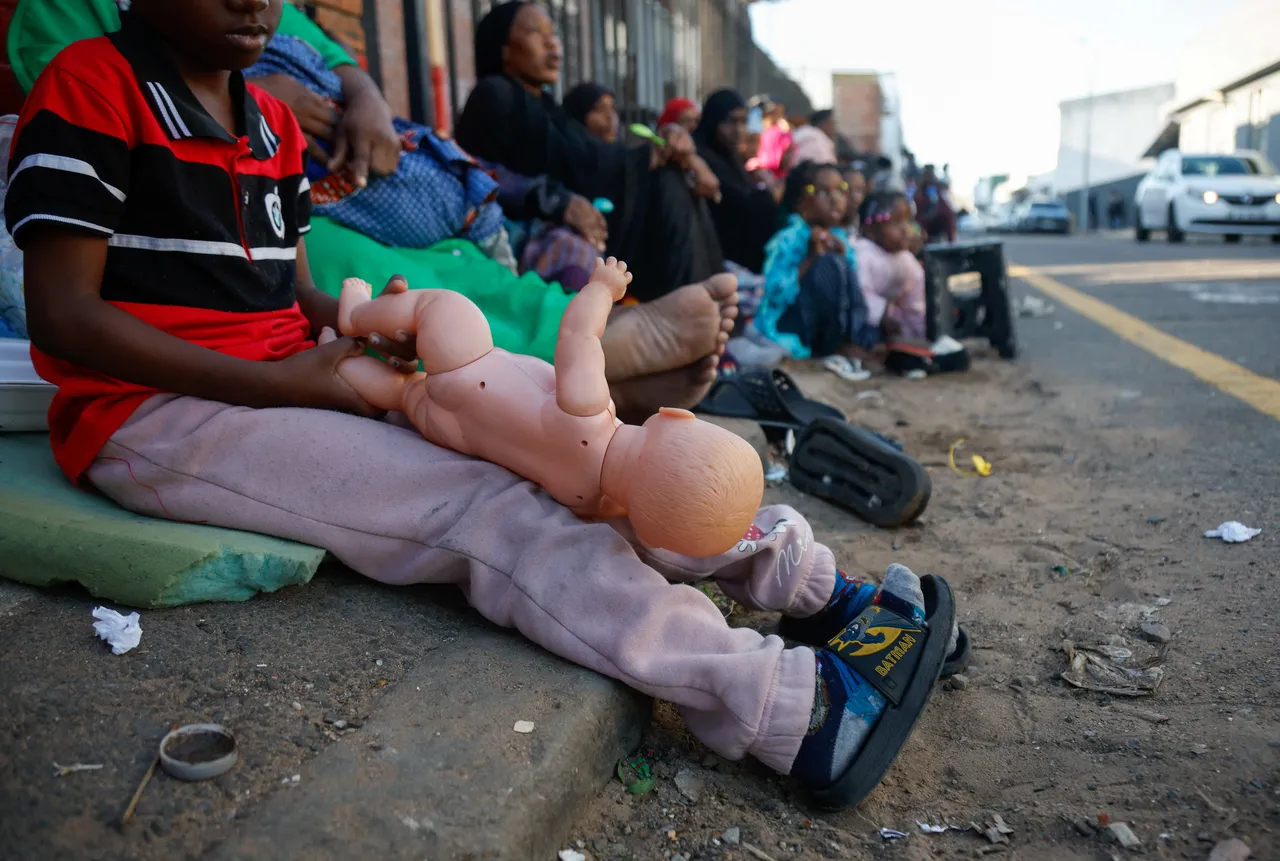
After the country's immigration authorities confirmed that the majority were, in fact, documented, many refused to return to their homes, citing security concerns. In the absence of responsible governance, the group – which at its peak reached over 400 – had camped out on the pavement of the Home Affairs building on Che Guevara road.
Amid a limited official response, local communities stepped in to provide much-needed humanitarian assistance.
Many of those involved feel the refugees have been failed by their politicians, and that getting involved in humanitarian efforts in a personal capacity is the only natural pathway for anyone with a degree of empathy.
As part of a broader civil society initiative, volunteers are taking part in a mutual aid campaign aimed at addressing the deteriorating conditions faced by Internally Displaced Persons (IDPs).
Spearheaded by the Durban-based South Africa Palestine Movement, the campaign brings a coalition of humanitarian groups, refugee organisations and non-profits in providing daily food schemes, sanitary products and diapers.
Upon viewing the IDP camp, the first thing one notices is the plurality of women and children, with the youngest being five months old.
Homeless in winter
The plight of those displaced has been compounded by Durban’s entry into winter, with the nights colder and the probability of sickness high. Residents say there are many sick people in the camp — children with flu and fever, and others with sores on their legs, diabetes, and hypertension.
Many on Che Guevara had fled after their businesses were looted and they were told to get out of the city. Without a means to provide for themselves, acquiring medicine has been a constant struggle.



In response to the health crisis unfolding, a plea was made to the local doctors' guild, and over-the-counter drugs such as Panadol and Ibuprofen were sent in periodic deliveries.
Talking with representatives from the IDP camp, those involved in the humanitarian efforts were able to get an understanding of the specific medical requirements of individuals, from insulin to perindopril for high blood pressure.
The health crisis, while still in effect, had been somewhat mitigated by the campaign’s intervention.
At the very least, volunteers say, they would like to see the government implement disaster relief to provide shelter and safety to the refugees who have lost their homes and livelihoods.
Coordinators of the aid relief had said that they had been engaging with national, provincial and local government structures for weeks, trying to get state entities to activate it’s disaster management funds.
On the 11th of June, a multi-departmental delegation held a meeting with the leadership of the IDP camp, giving them two choices: to reintegrate into the communities they had fled from or to be sent to the Lindela Repatriation Centre, infamous for its allegations of human rights abuses.
It was also not made clear how repatriation would work, considering that the majority of those displaced to Che Guevara road were refugees having fled wars and persecution in the Democratic Republic of Congo, Ghana, Rwanda, and Burundi.
When asked what they would like to see from the local municipality, the response emphasized the need for a greater sense of urgency in addressing the growing risk of violence ahead of June 30, referring to the deadline announced by the anti-migrant group March and March, which called for the removal of all undocumented immigrants from the country.
Since its announcement, concerns have risen over the possible humanitarian crisis that may emerge at the end of the month.
These concerns are not unfounded. If one is meant to take the South African government’s sluggish response to Che Guevara as a microcosm for its action against xenophobia, civil society may be all that is left to manage the fallout of the violence that transpires on the 30th.
The author, Riley Singh, is member of the South Africa Palestine Movement Youth Committee.
Disclaimer: The views expressed by the author do not necessarily reflect the opinions, viewpoints and editorial policies of TRT Afrika.