When South Africa decided to take Israel before the International Court of Justice (ICJ) in December 2023, it was making a statement that extended far beyond the courtroom in The Hague.
For a country whose history was shaped by decades of apartheid, the decision was rooted in a conviction that oppression, discrimination and violations of human rights should not be tolerated.
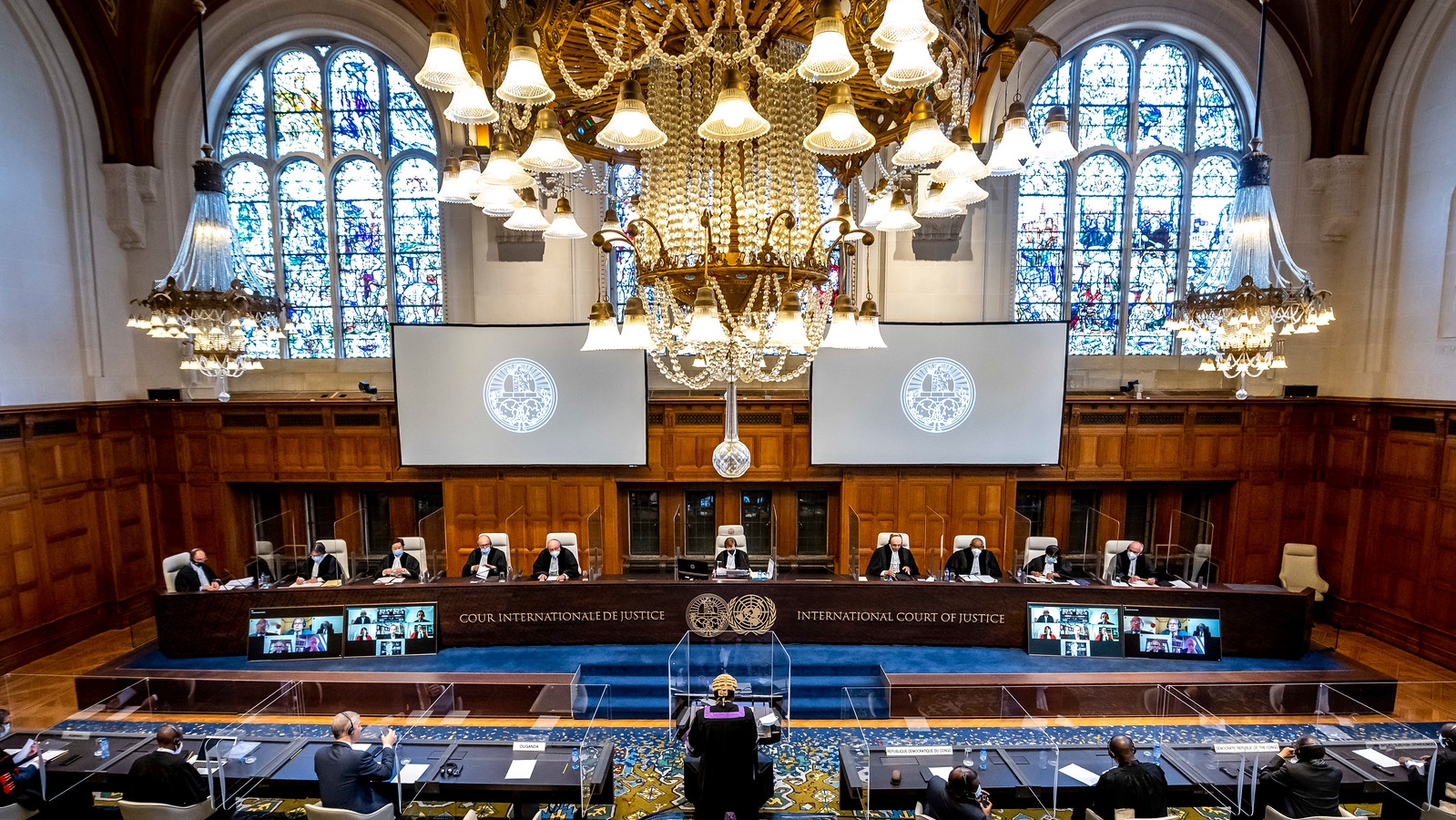
But Pretoria's intervention also carried significance beyond its solidarity with the Palestinian people. It demonstrated how countries of the Global South could use international institutions to challenge powerful states and demand accountability under international law.
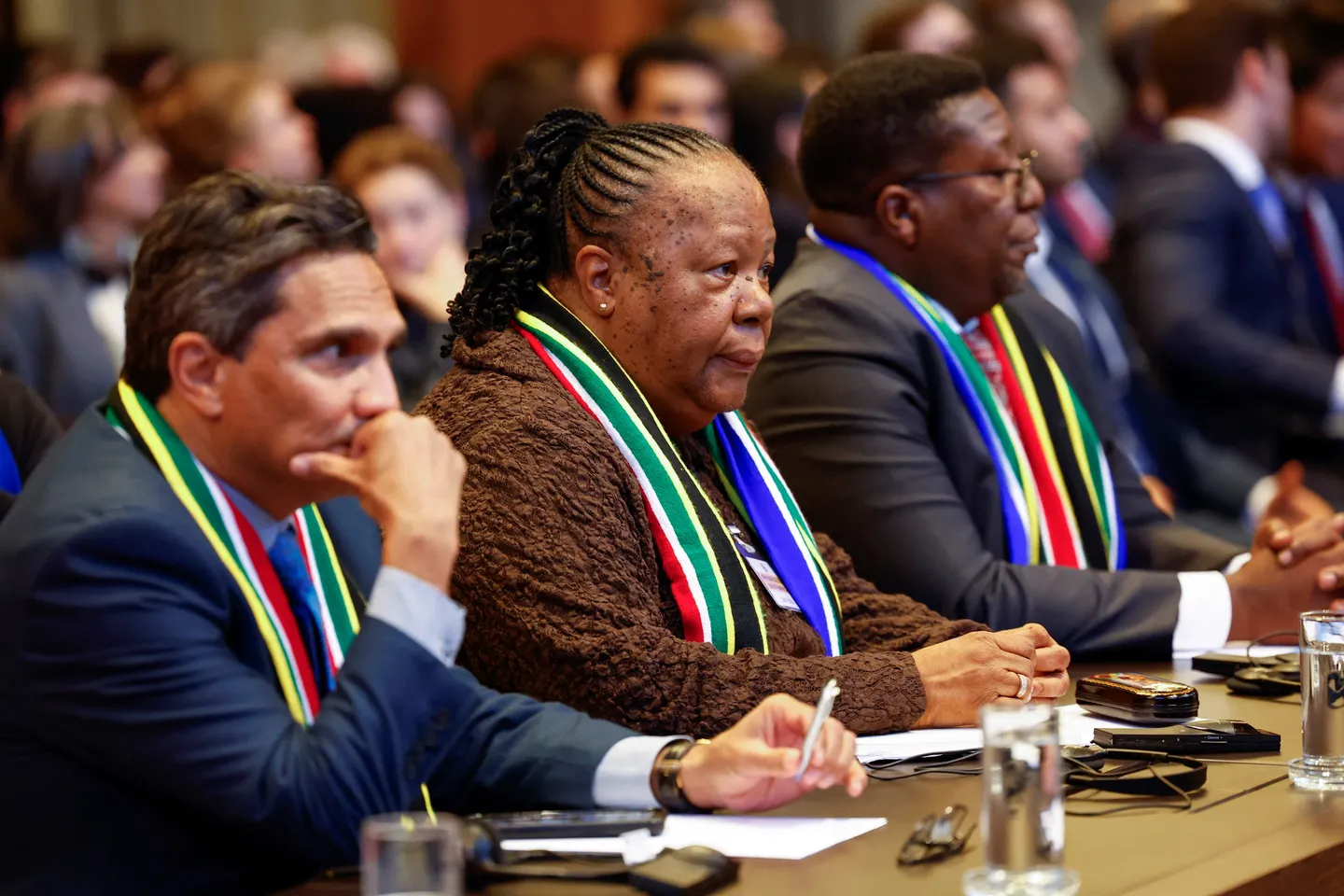
"It shows that it's possible,” former South African Foreign Affairs Minister Naledi Pandor tells TRT Afrika.
“It's an illustration of how countries can intervene to make international law work for the oppressed, just as the world intervened for South Africa when we were struggling against apartheid, so can the world intervene in support of Palestine, because the issue is not merely about Palestine, it's about human rights."
Pandor argues that the case exposes the two-facedness that have long undermined the credibility of international law, particularly when powerful countries and their allies are involved.
"We have exercised these instruments in a double standard fashion where it matters when it's Russia and Ukraine, but it doesn't matter when it's Israel and Palestine. We need to change that. It must be equitable," she says.
That conviction has come at a price. South Africa's legal challenge has contributed to tensions with Israel and some of its most powerful international allies, particularly the United States.
Pretoria has faced diplomatic pressure, trade uncertainty and mounting questions about the economic implications of a foreign policy that frequently puts it at odds with Western governments.
Yet, for those who championed the case, the question has never simply been about diplomatic convenience or economic calculations. It is about whether international law can be applied consistently, particularly when the interests of powerful countries are at stake.
A history that continues to shape foreign policy
To understand South Africa's position, one must look beyond the current conflict in Gaza and revisit the country's own painful history.
Apartheid, the system of institutionalised racial segregation and discrimination that governed South Africa for decades, left an enduring imprint on its political consciousness. The international solidarity that helped dismantle the system also shaped the African National Congress's longstanding support for the Palestinian cause.
Mustafa Briggs, a historian and author, says this historical connection is central to understanding why South Africa chose to challenge Israel.
"They see themselves in the situation that's happening in Gaza, because for many of them, they lived through apartheid. And they saw that a government was sanctioning this segregation and sanctioning this abhorrent crime towards humanity. And the entire world was observing but not really doing anything about it," he tells TRT Afrika.
He argues that the memories of apartheid remain particularly vivid among South Africans, many of whom witnessed its final years or grew up hearing accounts from parents and relatives.
"And so, with South Africa, the people still have that memory fresh, and they're seeing the same situation, if not a worse version of it happening in Gaza, which is what pushed them to step up."
For Mustafa, Pretoria's intervention represents an expression of solidarity informed by a collective historical experience.
South Africa's case, filed under the 1948 Genocide Convention, accused Israel of violating its obligations under the treaty through its military campaign in Gaza. Israel has rejected the allegations.
The price of challenging powerful interests
Taking a case of this magnitude to the world's highest court has not been without financial and diplomatic consequences.
South Africa has had to commit public resources to assembling its legal team, preparing extensive documentation and maintaining its representation in The Hague. By March 2025, government expenditure on the proceedings had exceeded R130 million ($7.8 million).
But the financial bill is only one aspect of the broader challenge.
Relations between Pretoria and Washington have deteriorated considerably. The administration of US President Donald Trump has taken measures against South Africa, including suspending financial assistance and imposing trade restrictions.
Washington's opposition to Pretoria's legal action against Israel has been an identifiable source of friction, according to observers who cite US-Israeli strong historical ties. However, Trump’s administration highlights South Africa’s land reform and domestic racial policies as the primary reasons for the measures.




In 2025, the United States imposed a 30% tariff on South African exports, while the country now faces suspension from the African Growth and Opportunity Act (AGOA), which provides preferential access to the American market, from January 2027.
The implications are particularly concerning for export-oriented industries, including agriculture and automotive manufacturing, with businesses warning of pressure on employment and competitiveness.
While South Africa's position on Palestine may not be exclusively responsible for these economic measures, the diplomatic consequences illustrate the difficult position facing countries that challenge the foreign policy interests of powerful states.
An African voice in a divided world
For Pandor, the South African case should be understood within a wider struggle to make international law meaningful for countries and populations that often find themselves marginalised in global decision-making.
She also sees an opportunity for Africa to exert greater influence in multilateral institutions, particularly through its collective representation at the United Nations.
With 54 Africa states in the organisation, she believes the continent has the numbers to shape international debates and push for a more equitable global order.
"Africa must stand on the side of the vulnerable, the marginalised, and international law. We have 54 members in the United Nations. That number should make a difference for humanity," she says.
But she laments the divisions that frequently weaken the continent's collective voice.
"I think often our vote and our interests are divided in the multilateral body. We need to be acting as a unified voice. We need to help to drive the world in a more progressive direction. Respecting human rights, respecting social justice, respecting equity."

Netanyahu's political troubles
As South Africa continues its legal battle, Israel is experiencing a significant political shift of its own.
Prime Minister Benjamin Netanyahu, who has dominated Israeli politics for decades, is facing an uncertain political future following the October 27, 2026 parliamentary election.
The results dealt a setback to his Likud-led political bloc, which secured 53 seats in the 120-member Knesset, short of the 61 required for a parliamentary majority. The opposing Zionist parties secured 48 seats, while Arab-led parties won the remaining 19.
Neither side has an easy path to forming a government. On November 10, the newly elected parliament was sworn in without a government in place. Former military chief Gadi Eisenkot has emerged as a potential alternative, but whether he can assemble a viable coalition remains uncertain.
The political setback comes amid years of public criticism of Netanyahu's leadership, particularly over the October 7, 2023 Hamas blitz, the subsequent war in Gaza and the government's handling of the security crisis.
However, the election result does not automatically signal the end of his political career. Netanyahu remains a caretaker prime minister while coalition negotiations continue, and another election remains a possibility if neither camp can secure the numbers needed to govern.
A struggle bigger than individual leaders
For South Africa, the unfolding developments in Israel add another dimension to an already complex international debate.
Netanyahu's political fortunes may change, and a new government could eventually emerge in Jerusalem. But the legal questions raised by South Africa at the ICJ will not disappear simply because Israel changes its political leadership, nor will Pretoria's diplomatic and economic challenges necessarily end with Netanyahu's departure.

The case has become part of a wider conversation about the authority of international institutions, the responsibilities of states and whether the rules governing international relations apply equally to the powerful and the vulnerable.
Pandor's position remains that Africa cannot afford to be selective in defending these principles.
Ultimately, the significance of Pretoria's intervention may lie not only in the eventual legal outcome, but also in the precedent it sets for countries that believe international law should offer protection regardless of political influence.
South Africa took a stand shaped by its past. Whether that stand will help transform the international system it challenged remains one of the most consequential questions facing the Global South.