 Charles Mgbolu
For more than three decades, West Africa's dream of a single currency has remained just that —a dream. Deadlines have come and gone, political declarations have been made and renewed, yet the Eco currency remains absent from the wallets of more than 400 million people.
Regional leaders say the proposed ECO intends to deepen regional integration, boost intra-African trade and support sustainable and inclusive economic growth but negotiations for the joint currency have dragged on for more than 30 years.
The latest commitment came in the July ECOWAS summit in Sierra Leone, where plans to introduce the Eco by the end of 2027 were adopted. The bloc plans to initiate a phased rollout, allowing only countries that meet key economic convergence criteria that include inflation, debt sustainability, and monetary stability to join at the outset.
But will this deadline be any different?
After many years of negotiations, the strongest possibility for the Eco currency to launch was during the ECOWAS 2019 summit, when an ambitious target to launch the currency in 2020 was adopted. But that deadline was never met.
Instead, the project ran into a series of challenges, including economic disparities among member states, fiscal instability, political disagreements, military coups, and the disruption caused by the Covid-19 pandemic.
Analysts note, however, that the difficulties facing the Eco predate the pandemic and coups.
For Dr Muda Yusuf, CEO of Nigeria's Centre for the Promotion of Private Enterprise (CPPE), weak economic governance lies at the heart of the problem.
"The quality of economic governance is poor. Policies are arbitrary and inconsistent and because of that, the capacity to achieve macroeconomic convergence required for this currency to be realistic across most countries has been very difficult," Yusuf tells TRT Afrika.
Recurring obstacles
Major concerns also included if members of the West African Economic and Monetary Union (UEMOA), which currently use the CFA franc, will be part of the first phase. Guinea has already indicated that it will not participate in the ECOWAS single-currency project.
Analysts say member nations have failed to meet the key convergence criteria including differing inflation rates across the region, different public debt levels and inability of governments to keep budget deficits within agreed limits.
"The key convergence criteria entail member nations ensuring low inflation figures, sustainable deficits, sustainable debt levels, and consistency in fiscal and monetary policy. Governments need discipline in macroeconomic management," Yusuf explains.
"We haven't seen that in most countries in the subregion. Macroeconomic convergence and currency issues require stability and consistency of policy, and that still does not exist."
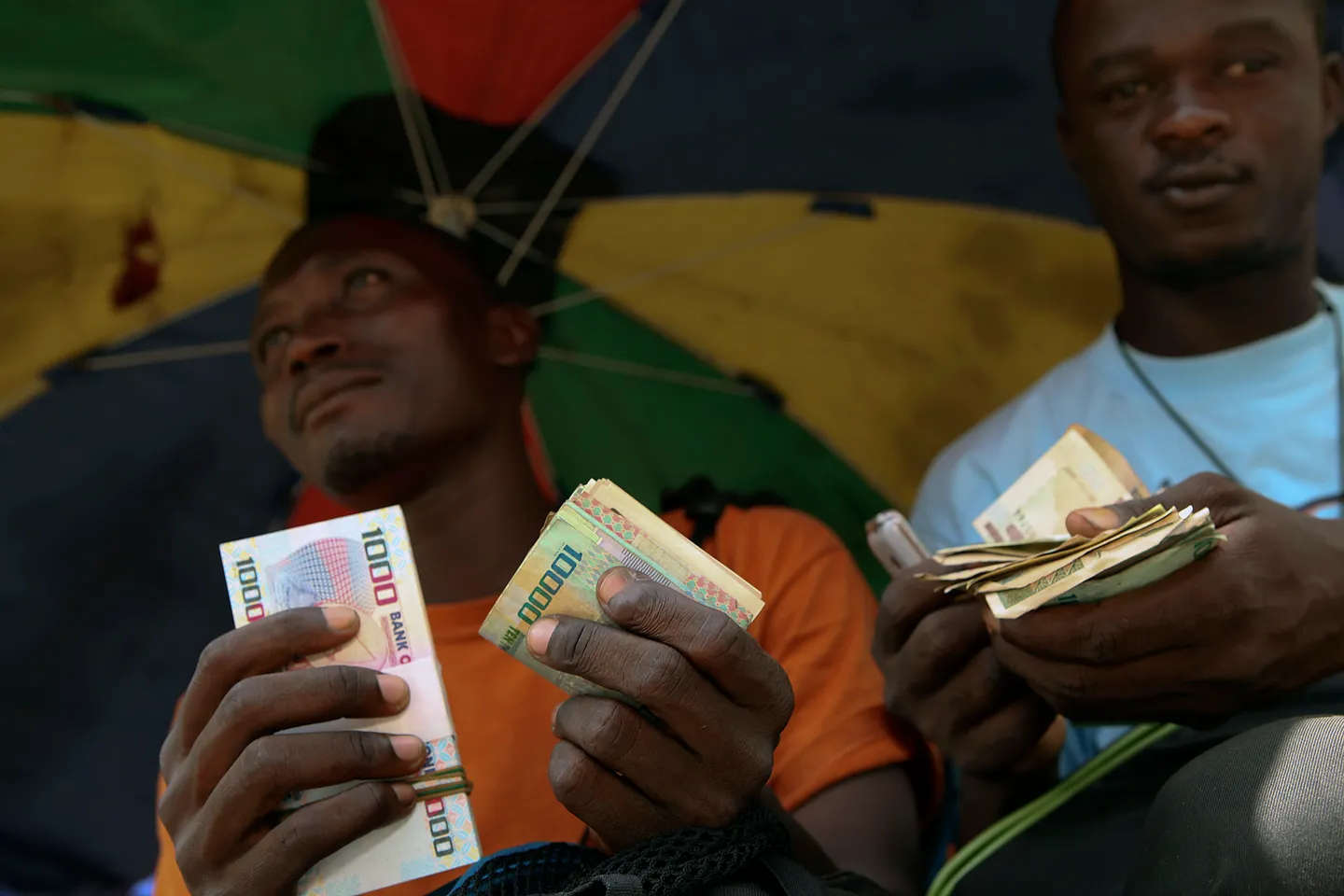
Analysts also point to differing exchange-rate regimes across the region. While several countries operate under the CFA franc system, others maintain independent national currencies such as the Nigerian naira, Ghanaian cedi, Gambian dalasi, Liberian dollar, Guinean franc, Sierra Leonean leone and Cape Verdean escudo.
The challenge of merging such diverse monetary systems into a single framework remains formidable. Questions surrounding the governance of a future regional central bank, voting rights and decision-making structures remain unresolved.
New pressures
Perhaps the most significant challenge today is the changing political landscape within ECOWAS itself.






The withdrawal of Burkina Faso, Mali and Niger from the bloc following disputes over sanctions imposed after military coups has raised questions about regional cohesion at a time when deeper integration is needed.
"So how do you communicate?” Yusuf asks. “How do you discuss when you have fragmented political ideologies and fragmented political leadership within the subregion? There is an issue of unity itself. If you have that kind of fragmentation, how do you get commitment from all stakeholders?"
The departures have created uncertainty over the future shape of regional cooperation and whether a monetary union can succeed without the participation of countries that were once central to the project.
Can 2027 be different?
Despite the challenges, analysts such as Fidel Amakye Owusu, a Ghanaian geopolitical and security expert, believe there are reasons the latest deadline could gain more traction than previous attempts.
“In terms of currency adoption, we should look at it more as an incremental process than a one-time event,” Owusu tells TRT Afrika.
“African leaders are more getting more radical in the way they want to make changes and are becoming more independent-minded and more original in their thought especially as they increasingly pursue resource nationalism, such resources can back such currencies to strengthen them, to make them consequential in both local trade and international trade,” Owusu says.
Growing concerns about dependence on external currencies and a renewed push for regional trade integration have strengthened political support for the Eco. Advocates argue that a common currency could reduce transaction costs, facilitate cross-border commerce and enhance West Africa's economic bargaining power.
In many respects, the political case for the Eco may be stronger today than at any point in the past decade.
However, the economic realities remain stubborn.
Many member states continue to battle high inflation, rising debt burdens and fiscal deficits. The convergence targets that have repeatedly derailed earlier launch plans remain difficult to achieve, while political divisions within the region have become more pronounced.
For that reason, analysts urge caution when assessing the 2027 target.
“I'm not so optimistic because there are a whole lot of structural issues, a whole lot of political issues, a whole lot of economic management and economic governance issues across most of the countries in the sub-region,” says Yusuf.
The central question may no longer be whether ECOWAS can physically introduce a new currency within the next two years. Rather, it is whether member states can finally achieve the economic discipline, policy coordination and political unity that every previous deadline lacked.
“How much of trade is taking place within the sub-region?” Yusuf asks. “Unlike what you have in the EU, the percentage of total trade compared to intra-regional trade is just about 15% or 20%. If there's no much trade going on within the sub-region, then what is the essence of the common currency?”
The history of the Eco suggests that setting a launch date has never been the hardest part. Creating the conditions necessary for a successful monetary union remains the most difficult.