African officials have warned that the sharp rise in oil prices due to the conflict in Iran will challenge monetary policymaking and could hit productivity in key sectors like mining, putting the continent's ongoing economic recovery in peril.
Central banks from Accra to Luanda have been cutting lending rates in recent months on the back of falling inflation and stable foreign exchange rates, and to spur their economies.
That might be over, for now.
"Periods of heightened uncertainty have become a defining feature of the global economic landscape, challenging central banks worldwide in unprecedented ways," Uganda's central bank told Reuters.
Growing risks
The bank, the only major one in the region that had adopted a cautious stance even before the war broke out, said it will reassess its tools and processes to ensure their effectiveness in the challenging environment.
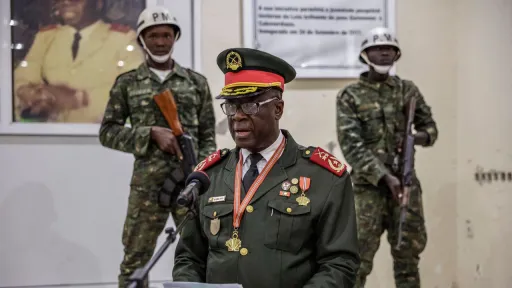
Angola's central bank held rates on Thursday after three straight cuts, with Governor Manuel Tiago Dias citing growing risks.
"These risks stem mainly from a possible prolongation of the war currently being waged in the Middle East, which could affect distribution chains, particularly agricultural inputs and fertiliser," he said.
Other major central banks will have to reassess, analysts said, with Ghana, Nigeria, Zambia and Kenya expected to halt their easing cycles.
"Central bankers are going to have to look at potential pass-through," said Razia Khan, chief economist for Middle East and Africa at Standard Chartered, referring to second-round effects of higher oil prices on inflation and other measures.
Scaled back forecasts






JPMorgan scaled back its forecasts for rate cuts in Nigeria, Kenya, Ghana and Zambia, citing the crisis. "With the exception of Angola, we have reduced the quantum of rate cuts initially pencilled," it said in a research note.
Brent futures traded at just under $100 per barrel on Friday, having peaked near $120 earlier in the week.
"If oil averages $100 for a year, we will see foreign exchange reserves decline across most of the continent, and many currencies weaken by 5%," said Charlie Robertson, head of macro strategy at FIM Partners.
Central banks in Kenya, Nigeria, Ghana and Zambia did not respond to requests for comment.
Net oil importer Kenya has seen bonds drop since the crisis started. But authorities have said fuel stocks are sufficient for now.
‘Monitor the situation’
"There's really no cause for alarm in the short to medium term. We have got security of supply, and we continue to monitor the situation very, very closely," said Energy Minister Opiyo Wandayi.
Neighbouring Ethiopia has boosted fuel subsidies to cushion consumers. Zambia's government warned fuel retailers against hoarding petroleum products, saying it had adequate stocks.
The setback will likely dent a fragile recovery in the region and hit key sectors like mining.
"Fuel prices here may go up and if they go up, they will affect productivity in the mining sector," Paul Kabuswe, Zambia's minister for mines, told Reuters, curbing a key source of hard currency.
"Our prayer is that the war should end."