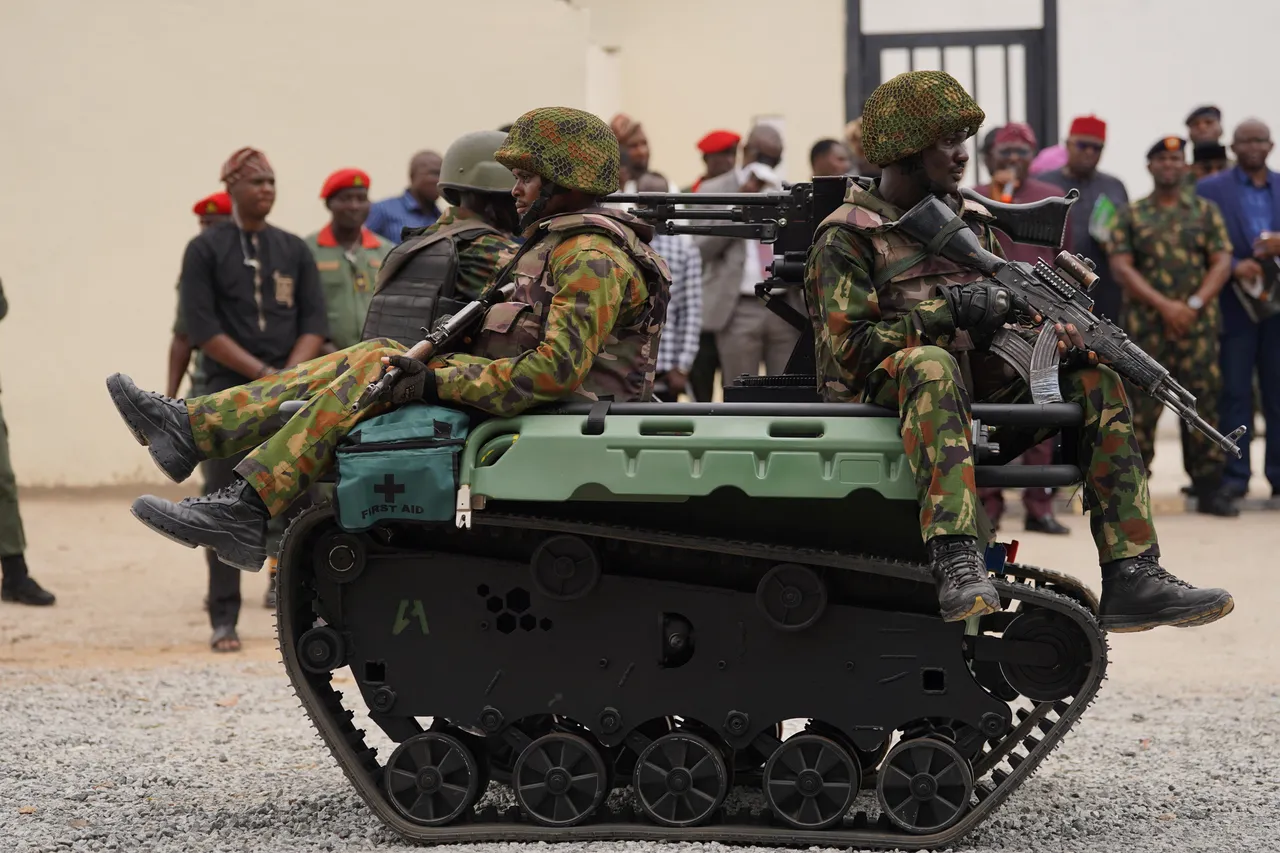
A Nigerian defence technology startup, Terra Industries, has unveiled a range of autonomous defence systems, including interceptor drones, mine-detection vehicles and battlefield intelligence software, at a demonstration attended by senior military officials and government representatives.
The event, held on Monday, marked the company’s shift from providing commercial infrastructure security to developing systems for direct use by the Nigerian Armed Forces.
Officials at the demonstration were shown unmanned ground vehicles capable of detecting improvised explosive devices, as well as interceptor drones designed to neutralize aerial threats through kinetic impact rather than traditional missile systems.
The company said the technologies are tailored to operational realities on the ground, particularly the risks posed by roadside explosives, Reuters News Agency reports.
Nigeria has for years faced a complex security environment, including insurgency in the northeast linked to groups such as Boko Haram and its splinter factions, as well as banditry and armed violence in parts of the northwest.






Authorities say efforts are continuing to improve both operational capacity and the safety of personnel deployed in these regions.
Speaking at the event, company representatives emphasised the cost-effectiveness and adaptability of the new systems, particularly the interceptor drones, which are designed to counter aerial threats without relying on expensive missile-based defences.
Founded two years ago by 22-year-old Nathan Nwachuku and 24-year-old Maxwell Maduka, Terra Industries has rapidly expanded its footprint. The startup raised $34 million earlier this year from investors including Lux Capital and 8VC.
In February, the company signed a joint venture agreement with the Defence Industries Corporation of Nigeria, a move aimed at strengthening domestic defence production. It has also announced plans to establish a 34,000-square-foot drone manufacturing facility in Ghana, expected to become operational by June.
Terra Industries says its existing security technologies are already being used to protect infrastructure assets valued at about $11 billion across Africa, as it positions itself as a growing player in the continent’s defence and security technology sector.