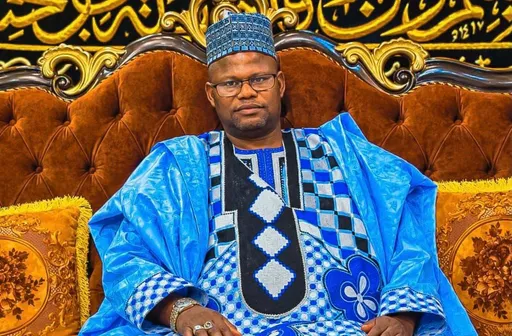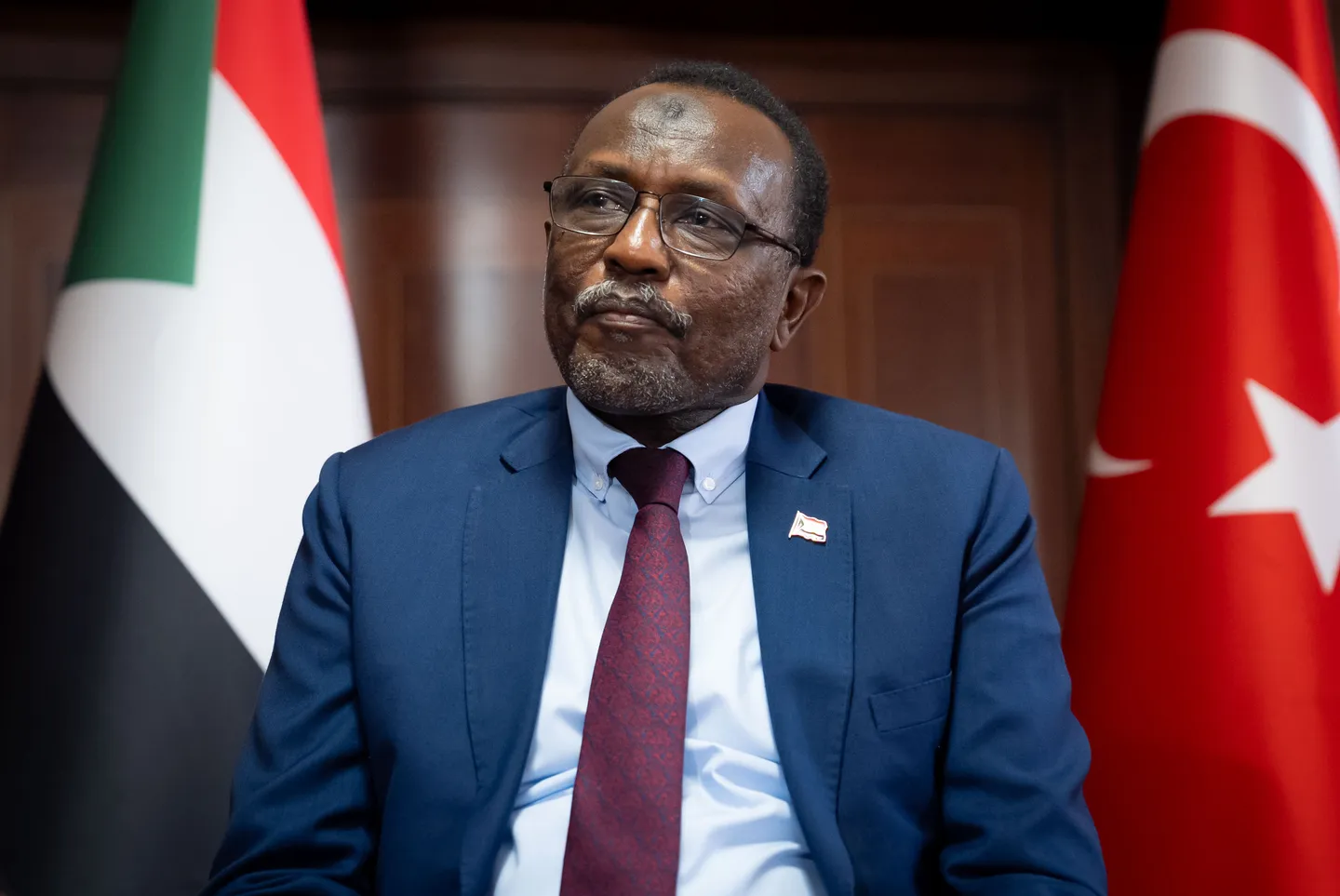
Sudan’s Ambassador to Ankara, Nadir Yousif Eltayeb, criticised the international community’s failure to intervene in the massacre carried out by the paramilitary Rapid Support Forces (RSF) in the city of El Fasher, saying, “This reflects the double standards that prevail in today’s world.”
El Fasher, which came under siege in May 2024, fell under the control of the paramilitary Rapid Support Forces (RSF) in October 2025.
Throughout the siege, which lasted about 18 months, access to food and medical supplies became increasingly difficult. According to the United Nations Human Rights Office, more than 6,000 people were killed during the first three days of paramilitary RSF attacks on the city.
Between 26 October 2025 and 1 March 2026, approximately 138,200 people were displaced from El Fasher and surrounding settlements. The city, which had a pre-war population of more than one million, is now believed to have fewer than 70,000 residents.
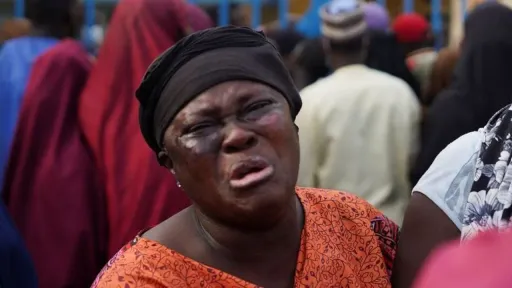
Allegations of killings, forced displacement, torture and sexual violence against civilians continue to emerge, while residents face ongoing challenges in accessing security, food and healthcare services.
Ambassador Eltayeb and Dr. Mayada Kamal Eldeen, a faculty member in the Department of Political Science and International Relations at Tokat Gaziosmanpasa University, spoke to Anadolu Agency (AA) about the atrocities in El Fasher, the international community’s response and efforts to hold those responsible accountable.
‘One of the greatest tragedies of this century’
Sudan’s Ambassador to Ankara, Eltayeb, described the events in El Fasher as “scandalous and shameful” for international justice institutions.
He stressed that international organisations had failed to protect thousands of civilians despite receiving warnings more than two years earlier.
“The massacre in El Fasher is one of the greatest tragedies of this century,” Eltayeb said.
He argued that the events in the city exposed the international community’s failure to protect civilians and revealed its double standards.
“This reflects the double standards that prevail in today’s world. If El Fasher were a Western city, the response would have been entirely different. The Sudanese people have been shocked and disappointed by the indifference shown by the rest of the world. Had international law been strictly enforced, thousands of lives could have been saved,” he said.
‘No one knows the actual death toll’
Eltayeb argued that estimates of the death toll in El Fasher were far below the actual number, saying it was impossible to obtain accurate figures on what had happened in the city.
“No one knows how many people have been killed because the city has become a massive prison. It is impossible to enter or leave, and no humanitarian assistance is being allowed in,” he said.
Eltayeb said those who managed to escape the city had recounted horrific experiences. He alleged that one of the perpetrators of the massacre had openly boasted about killing more than 200 people during the first three days of the attacks.
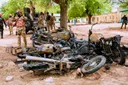
The ambassador also pointed to satellite imagery that he said revealed large mass graves and thousands of burned bodies.
‘They targeted specific ethnic groups’
“The terrorist militias targeted specific ethnic groups, such as the Zaghawa, in what constitutes a clear act of ethnic cleansing. They killed, burned, raped and imprisoned tens of thousands of people belonging to these communities,” he said.
Criticising the international community’s failure to intervene in El Fasher, Eltayeb added:
“I believe the issue was not that the international community was unable to prevent what happened, but rather that it remained indifferent, acted too slowly or deliberately decided not to intervene. The international community consciously turned a blind eye to the massacre in El Fasher.
“I believe this was due to pressure exerted by the supporters of the terrorist militias. The world watched with indifference, while some even welcomed the fall of the city.”
El Fasher’s symbolic significance
Highlighting El Fasher’s historical importance to Sudan and Darfur, Eltayeb said the city had served as the historic capital of the Darfur Sultanate and had played a leading role in resistance against British colonial forces.
He noted that the city had fought under the banner of the Ottoman Empire, was home to more than 300 Quranic schools and had contributed to the production and supply of the Kiswa, the cloth covering the Kaaba in Mecca.
“This is why it is being targeted,” he claimed.
Eltayeb said that the Sudanese Armed Forces were making advances in the Kordofan and Darfur regions, expressing confidence that El Fasher would soon be recaptured and its residents would be able to return safely.
He reiterated the Sudanese people’s disappointment with the international community, arguing that the atrocities in El Fasher could have been prevented had the United Nations Security Council Resolution 1591, adopted in 2005, been properly implemented.




The resolution provides for an arms embargo on Darfur and sanctions against those responsible for violations.
The envoy also stated that the Sudanese government was working to facilitate humanitarian assistance for displaced people.
He noted that Sudan’s prime minister had presented a peace initiative to the UN Security Council the previous year.
Türkiye expected to lead Sudan’s reconstruction
Commenting on Türkiye’s position toward Sudan, Eltayeb said Ankara supported Sudan’s legitimate government, unity and stability, while rejecting attempts to divide the country or establish an illegitimate government.
“Türkiye understands the conspiracy aimed at destabilising the region and the threat posed by this terrorist militia, because Türkiye itself has suffered from terrorism for 40 years,” he said.
Eltayeb emphasised that Türkiye had provided substantial humanitarian assistance to Sudan since the beginning of the conflict and that its support was continuing.
He added that Türkiye was expected to play a leading role in Sudan’s rehabilitation and reconstruction, a process he anticipated would begin soon.
‘Civilians were used as a weapon of war in El Fasher’
Dr Mayada Kamal Eldeen, a faculty member in the Department of Political Science and International Relations at Tokat Gaziosmanpasa University, argued that the atrocities committed in El Fasher should be classified as ethnic cleansing and crimes against humanity.
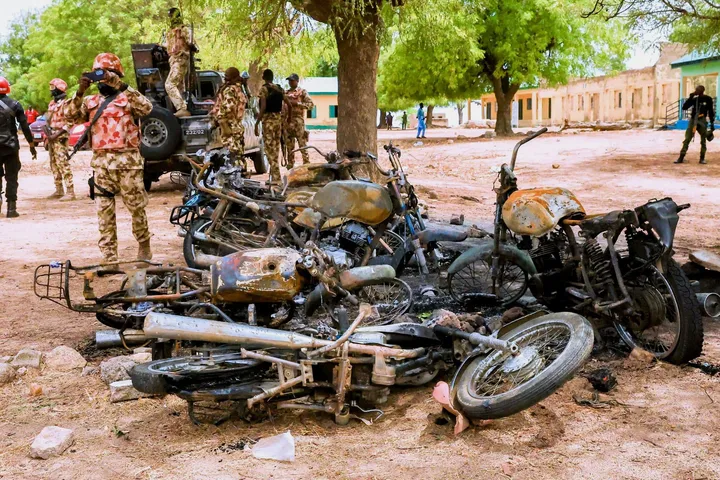
Dr Kamal Eldeen said the events in El Fasher were the result of a systematic siege lasting many months, during which the paramilitary RSF targeted hospitals, water treatment facilities, markets and residential areas with heavy weapons and drones.
Commenting on the UN’s report that more than 6,000 people had been killed during the first three days of the attacks, Kamal Eldeen said: “The destruction of El Fasher’s vital infrastructure deprived civilians of their most basic humanitarian needs. The civilian population was clearly used as a weapon of war.”
‘Ethnic cleansing’ assessment
Kamal Eldeen argued that the atrocities committed in El Fasher and across Darfur should be classified as ethnic cleansing and crimes against humanity.
She said the paramilitary RSF had specifically targeted non-Arab indigenous African communities, particularly the Masalit, Zaghawa and Fur ethnic groups.
According to Kamal Eldeen, forced displacement, dispossession and massacres were intended to alter Darfur’s demographic composition.
She described the violence as “a documented strategy of ethnic cleansing aimed at forcibly changing Darfur’s demographic structure.”
‘Forgotten war’
Kamal Eldeen criticised the lack of effective international intervention despite El Fasher remaining under siege for months, describing the situation as one of the greatest failures of modern diplomacy.
She pointed to structural problems within the UN Security Council and the tendency of global powers to place the Sudanese crisis below their geopolitical priorities as major obstacles to intervention.
She said the international community’s focus on the crises in Gaza and Ukraine had pushed the war in Sudan into the background. “Sudan has become a forgotten war,” Kamal Eldeen said.
She also alleged that the UAE had provided logistical, financial and military support to the paramilitary RSF, arguing that such backing had made it more difficult to impose effective sanctions and protect civilians.
‘Holding perpetrators accountable necessary’
Kamal Eldeen stressed that prosecuting those responsible for crimes committed in El Fasher was not only possible but essential.
She noted that Darfur remained under active investigation by the International Criminal Court (ICC). To establish accountability, she called for the systematic collection of digital evidence, satellite imagery and witness testimonies.
She also urged the Sudanese government and its diplomatic missions to pursue international arrest warrants against RSF leaders.
“International financial and legal sanctions must be immediately imposed on states and front companies that provide weapons and financing,” Kamal Eldeen suggested.