By Umut Çağrı Sarı
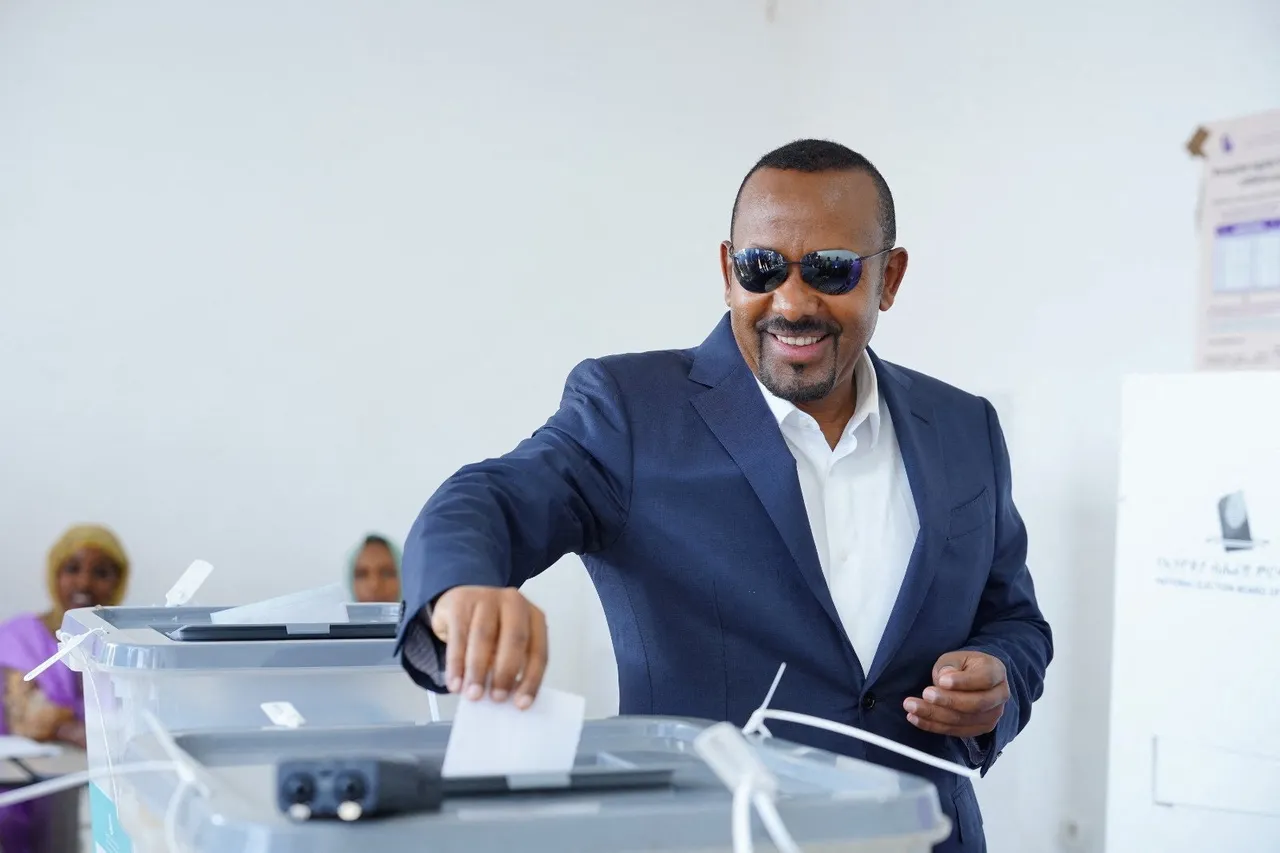
Prosperity Party of Ethiopian Prime Minister Abiy Ahmed achieved an overwhelming majority in parliament, securing the expected result in the general elections held on June 1.
According to the results announced by the National Election Board, the party won 438 out of the 486 announced seats, reaching a nearly 90 percent majority in the House of Peoples' Representatives.
While this result goes down in history as the strongest electoral victory Abiy Ahmed has achieved since coming to power in 2018, it also reveals a significant paradox when considering Ethiopia's increasingly deepening domestic and foreign crises: while the country is experiencing one of its most fragile periods in recent years across security, economic, and political domains, the ruling party has secured the strongest parliamentary support in its history.
This result can hardly be called a surprise. The Prosperity Party was seen as the clear favorite in the elections in Ethiopia, a country with a population exceeding 130 million.
The primary reason for this was the highly fragmented structure of the opposition. The majority of the more than forty opposition parties participating in the elections lacked both financial resources and the capacity to organize on a national scale.
Even Ezema, one of the largest opposition parties, could only field candidates in 293 electoral districts, whereas the Prosperity Party ran with 461 candidates.
Consolidation of power in parliament
Moreover, the ruling party faced no opponents whatsoever in 64 electoral districts. Consequently, the election took on the character of an asymmetric race between a powerful ruling party and a weak, divided opposition.
In the early years of his rule, Abiy Ahmed won the international community's support as a reformist leader who secured peace with Eritrea and won the Nobel Peace Prize. Today, however, the same leader is heavily criticized for an increasingly authoritarian governance style.
For this reason, even though elections are held regularly in Ethiopia, it is becoming increasingly difficult to speak of a truly competitive and fair democratic environment.
The electoral process itself confirmed this picture. No voting could take place in the Tigray region. While the region is still trying to recover from the war that claimed hundreds of thousands of lives between 2020 and 2022, anxieties persist regarding the potential for renewed conflict between the federal government and the Tigray administration.
Military build-ups on the border by both sides keep the possibility of a new war alive under the shadow of the elections.
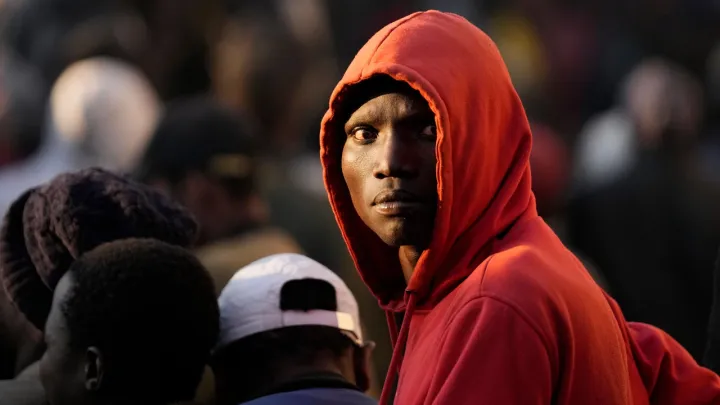
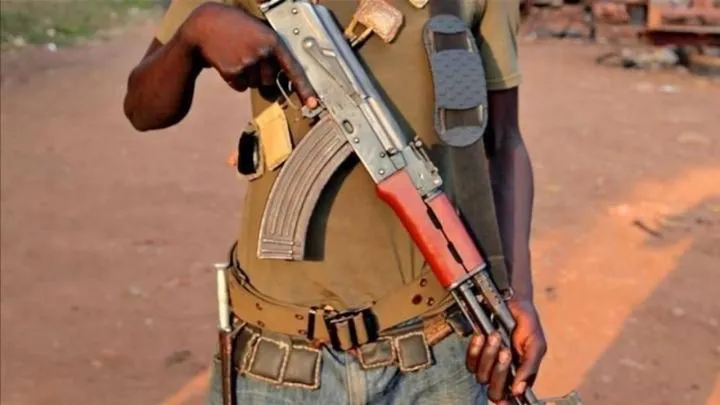
Similarly, some polling stations in the Amhara region could not be opened due to security reasons. The Fano militias, who have been fighting against the federal government for over three years, announced that they would prevent the elections, and numerous clashes with security forces took place throughout election day.
In Oromia, the country's most populous region, the electoral process was disrupted due to attacks by the rebel group, Oromo Liberation Army (OLA). The African Union also emphasized that the elections were carried out under extremely challenging security conditions, particularly in Oromia, Amhara, and Tigray.






Despite this, the Prosperity Party further strengthened its dominance in parliament. The election results show that, thanks to the state apparatus, organisational capacity and the fragmented nature of the opposition, Abiy Ahmed has maintained his popular support and political dominance.
Escalating tension
This consolidation of power in domestic politics could pave the way for more assertive and riskier moves in Ethiopia’s foreign policy. The tension experienced in relations with Sudan in recent months, in particular, constitutes the most striking example of this.
In March, the Sudanese administration accused Ethiopia of carrying out drone attacks targeting its territory. Khartoum also claims that new training facilities have been established in northwestern Ethiopia for the Rapid Support Forces (RSF), which is fighting the Sudanese army.
While reports published by Reuters alleged that the facilities in question were financed by the United Arab Emirates, the Ethiopian administration did not comment directly on these allegations and continued to maintain that it remains neutral in the Sudanese civil war.
However, the balance of power in the region points beyond these statements. Ethiopia stands as one of the closest partners in the Horn of Africa to the United Arab Emirates, which is known as the most significant foreign backer of the RSF.
In response, Sudanese leader General Abdel Fattah al-Burhan is deepening security relations with Ethiopia’s rivals, Egypt and Eritrea. Openly supporting Cairo’s stance regarding the Grand Ethiopian Renaissance Dam, the Burhan administration is pursuing an increasingly harsh line in its relations with Addis Ababa.
A new geopolitical fault line
Today, Sudan believes that Ethiopia provides logistic and military transit opportunities to the RSF. The clashes that took place in the disputed Fashaga border region between 2020 and 2022 also show that the confidence crisis between the two countries has not yet been overcome.
All of this is happening at a time when the possibility of a renewed war in northern Ethiopia is being discussed. Should a new conflict break out in Tigray, or if tensions with Eritrea turn back into an active war, the civil war in Sudan and the crisis in Ethiopia could feed into each other, transforming into a single, intertwined regional security problem.
The real test begins now
Abiy Ahmed’s electoral victory appears to have indisputably consolidated his rule in the short term. However, the strong result at the ballot box does not erase the structural problems facing Ethiopia.
On the contrary, with a powerful majority in parliament, the government will no longer be able to attribute its failures to the weakness of the opposition. Ahead lies the Tigray issue, the Amhara rebellion, the security crisis in Oromia, economic fragility, and an increasingly intense regional rivalry on the Sudan-Eritrea axis, all waiting to be resolved.
So, for Abiy Ahmed, who has received strong support from the public, the real test is only just beginning.