 Pauline Odhiambo
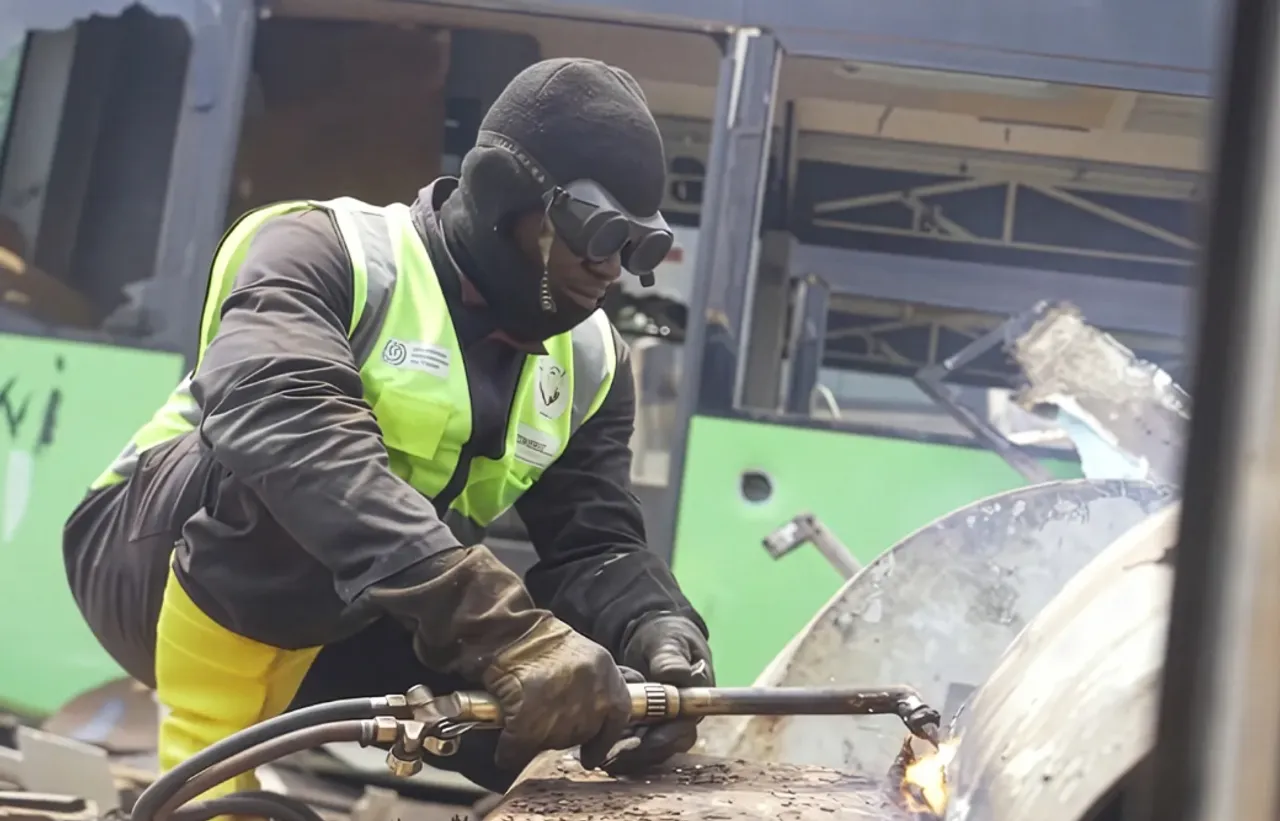
The morning sun beats down on a transformed landscape in the heart of Cameroon’s capital. Where mountains of rusting metal and abandoned vehicles once stood as an eyesore for over a decade, workers now move with purpose, their protective gloves and boots glinting alongside the scrap they handle.
For 45-year-old Étienne Mbarga, this is no longer just a dumping ground—it is his livelihood, his safety net, and his source of pride.
“Before, we used to get injured a lot and sometimes we’d be off work for several days,” Mbarga tells TRT Afrika as he pauses to wipe sweat from his brow.
He still remembers the deep gash on his forearm from two years ago—a wound that kept him from feeding his three children for nearly two weeks.
“Now, with protective equipment, we can handle scrap metal without getting hurt, work every day and earn a living. We’re protected and feel more comfortable in our work.”
Mbarga is one of more than 150 workers who have seen their lives transformed by a scrap metal recycling scheme in Yaoundé, supported by the International Labour Organization (ILO).
The initiative has not only cleaned up an urban site that had fallen into disrepair but has also begun rewriting the rules of an industry long defined by danger, informality, and invisibility.
‘Rusty’ second chances
A few hundred metres away, 32-year-old Clarisse Ngoa is unloading a wheelbarrow filled with twisted iron bars. A single mother of two, she entered the scrap trade five years ago after struggling to find steady work as a seamstress. Back then, she wore often flimsy sandals while foraging through heaps of scrap. Her hands constantly nicked and bleeding, she earned barely enough to buy rice for the evening meal.
“People looked down on us. They called us chiffonniers—ragpickers,” she says, shaking her head. “But now? I have a helmet, gloves, boots. I know my rights. And last month, I sent my son to a proper school.”
Clarisse’s transformation mirrors a broader shift taking place across Cameroon’s ferrous waste sector. Historically characterised by a high level of informality, the industry is gradually becoming more structured, with better-organised stakeholders, safer practices, and growing recognition for workers who toil at the intersection of poverty and environmental decay.
Metal milestones
The results speak for themselves. More than 840 tonnes of scrap metal have been collected under the ILO-backed project, aptly named “Formalisation of the ferrous waste collection and recycling sector to promote decent work and environmental sustainability.”


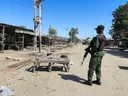



The dismantling of 75 end-of-life vehicles—including buses and minibuses that had languished for years—marked a significant milestone. Organised in collaboration with the National Union of Scrap Metal Workers (SYNAFSEC), the operation mobilised four teams of workers over two weeks, generating nearly 30 million CFA francs in value.

But for the workers, the change is about more than just impressive figures. Targeted support from the ILO has included training sessions, the provision of protective equipment, and awareness campaigns on occupational health and safety standards. On the ground, these measures have proven that better work organisation can go hand in hand with increased productivity and improved incomes.
The transformation is now being reinforced by a major structural reform: the establishment of a national digital platform known as the National Waste Exchange (BND). From now on, all waste-related transactions—production, transport, recycling, and recovery—must be recorded via a single digital system called the Traceability Manifest. Each transaction carries a unique identifier and a QR code that enables real-time tracking.
This digital leap forward improves transparency, secures transactions, and facilitates the gradual integration of informal workers into the formal economy. It also helps to better organise the value chain by connecting producers, collectors, and recyclers in a way that was previously impossible.
“What we are seeing in Cameroon is a tangible transformation in which formalisation, the green transition and digitalisation reinforce one another,” says Claude Yao Kouame, Director of the International Labour Organization’s Country Office for Cameroon, São Tomé and Príncipe and Equatorial Guinea. “By supporting both workers on the ground and structural reforms, the ILO is helping to build a more inclusive, safer and more sustainable sector.”
Beyond the scrap heap
The ILO’s approach is rooted in its core mandate to promote decent work and support the transition from the informal to the formal economy. Through this project, it has mobilised expertise in social dialogue, enterprise development, social protection, and working conditions to drive a sustainable transformation of the sector.
“When properly supported,” Kouame reflects, “the green and digital transitions can create more secure jobs, strengthen workers’ rights and help build a fairer and more sustainable economy for everyone.”
The impact is multifaceted: improved working conditions, income generation, environmental remediation, and waste recovery within a circular economy framework. In Yaoundé, those outcomes are no longer theoretical. The cleaned-up urban site now stands as a testament to what becomes possible when workers are equipped, organised, and respected.
For Étienne Mbarga, the change is deeply personal. “I used to hide what I did from my neighbours,” he admits, a quiet smile crossing his face. “Now I tell them: I recycle metal. I make a living. And I have dignity.”
Clarisse Ngoa nods in agreement, loading her wheelbarrow for another trip. “This waste,” she says, gesturing at the piles of scrap around her, “it used to be a curse. Now it’s our future.”