 Pauline Odhiambo
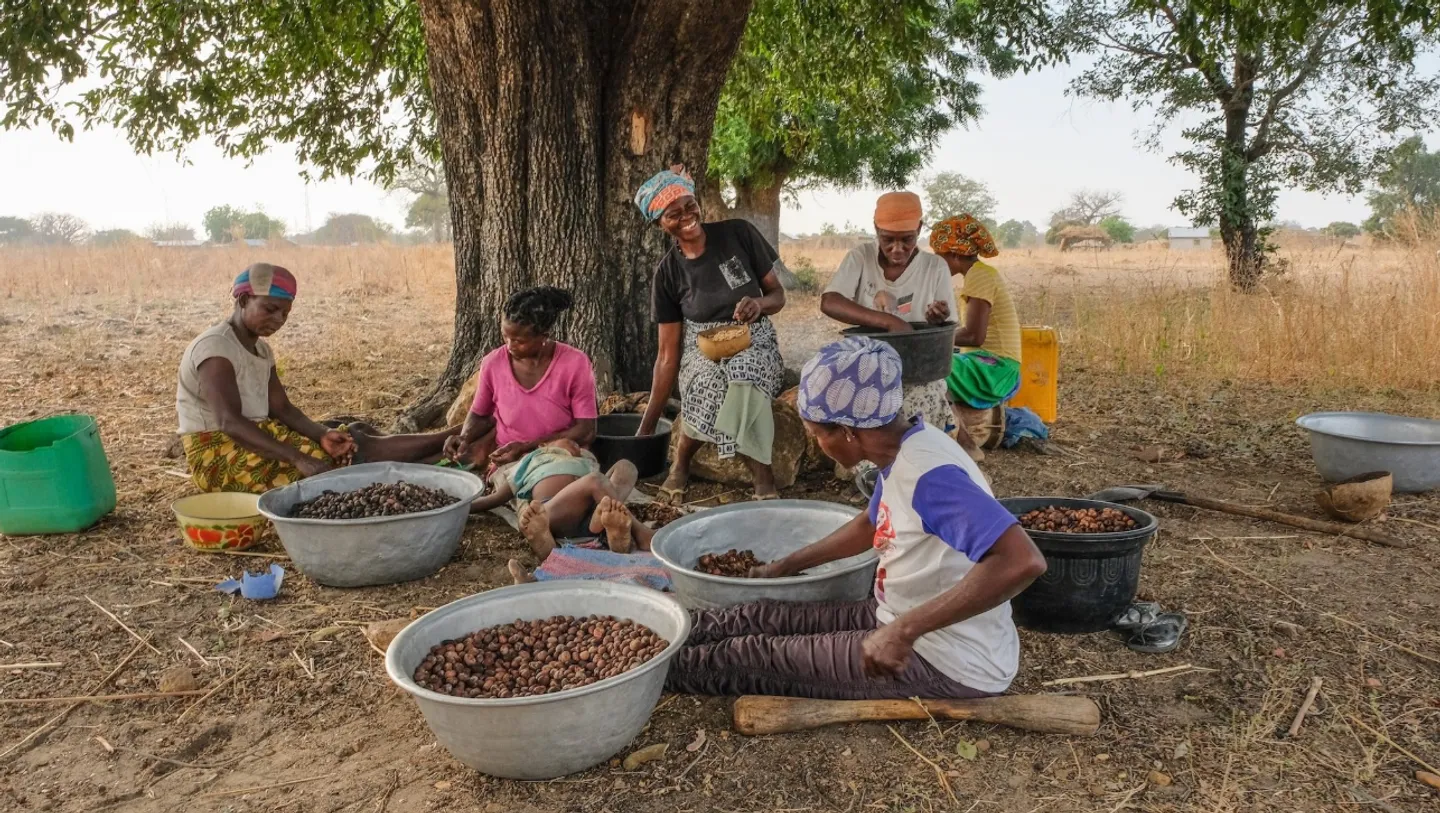
Joana Naab still remembers the pain in her hands. For over two decades, she cracked shea nuts, boiled kernels, and stirred vats of simmering oil in the informal workshops of northern Ghana.
"Before, we would work from morning till night, cracking nuts and boiling oil until our hands ached," she says. "No one asked us if we were tired. No one thought about what we should be paid."
Today, Naab serves as President of the Ghana Shea Workers Union (GSWU). Her journey from anonymous labourer to labour leader mirrors the transformation sweeping through Ghana's shea sector.
"Finally, from now on we can work with safety, get breaks and earn decent pay… my hands will heal," she says, her voice carrying both relief and resolve.
The change Joana describes is not merely symbolic. In March 2026, the GSWU and the Ghana Shea Employers Association signed the sector's first-ever Collective Bargaining Agreement, covering approximately 2,000 shea workers across 11 cooperatives and 160 processing centres. The agreement establishes frameworks for fair wages, working hours, occupational safety, social protection, and grievance procedures.
Voices finally heard
For many workers across Ghana’s shea sector, earning a living has long meant working in an informal, seasonal, and geographically dispersed industry, with limited organised representation and few opportunities to collectively influence their working conditions.
Just two years ago, thousands of workers in Ghana's shea sector had little representation and few opportunities to influence the conditions under which they worked. Today, they have built representative organisations, established social dialogue, and negotiated a landmark Collective Bargaining Agreement (CBA)—creating new possibilities for decent work in a sector predominantly driven by women workers.
But Joana knows that paper promises mean nothing without enforcement.
"For far too long, labour agreements in the agricultural sector, particularly within the informal economy, have faced implementation challenges," she says. "By building a joint reporting system with our employers, we are putting an engine and wheels into our collective bargaining agreement.”
She adds that fair wages, maternity protection, and workplace safety must become "non-negotiable."
Shea, from which shea butter is derived, is a natural fat extracted from the kernels of the shea tree (Vitellaria paradoxa), native to the African continent. It’s a valuable commodity widely used for cooking, fabricating cosmetics, food, pharmaceuticals, and, most significantly, as a substitute for cocoa butter in chocolate production - an industry powered predominantly by women.
The economics of invisibility
In Bekwai, part of Ghana's Ashanti Region, Rabiatu Abubakari surveys her warehouse with a mixture of frustration and determination. As President of the Ghana Shea Butter Employers Association, she has spent years advocating for a fundamental shift in how Ghana's shea wealth is distributed.
"We are losing millions of cedis because our shea nuts are being exported in their raw form instead of being processed here in Ghana," Rabiatu says. Approximately 70 percent of Ghana's shea nuts leave the country unprocessed, she estimates, depriving local communities of jobs, revenue, and industrial development.
The obstacles facing local processors are formidable.
"When we go to the banks for loans, most of the time we are declined, and even when the loans are available, the interest rates are too high for us to sustain the business," Abubakari explains.
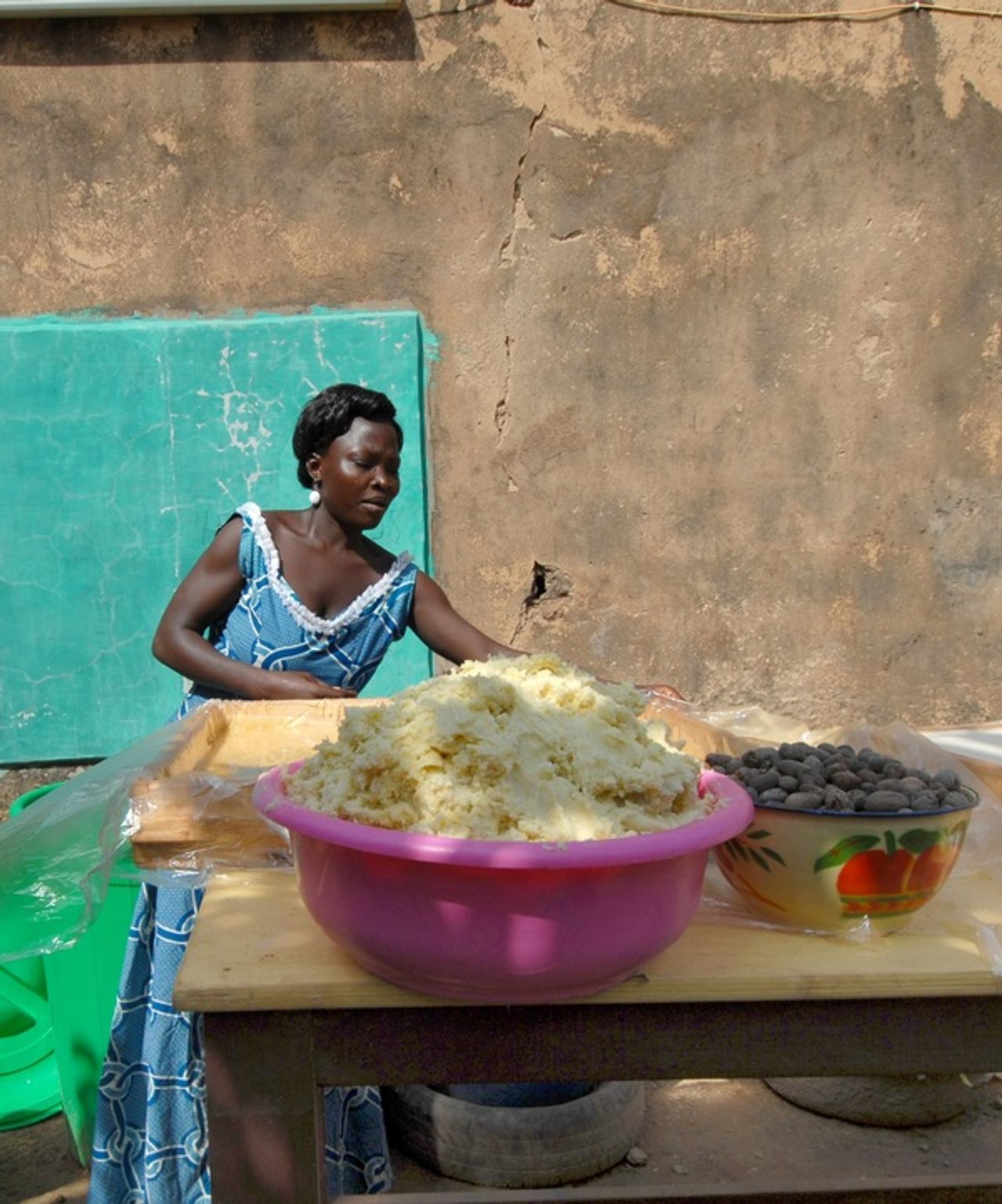





The seasonal nature of shea harvests compounds the problem: without adequate storage facilities, processors cannot maintain year-round operations.
Abubakari argues that raw exports keep women, who form the backbone of the sector, "stuck at the lowest end of the value chain." She calculates that Ghana forfeits up to 300 percent of the potential value that could be added through local processing.
Africa’s shea business
The stakes extend far beyond Ghana's borders.
Across Africa, the shea trade supports the livelihoods of approximately 16 million women in 21 countries, with the vast majority working as collectors and small-scale processors. West Africa supplies an estimated 96 percent of global shea kernel demand, yet the region captures only a fraction of the final product value.
Ghana's shea exports generated more than $350 million in 2025, according to the Ghana Export Promotion Authority—more than double the $118 million in annual export earnings recorded in 2023. The country ranked as the world's leading exporter of shea butter in 2025, according to industry data. The West Africa shea butter market was valued at $1.25 billion in 2025 and is projeced to reach $3.78 billion by 2031, growing at a compound annual growth rate of 6.57 percent.
Yet this growth is fragile. The Global Shea Alliance warns that West Africa loses an estimated eight million shea trees annually to population growth, agricultural expansion, bushfires, and climate change. Without intervention, projections suggest global demand for shea could exceed supply by 2044.
Shea solutions
Aaron Adu, Managing Director of the Global Shea Alliance, sees both peril and possibility in the current moment.
"Across Africa, we are losing an estimated eight million shea trees every year," he states. "This is not simply an environmental concern. It is a threat to biodiversity, rural livelihoods and an industry that supports millions of women across Africa."
Adu's organisation has launched the Action for Shea Parklands initiative, aiming to nurture 10 million shea and native trees, restore four million hectares of shea parklands, and empower 10 million women by 2030. The Global Shea Alliance, which represents 849 members from 36 countries, works to connect women's cooperative groups with brands, retailers, and suppliers who increasingly demand traceable, certified sourcing.
On the policy front, Ghana's government has announced plans for a phased ban on raw shea nut exports, targeted for 2026 but yet to be enforced. The Buipé shea processing facility, previously abandoned, is being rehabilitated with a capacity to process 60 tonnes annually and the potential to create hundreds of direct jobs.
For Adu, the breakthrough lies in balancing regulation with support.
"Ghana's approach has been to combine the export restriction with complementary measures, minimum prices to protect women collectors, and certification systems to strengthen traceability," he notes.
The goal, he says, is to move Ghana "from being a raw material exporter to a nation of value-added exports."
The journey is far from complete. But for workers like Joana Naab, something fundamental has already shifted.
"We are no longer invisible," she says. "We have a voice, and we intend to use it."