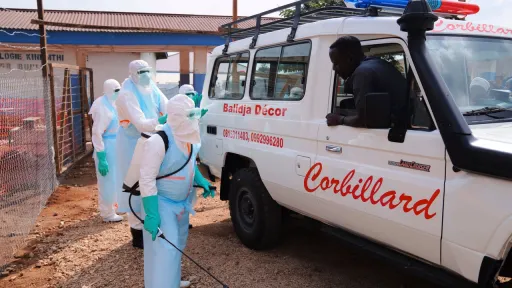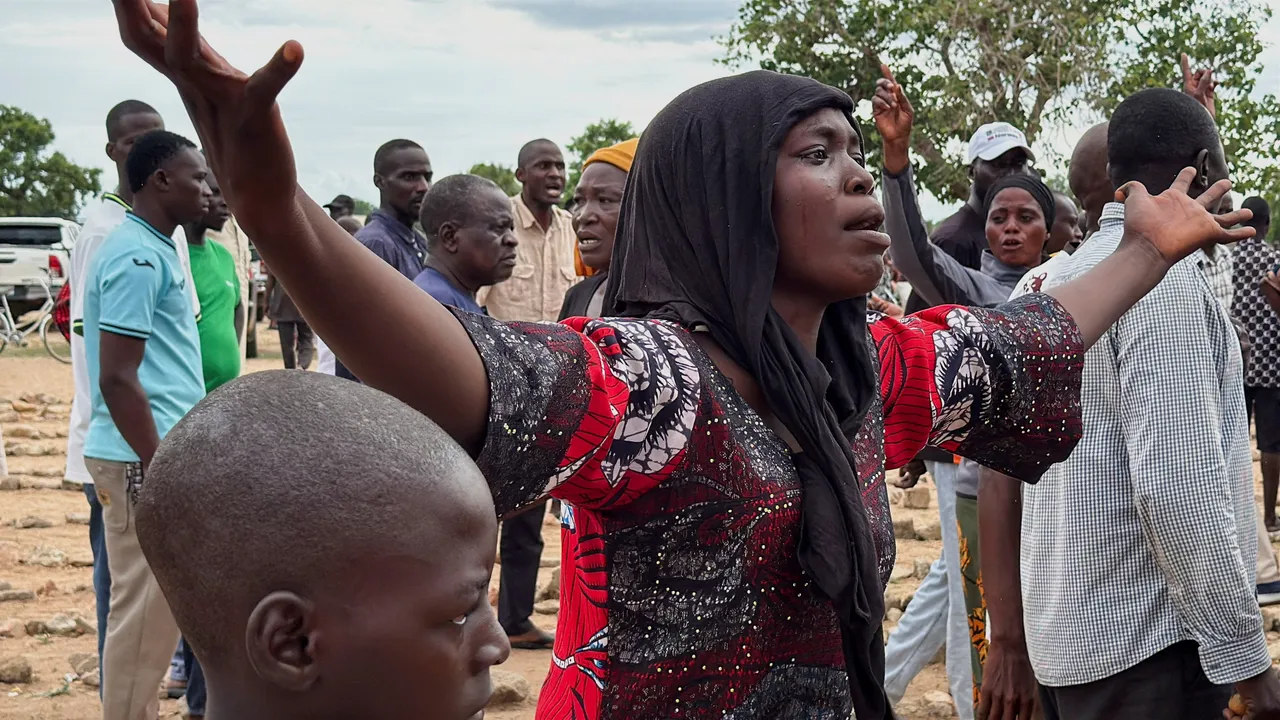
Twelve years have passed since the world rallied under #BringBackOurGirls to demand the release of over 270 schoolgirls abducted from Chibok; the nightmare haunting Nigerian education has not ended. It has mutated.
The rescue of 39 pupils and five teachers kidnapped in May from a school in Oyo State was rightly celebrated across Nigeria. President Bola Tinubu said the abductors were members of Ansaru, an al-Qaeda-linked group that splintered from Boko Haram in 2012.
Even as the Oyo students remained in captivity, another group of students due to sit their secondary school examinations in Borno State was abducted on June 29, before being rescued in a separate military operation.
These incidents confirm that, despite periodic rescues and military successes, schools remain among the country’s most vulnerable targets. Terrorist groups keep returning to them not simply out of opportunity but because three distinct logics now converge on the same target: ideology, coercive leverage, and an increasingly criminal ransom economy.
Schools as ideological targets
To understand how Nigeria arrived here, one must trace the dark lineage of ideological hostility toward conventional education. Boko Haram’s late founder, Muhammad Yusuf, condemned the Nigerian state’s education system as religiously corrupt, famously declaring that “a school is worse than a hundred churches.”
His successor, Abubakar Shekau, weaponised this rhetoric. The movement’s popular nickname, Boko Haram, has come to symbolise its rejection of state-led conventional education.
During Boko Haram’s 2009 uprising, schools were attacked and burned, though often when empty. By 2013 and 2014, the group was no longer waiting for empty buildings.
In February 2014, terrorists massacred boys at a boarding school near Damaturu, Yobe State, shooting and burning students as young as eleven. For years this war on education stayed confined to northeastern Nigeria, but it destroyed over 900 schools and displaced thousands of learners, according to Human Rights Watch.
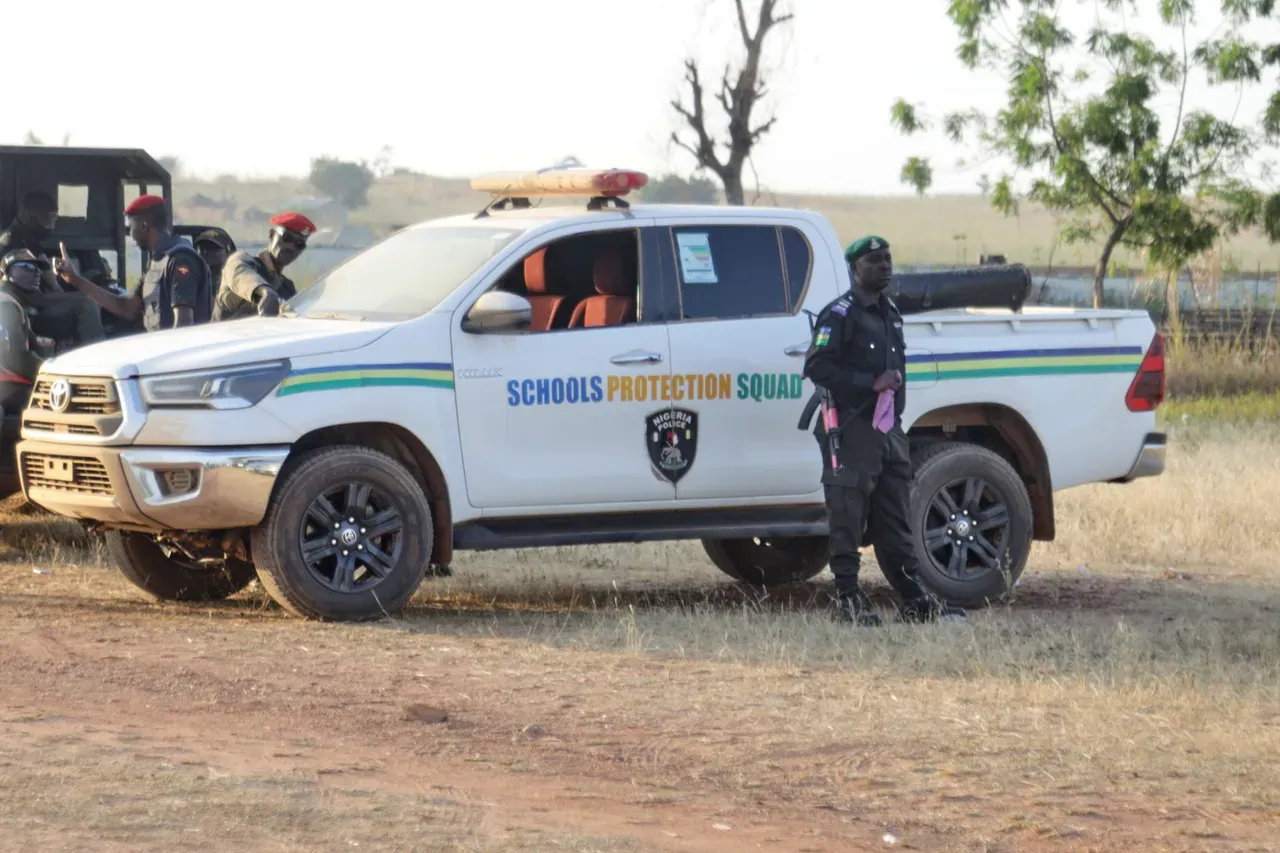
From ideology to strategy
The early years of this crisis were defined by Boko Haram’s violent rejection of Western-style education in the Northeast, but the geography and economics of mass school kidnappings have since expanded. Today, school attacks have evolved from an ideological statement to a high-yield commodity line within a thriving national kidnap economy.
Even inside Boko Haram the practice was contested but the approval they sought came from their own circles, not from any recognised religious authority.
In 2015, commanders who would later lead ISWAP were told by a Daesh figure and got the answer they wanted. Nigeria's leading Muslim bodies have consistently condemned the attacks, and most of the children killed and abducted have been Muslim.
The recent raid in Oyo State, far from the northern strongholds where such terrorist groups have traditionally operated, illustrates the shifting contours of the threat.
Attributed to Ansaru, it fits a pattern of leveraging high-profile hostages to force the government into releasing imprisoned commanders. Yet this logic is not unique to Ansaru. In 2012, a Boko Haram spokesman threatened attacks on government schools in retaliation for the detention of the group's members' families.
The rise of the kidnapping economy
The picture grows more complicated once criminal armed groups enter the equation.
Many mass school abductions since 2020 were carried out not by terrorists organisations but by heavily armed bandit groups across northwestern Nigeria. Though these groups sometimes cooperate with terrrosits groups and overlap with them geographically, their motivation is usually financial rather than ideological.






Emerging from longstanding rural conflicts over cattle rustling, weak governance, and illicit economies such as illegal mining, they have discovered that schoolchildren are the ultimate soft target.
Unlike targeting a community leader or an army officer, raiding a rural school delivers a massive supply of high-leverage hostages with minimal resistance. This is why attacks on schools continue even where ideological hostility to education is largely absent.
In 2021, gunmen abducted more than a hundred students in Kaduna State and demanded roughly 1 million naira ($724) per student, a sum the community raised themselves, despite federal laws criminalising ransom payments.
In 2024, twenty medical students were seized en route to a conference, with 50 million naira demanded for their release. And the list does not stop there.

Why rescue remains so difficult
In several high-profile cases, intelligence and aerial surveillance have let security forces locate abducted victims relatively quickly. But locating hostages is only the beginning. Assaulting heavily armed kidnappers surrounded by children carries great risk, which forces the state toward slower kinetic and non-kinetic options.
Terrorist groups understand this leverage well. The child hostages have also been used as protection against overwhelming state firepower. And, in the most horrifying cases, as in 2014, some of the students are coerced or drugged and prepared as suicide bombers to force the government’s hand in negotiations.
Three problems, not one
The mistake would be to treat all of this as a single crisis with a single fix. It is an easy way to bundle all this under a single call to “protect schools”; however, schools do not exist in isolation from the communities around them. A classroom surrounded by insecurity remains insecure, so each threat requires its own response.
A theological war on schooling calls for sustained deradicalisation, a state that makes the value of education undeniable to communities Boko Haram once persuaded otherwise, and religious voices capable of dismantling those narratives from within their own traditions.
Abductions used as political leverage call for sustained security-sector effort directed at dismantling the perpetrating networks. A ransom economy calls for policing, financial tracing of payments, better intelligence, and a state presence in the rural areas bandit groups now move through unchallenged.
It has long been said in Nigeria that the children of the poor a nation fails to educate will not let the children of the rich live in peace. Unfortunately, the burden of this failure has fallen disproportionately on poorer Nigerians, as children of the wealthy are insulated by private security or educated abroad.
The Oriire and Borno students are home, for which Nigerians can be grateful. But many children remain in captivity, and countless others attend schools still frighteningly vulnerable to armed groups enabled by decades of insecurity, weak governance, and neglect. Until that structural vulnerability is addressed, communities across the country will keep asking the same distressing question: which school is next?
The author, Dr. Ifeoluwa Siddiq Oyelami, is a researcher whose work explores religion and postcolonial thought, with particular attention to religious extremism, interreligious relations, and the intellectual traditions of West Africa.
Disclaimer: The views expressed by the author do not necessarily reflect the opinions, viewpoints and editorial policies of TRT Afrika.