 Pauline Odhiambo
The morning sun had barely cleared the thatched rooftops of Tamale, Ghana, when Abena Serwaa gathered her three youngest children and began the dusty walk to the health clinic.
For the past week, she had heard whispers through the market—whispers that vaccines were unsafe, that foreign doctors were injecting children with poison. But Abena remembered her grandmother's stories. She remembered the wailing that once echoed through her village when measles swept through, claiming the youngest and the weakest.
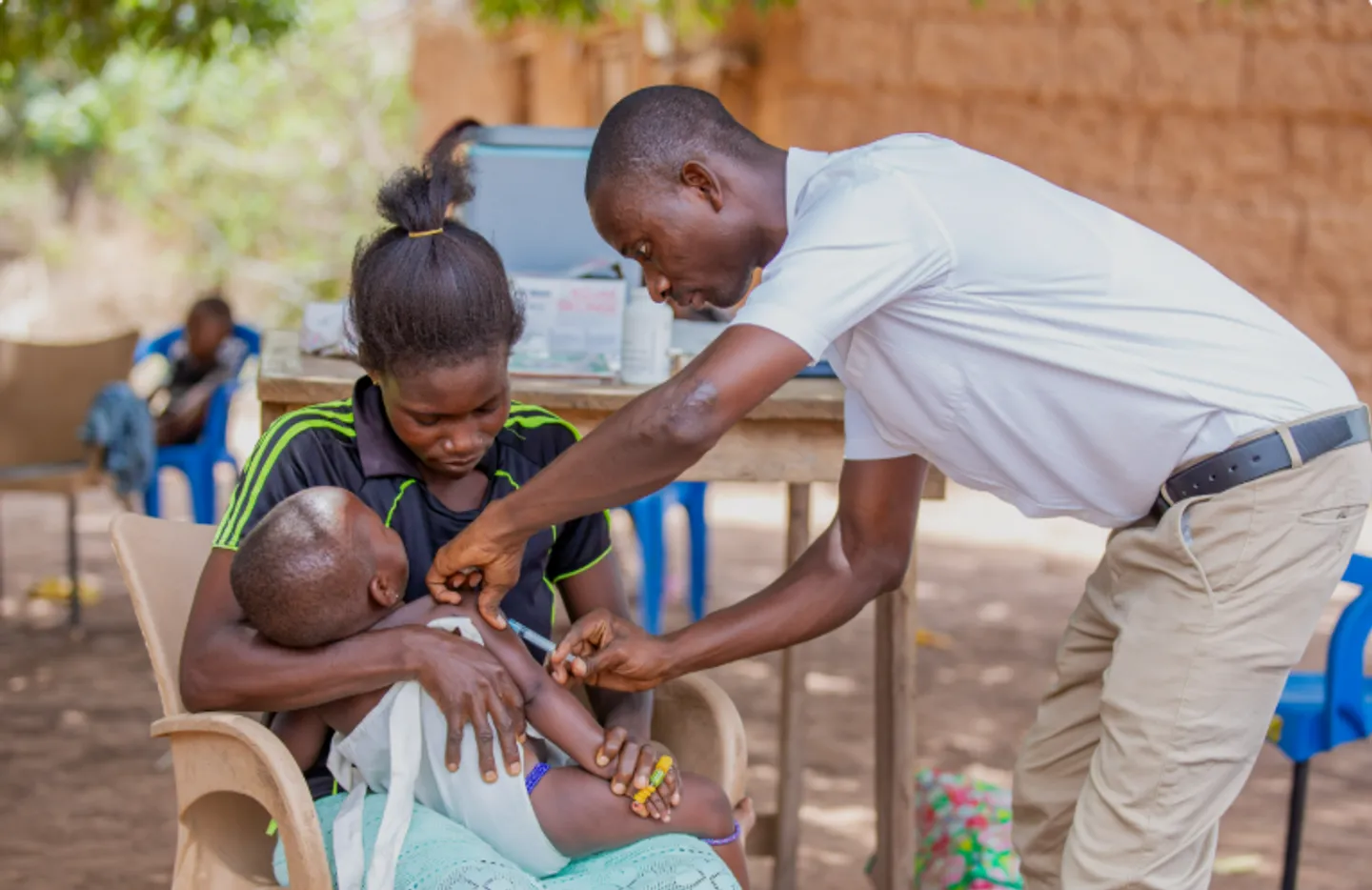
She had lost an aunt to that outbreak. So she walked, her two-year-old son Kwame fussing in her arms, determined to see him receive his first dose of the diphtheria, tetanus and pertussis vaccine.
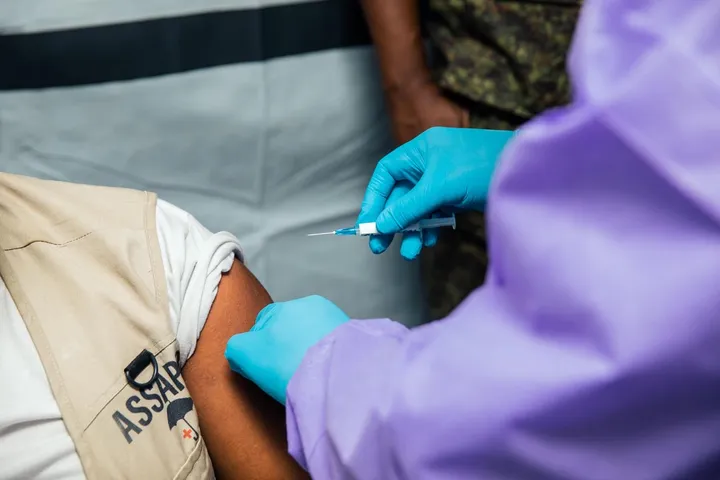
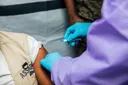
When the nurse's needle pierced Kwame's tiny arm, Abena felt not fear, but hope—hope that her son would live to see the future she had only dreamed of.
Three thousand miles away, in the sprawling Kibera settlement of Nairobi, Kenya, Samuel Ochieng watched his neighbour's child cough violently, her tiny body racked with fever. The local health workers had come door-to-door, urging families to complete the full vaccine schedule, but Samuel's wife had been hesitant.
She had heard rumours on social media that the second measles dose caused infertility. It took the sight of that coughing child to change her mind. Samuel carried his daughter Grace to the mobile clinic that very afternoon, praying it wasn't too late.
"I almost let fear steal my daughter's future," he later confessed to the nurse. "I will never make that mistake again."
Fragile recovery
Stories like Abena's and Samuel's are playing out across Africa and the developing world as global immunization coverage makes a tentative comeback.
According to the annual WHO-UNICEF Estimates of National Immunization Coverage released on July 15, 90% of infants worldwide—nearly 116 million—received at least one dose of the DTP vaccine in 2025, while 85% completed the full three-dose series.
Both figures represent a one-percentage-point improvement over the previous year, but here is the sobering truth: global coverage remains one point below 2019 levels, stuck in a narrow range that has barely shifted since 2009.
Behind these numbers lie real lives and real risks. An estimated 13.5 million "zero-dose" children—those who received not a single vaccine in their first year—still exist. That is nearly 750,000 fewer than the previous year, progress that should be celebrated. Yet even as we reach more children, we are losing others who start the vaccination journey but never complete it.
The drop-out rate is alarming: 7.3 million infants received their first DTP dose but never returned for their first measles dose. Consequently, 57 countries reported large or disruptive measles outbreaks in 2025. The 95% coverage threshold required to prevent such outbreaks remains stubbornly out of reach, with only 84% receiving MCV1 and 77% receiving MCV2.
Conflict, hesitancy, and the gaps between
Why is there a struggle to close the gap?
The answer lies in a perfect storm of conflict, poverty, and eroding trust. More than half of all zero-dose children live in fragile, conflict-affected, or vulnerable settings—places like Syria, where in a single year, DTP1 coverage dropped by six percentage points and MCV1 by twelve. Political upheaval and insecurity make routine immunization nearly impossible.
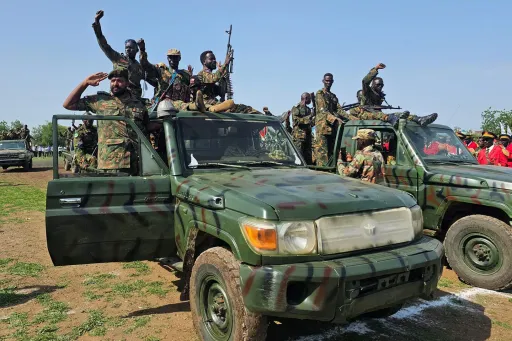
Yet there are bright spots: Sudan recorded the largest single-country gain globally last year, increasing DTP1 coverage by an astonishing 35 percentage points. This is proof that even amid ongoing conflict, progress is possible when access to services improves.
But the threats are not limited to war zones.
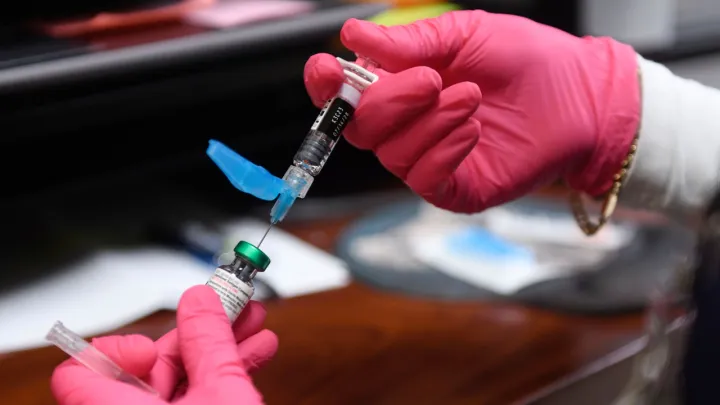
In middle- and high-income countries, where vaccines are freely available, coverage is slipping due to shifting political commitment, structural challenges, and rising vaccine hesitancy.
South Africa's DTP1 coverage has fallen by 20 percentage points since 2019. Bosnia and Herzegovina, which saw the largest increase in MCV1 coverage in its region in 2024, experienced a 23-point drop the very next year. Hesitancy is a contagion of its own kind, spreading through misinformation and distrust, and it is proving just as difficult to contain as any virus.
The price of inaction
The consequences of these gaps are devastating and avoidable.
Every child who misses a vaccine becomes a potential link in a chain of transmission, a threat to their community and to global health security.
As UNICEF Executive Director Catherine Russell put it: "Governments and health workers have helped global vaccination rates bounce back after dropping significantly during the COVID-19 pandemic. But millions of vulnerable children are still being left unprotected due to conflict, displacement, and poverty. We must reach every child, and we must rebuild trust where it is fraying. No child should suffer from a disease that a simple vaccine can prevent."
WHO Director-General Dr Tedros Adhanom Ghebreyesus echoes that urgency, saying: "Every child, whether born into wealth or poverty, peace or conflict, deserves the life-giving protection that vaccines provide. Immunization is one of the most cost-effective, most equitable, and most reliable interventions for protecting children's health and well-being. Our greatest security begins with ensuring that everyone, wherever they may live, is protected from deadly diseases that vaccines have the power to prevent."
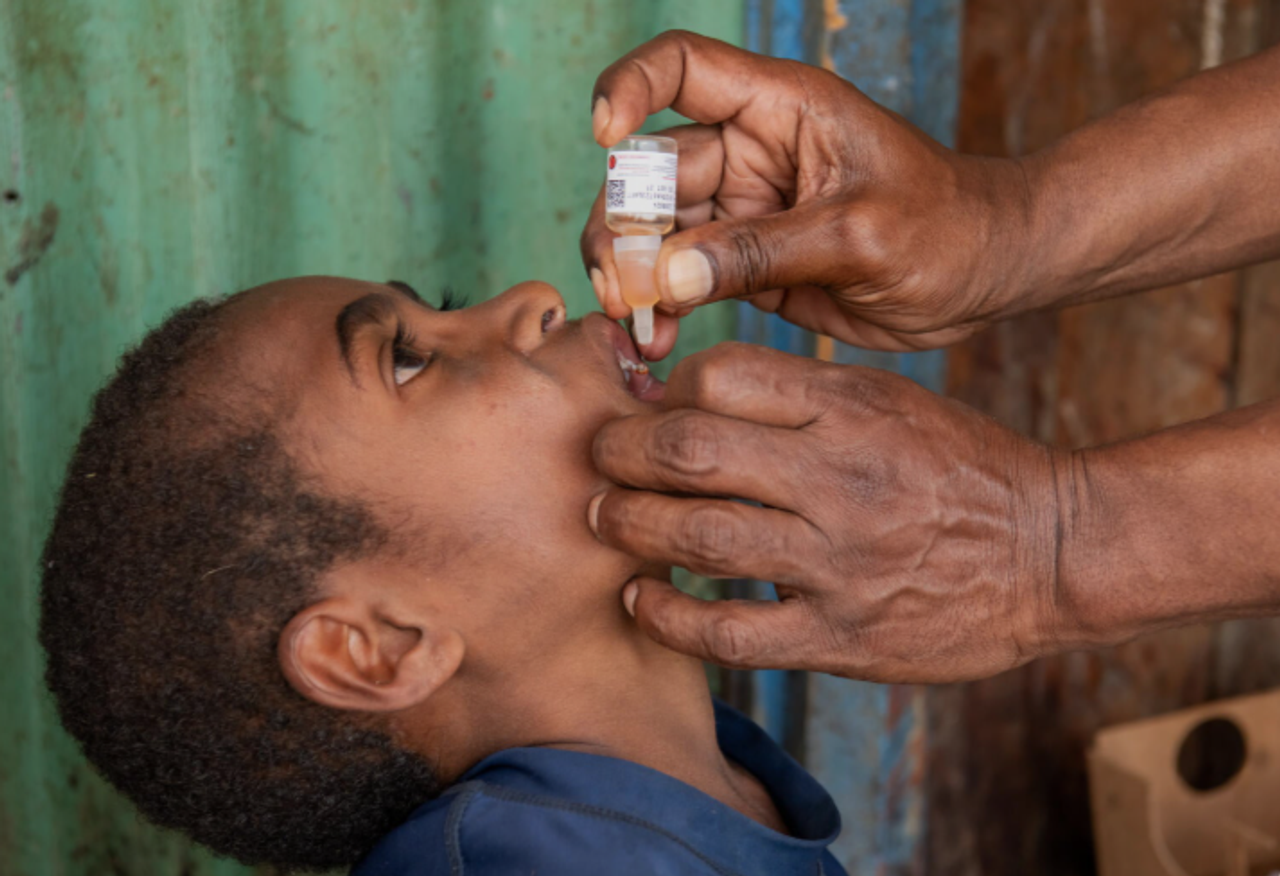
Over the past 25 years, sustained investments from governments and partners have reduced the annual number of zero-dose children by 40%. In countries supported by Gavi, the Vaccine Alliance, children today are protected against more diseases than ever before, with 74% average coverage across a full course of WHO-recommended vaccines.
But the foundations of that progress are now under strain. The full impact of cuts to international health financing announced over the past two years is not yet reflected in the data, but the warning signs are clear: only 18 national immunization surveys were undertaken this year, down from 50 in 2024 and an average of 33 per year between 2015 and 2019.
Weakening the data systems needed to find and reach missing children will inevitably lead to outbreaks and preventable deaths.
A needle and a promise
WHO and UNICEF are calling on governments and partners to strengthen immunization in conflict and fragile settings, counter false information, increase domestic and global funding, and invest in stronger data and surveillance systems. It is a tall order, especially in a world of geopolitical uncertainty and funding constraints.
Yet the alternative—allowing preventable diseases to resurge—is unthinkable.
For Abena Serwaa, the statistics and the global strategies matter less than the tiny arm of her son, now protected against diseases that once devastated her family. She is part of a global movement of parents who choose science over fear, hope over hesitation.
As she cradles Kwame, her eyes bright with determination, she offers a message that transcends borders and politics.
"I walked through the dust and the doubt to reach this clinic," she says, "because no child in my family will die from a disease that a needle can stop. If we want our children to inherit the future, we must first give them the chance to live."