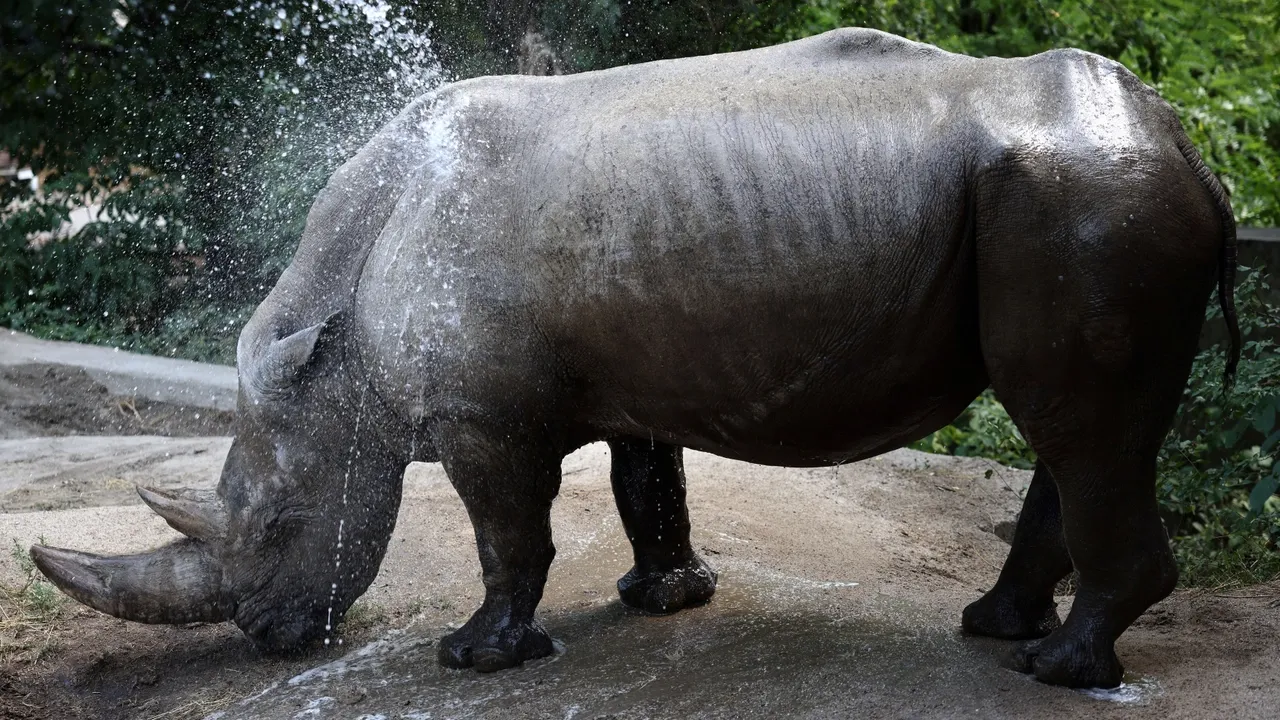
For the first time in more than 40 years, rhinos are back in Uganda's Kidepo Valley National Park after poachers hunted them all for their prized horns and meat.
Two southern white rhinos rumbled out of transport crates on Tuesday after a long journey from a private ranch, becoming the first of eight animals set to repopulate the park where the last rhino was killed in 1983.
Back then, poachers killed all the rhinos roaming Kidepo and the country's other national parks, once home to around 700 of the giant mammals.
Their disappearance marked the species' total extinction in the wild in Uganda. Their reintroduction is now being overseen partly by the state-run Uganda Wildlife Authority.
'New rhino story'
"This moment marks the beginning of a new rhino story for Kidepo Valley National Park," James Musinguzi, Executive Director UWA, said at a ceremony to mark the occasion.








"Translocation of these rhinos is the first step in restoring a species that once formed part of the park's natural heritage," he added.
The two rhinos were translocated to Kidepo, a vast expanse of savannah in remote northeastern Uganda, from the privately owned Ziwa Rhino and Wildlife Ranch in Nakasongola, about 100 kilometres north of the capital Kampala.
The ranch has been breeding rhinos since 2005, when it imported four southern white rhinos from a Kenyan game reserve.
Poaching remains a threat
Poaching remains a major problem in Uganda's protected wildlife areas and authorities regularly detain and prosecute suspects caught with ivory, pangolins and other endangered species, according to conservationists.
Despite international campaigns to crack down on poachers and smugglers, demand for rhino horns has remained strong, driven by their use in traditional medicine and their role as status symbols in many Asian countries.