 Charles Mgbolu
For Kenya, a country that spent decades battling poaching and rebuilding its wildlife population, the recent deaths of 16 elephants have triggered a troubling question: Have Kenyan wildlife agencies won the war against guns and traps only to face a more elusive threat in the form of poison?
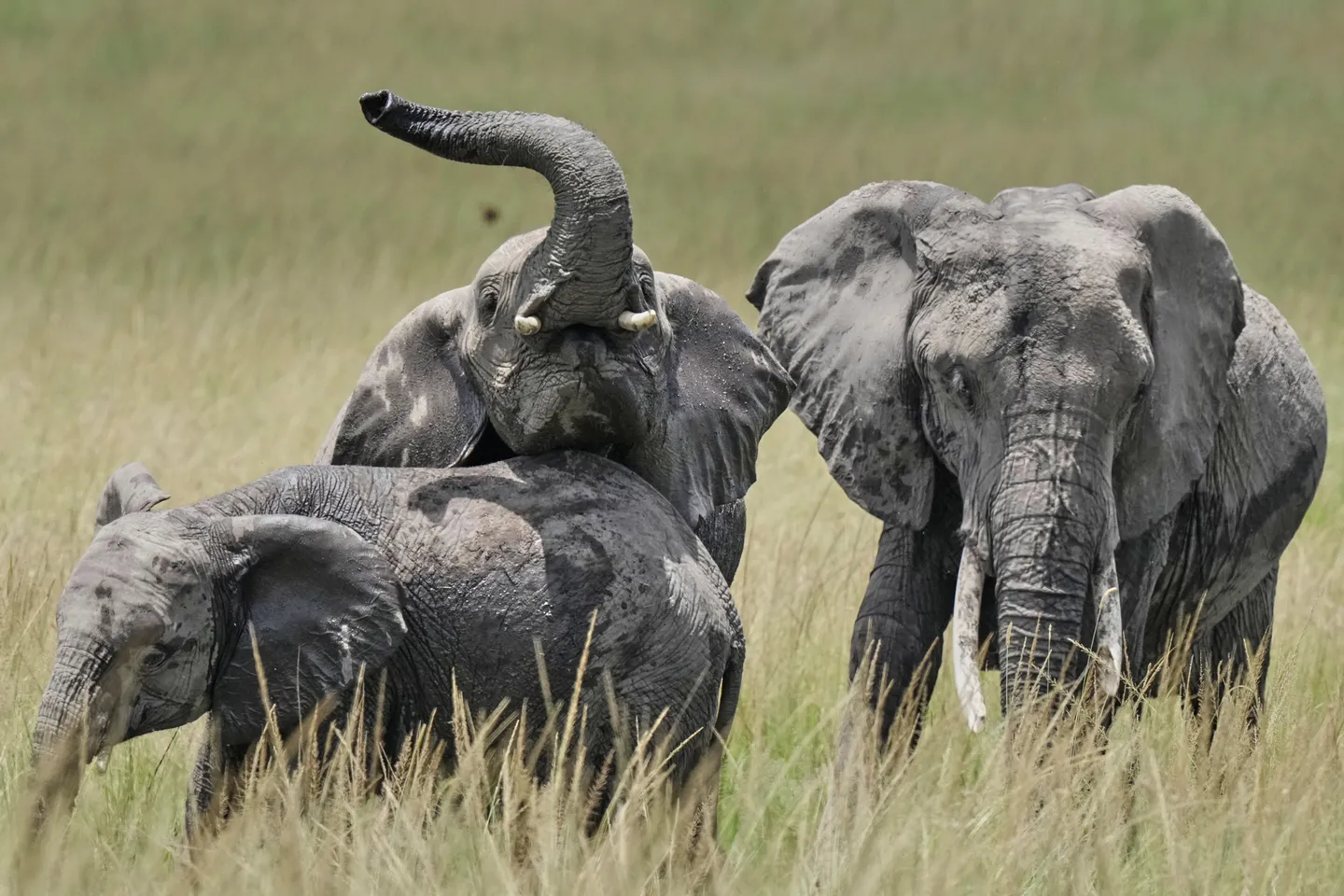
Last week, the news of elephants in Kenya's famed Amboseli ecosystem collapsing one after another made global headlines. Reports from the Kenya Wildlife Service (KWS) revealed the giant animals struggled to breathe and some showed signs of paralysis. Within days, they were dead.
By the time wildlife authorities counted the toll, 16 elephants — most of them females and calves — had perished after feeding in farmlands bordering the Amboseli National Park. Preliminary tests pointed to cyanide poisoning, with traces of the chemical detected in the animals' digestive systems. Tomatoes were also found in their stomachs.
Kenya has since launched investigations.
The East African nation’s Pest Control Products Board (PCPB) now leads a multi-agency technical team to examine and investigate whether pest control products or other crop-protection chemicals may have been improperly used, stored, or disposed of in Kimana, Kuku, Kitenden and the wider Amboseli ecosystem, and whether water, soil, or forage may have been contaminated.
But conservationist Dr Paula Kahumbu, Chief Executive Officer of WildlifeDirect, says this is more than just protecting wildlife.
"It is a warning that Kenya's pesticide governance, regulatory oversight, and enforcement systems require urgent reform," Kahumbu tells TRT Afrika.
Worrying pattern
For wildlife experts, the incident represents the latest chapter in a shift that has been unfolding quietly for years.
In the 1980s and 1990s, poaching dominated conservation concerns. Today, many wildlife experts say poisoning is emerging as one of the most dangerous threats facing wildlife populations across Kenya.
Conservation records show that poisoned carcasses placed to kill lions or hyenas have repeatedly wiped out vultures and other scavengers that feed on the same animals.
One of the country's most notorious incidents occurred in 2015 when members of the famous Marsh Pride in the Maasai Mara died after consuming a poisoned cow carcass.
The lions, foaming at the mouth, died within days, and dozens of endangered vultures that fed on the lions' carcasses also perished.
Experts like Kahumbu say these latest elephant deaths are particularly alarming because of their scale and speed, and warn that concerns should not be limited to wildlife.
"We don't want our children to die from cyanide poisoning. If toxic chemicals are capable of entering crops consumed by elephants, we must ask whether human consumers, farm workers, neighbouring communities and domestic livestock are being adequately protected," Kahumbu says.
KWS says it is working with communities and conservation partners and has “intensified elephant surveillance, ranger patrols, and veterinary monitoring across the ecosystem to address any further cases and safeguard our wildlife and visitors.”
It adds that its findings to date do not indicate an infectious or transmissible disease and reassures the public and tourism sector players that Amboseli National Park remains open and is operating normally.
Economic costs to communities






Yet the story is not simply about chemicals.
Across Amboseli, many communities live with wildlife every day. Elephants frequently leave the park at night and move through community lands in search of food and water. Farmers often spend sleepless nights guarding their crops, beating drums, flashing lights, and calling wildlife authorities for help.
For some families, a single elephant raid can wipe out an entire season's harvest.
Many residents feel they shoulder the costs of living alongside wildlife without receiving adequate benefits from tourism revenues generated by nearby parks. The result is growing resentment in some areas and increasing pressure on already strained conservation efforts.
"People are utilising land that was previously reserved for wildlife, forcing animals and humans into closer contact. When wildlife loses access to its traditional habitat, it often moves into areas occupied by people, which creates opportunities for conflict," Philip Muruthi, vice president at the African Wildlife Foundation, tells TRT Afrika.
This tension, he says, lies at the heart of Kenya's human-wildlife conflict challenge.
According to government records, more than 57,000 human-wildlife conflict incidents were reported between 2009 and 2024. Kenya's National Elephant Plan notes that at least 1,160 elephants died between 2000 and 2020 in incidents linked to self-defence or retaliatory killings.
Conservation experts argue that lasting solutions will require more than law enforcement alone.
Non-lethal strategies
Muruthi explains that technology can be better harnessed to become an important tool in conflict prevention.
"For example, when wildlife monitors observe a pride of lions moving toward a community, technology can be used to quickly disseminate warnings to residents. Similar systems can be used to alert communities when elephants or other potentially dangerous animals are approaching populated areas," Muruthi explains.
The goal is to provide timely information so that people can take preventive measures before conflict occurs.
Muruthi adds that beyond infrastructure and technology, cultural lessons can help reduce conflict.
“There is much we can learn from communities that have successfully lived alongside wildlife for generations.”
The Maasai, for example, have coexisted with wildlife for a very long time. Muruthi says their experience demonstrates that people and wildlife can share landscapes with relatively limited conflict because they understand animal behaviour and have developed practices that support coexistence.
“We should study what such communities are doing right and identify lessons that can be adapted elsewhere. By learning from these successful models, we can develop more effective approaches to managing and reducing human-wildlife conflict,” Muruthi says.