Ziyad Motala
The US government has done what even the harshest critics of the International Criminal Court (ICC) might once have considered unthinkable.
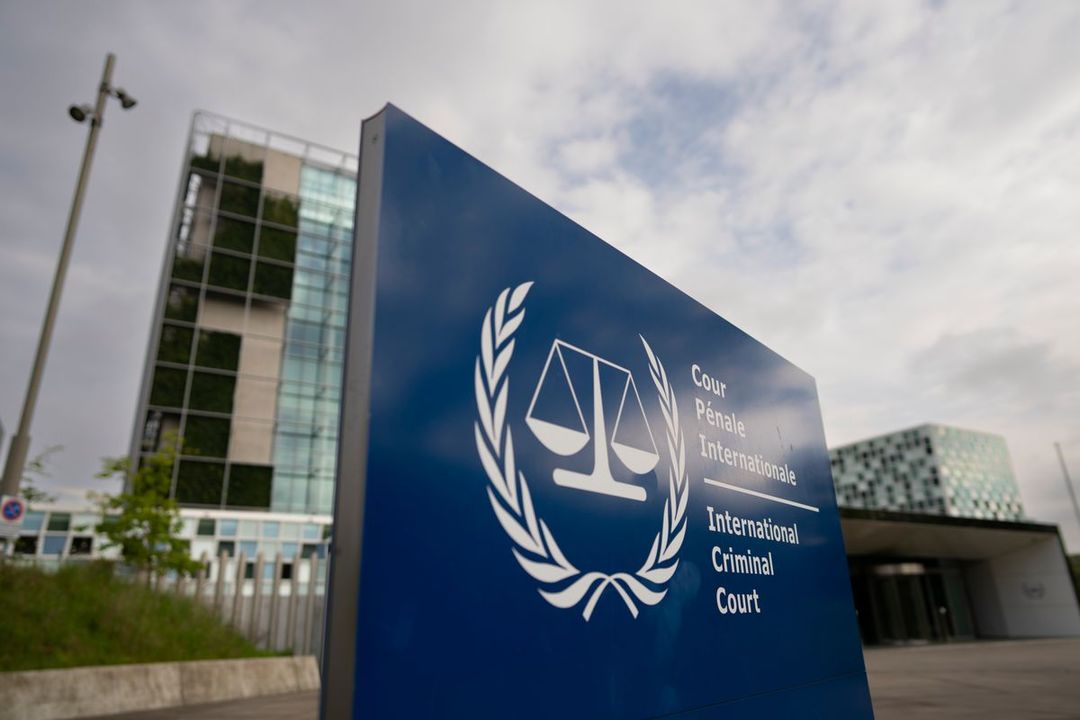
Last month, Washington placed the Court itself on its sanctions list, extending a campaign that had already targeted 13 of its officials. Europe has condemned the move. The question is whether it intends to do anything more.
The immediate dispute concerns the ICC's investigation of alleged crimes committed in Gaza and its November 2024 arrest warrants for Israeli Prime Minister Benjamin Netanyahu and former Defence Minister Yoav Gallant.
Washington also objects to the Court's investigation of alleged crimes by American personnel in Afghanistan.
The US argues that the ICC cannot exercise authority over nationals of countries that have not accepted its jurisdiction.
But Article 12 of the Rome Statute permits jurisdiction over crimes committed on the territory of a state party, regardless of the accused person's nationality.
Palestine is a state party. There is a legal disagreement here, but the answer cannot be to punish the judges for adjudicating it.
ICC judge Kimberly Prost has described how American sanctions led to the cancellation of credit cards and her Amazon and Google accounts, leaving everyday activities unexpectedly difficult.
Such measures do not merely inconvenience judicial officers; they enlist banks and technology companies in a campaign that can isolate individuals from essential services.
When judges become financially untouchable because of the cases before them, the principle of judicial independence has suffered a serious injury.
The October 9 designation carries the same threat to the institution as a whole.
American persons and businesses are generally barred from dealings involving blocked parties, and assets subject to American jurisdiction may be frozen.
Washington has issued licences permitting many routine ICC operations to continue until 7 April 2027, with other exemptions covering certain services.
Speak out, speak loud
Europe's response has been eloquent but hesitant: leaders declared their support for the Court at their October 15-16 meeting and urged Washington to reverse course.
On October 23, the European Commission advised EU businesses to continue serving the ICC, pointing in particular to European payment infrastructure.
Yet the Commission still favours diplomacy and has not activated the principal legal instrument available to resist the extraterritorial effects of American sanctions.
Assurances of solidarity are less persuasive when the institutions asked to provide banking and technological services remain anxious about American retaliation.
The hesitation is harder to justify because all 27 EU member states are parties to the Rome Statute.
Under Article 86, they have undertaken to cooperate fully with the Court in investigating and prosecuting crimes within its jurisdiction.
That provision does not specifically command activation of the Blocking Statute, but it gives the European debate a legal dimension that diplomatic statements obscure.
States committed by treaty to supporting the Court cannot treat the erosion of its operational independence as someone else's problem.
That instrument is the European Union's Blocking Statute, Council Regulation 2271/96.
Adopted in 1996 in response to American measures involving Cuba, Iran and Libya, it reflects a straightforward proposition: Washington cannot assume that its sanctions policy automatically governs lawful commercial activity in Europe.
The regulation is not a declaration of sympathy. It creates obligations intended to prevent European economic operators from becoming instruments of a foreign government's extraterritorial policy.
Where the regulation's annex lists specified American measures, European companies are prohibited from complying with their requirements, subject to authorised exceptions.
They may seek damages caused by the application of those measures, while foreign court judgments based on them cannot be enforced in the EU.
Affected operators also have reporting obligations.
The Commission must amend the annex to cover ICC sanctions; the existing statute does not automatically protect the Court. That is the decision Europe has been reluctant to take.
The Dutch bank ABN AMRO, which handles the ICC's finances, faces potential American penalties if it continues providing banking services after the temporary sanctions exemption expires in April 2027.
Its extensive American operations expose it to considerable financial and regulatory risks.
Although the bank has not announced that it is terminating its relationship with the Court, the uncertainty places it in an increasingly difficult position.
Activating the EU Blocking Statute could prohibit the bank from withdrawing its services merely to comply with the specified American sanctions, although it would not eliminate the risk of American retaliation.
The consequences are already evident in the insurance sector. On October 1, the ICC and the French insurance giant AXA terminated their contractual relationship by mutual agreement.




AXA had provided health insurance services to the Court. According to the Financial Times, the company cited concerns about the extraterritorial application of American sanctions.
Months of discussions reportedly failed to produce an arrangement that would adequately protect the parties without European blocking legislation. The ICC subsequently arranged coverage with another insurer whose identity has not been disclosed.
An international criminal court operating on European soil should not have its access to ordinary banking and insurance services determined by Washington's political objections to its judicial decisions.
Calls for action are also coming from within the EU itself. Fifty-eight members of the European Parliament wrote to Commission President Ursula von der Leyen after the latest sanctions, urging deployment of the Blocking Statute.
Parliament has also pressed for such protection in earlier resolutions.
These representatives understand the implications of allowing an external power to determine whether an institution headquartered on European soil can obtain ordinary commercial services.
Can Europe take on the US?
Legitimate doubts remain about how much the statute can accomplish.
When Europe updated it in 2018 to counter renewed American sanctions on Iran, companies with substantial American exposure still feared exclusion from United States markets and financial networks.
A European legal prohibition does not erase those risks. Nor does it necessarily persuade a multinational bank to sacrifice its American business.
The Commission is right to consider the costs, but an imperfect remedy is not an excuse for refusing to use it.
Activation should therefore be accompanied by practical protection. The EU should secure reliable euro-denominated payment channels, work with banks and insurers prepared to serve the Court, and reduce dependence on vulnerable American technology infrastructure.
It should enforce the regulation consistently and provide clear guidance on the scope of permissible conduct and available exemptions.
If European businesses are expected to resist extraterritorial pressure, governments must do more than congratulate them for their courage while leaving them to absorb the losses.
The alternative is an extraordinary form of institutional dependence. European leaders speak incessantly about strategic autonomy and the rules-based international order.
They regulate powerful American technology companies, defend the sovereignty of European markets and claim an independent voice in world affairs.
Yet, when sanctions reach a court in The Hague, they seem content to ask Washington to reconsider. The issue is no longer a shortage of legal instruments; it is whether the political will exists to deploy them.
Europe's credibility is also on trial. Its governments have strongly supported the ICC's investigation of Russian conduct in Ukraine and the warrant against Vladimir Putin.
That support should not evaporate when the Court examines allegations involving Israeli leaders or American personnel.
The allegations must be tested according to evidence and law, not the identity of the accused or the diplomatic influence of their governments.
If international criminal justice is welcomed against adversaries but obstructed when allies are implicated, the promise of equal accountability becomes difficult to defend.
This inconsistency is not lost on countries across Africa, Asia and Latin America, where complaints about selective international justice have circulated for decades.
Many governments joined the Rome Statute on the understanding that the gravest crimes would be examined without political privilege.
If international criminal justice is welcomed against adversaries but obstructed when allies are implicated, the promise of equal accountability becomes difficult to defend.
A European refusal to protect the Court when Washington objects would reinforce the belief that universal principles carry an unwritten exception for powerful Western states.
No amount of rhetoric about human rights can easily repair the damage done by visible double standards.
The Commission should amend the Blocking Statute's annex to cover the relevant ICC sanctions and use the months before the American operational licence expires to put real safeguards in place.
It should also make it clear that disagreement with the Court is not a licence to interfere with its independence. Europe need not approve every ICC decision to defend the institution's right to make decisions free of economic intimidation.
Will Europe finally exercise the legal authority it claims to possess, or continue as a supplicant of Washington, requesting permission to uphold principles it says are non-negotiable?
The answer will matter to judges in The Hague and to victims awaiting justice in places far beyond Europe.
It will also reveal whether European strategic autonomy is a serious commitment or merely a phrase repeated whenever exercising it would be inconvenient.
The author, Ziyad Motala, is a Professor of Law at Howard Law School Washington D.C. Motala teaches in the areas of International Law and Constitutional Law. He was born in South Africa and was active in the country’s liberation struggle. He co-authored Constitutional Law, Analysis and Cases with Cyril Ramaphosa the current President of South Africa and architect of the South African Constitution.
Disclaimer: The views expressed by the author do not necessarily reflect the opinions, viewpoints and editorial policy of TRT Afrika.