 Charles Mgbolu
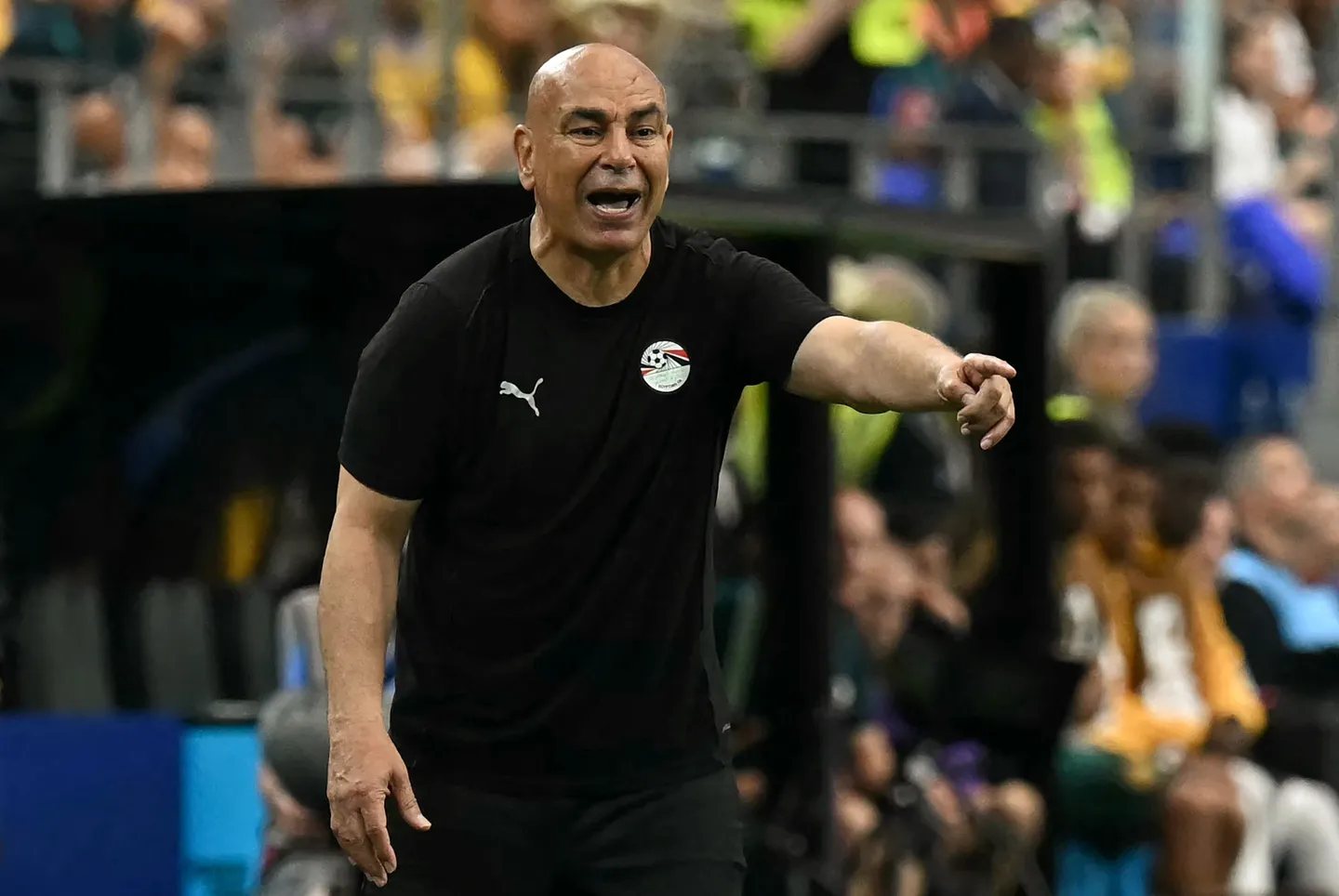
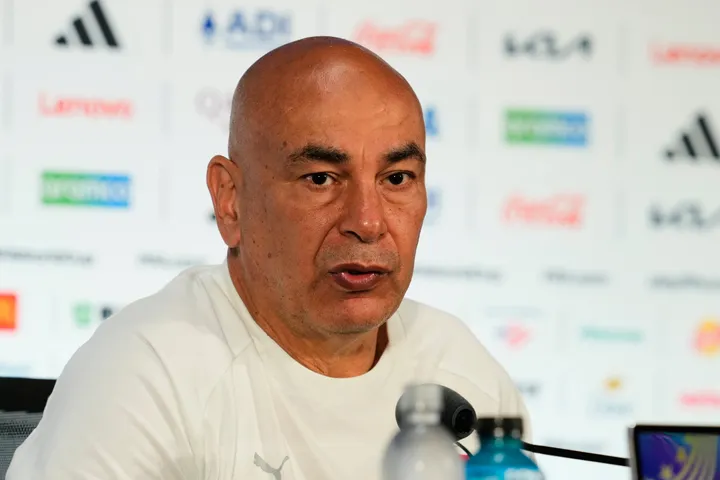
When FIFA suspended Egypt coach Hossam Hassan for three matches, analysts saw it as a straightforward exercise of the governing body’s disciplinary authority. Yet it has reopened a much broader debate about how football’s most powerful institution enforces its rules, particularly when controversies involve teams of different stature and influence.
The Egyptian Football Association announced on Monday that FIFA’s Disciplinary Committee had suspended Hassan following Egypt’s 3-2 defeat to Argentina in the World Cup round of 16 on July 7 in Atlanta. Hassan’s twin brother, Ibrahim Hassan, the team director, received the same sanction, while forward Mostafa Zico was handed a five-match suspension.
The punishment followed a match in which Egypt surrendered a two-goal lead amid contentious refereeing decisions. The Pharaohs were angered by a disallowed goal involving Zico and a late penalty appeal when the score was 2-2. After Argentina completed its comeback, Hassan accused match officials of having “cheated” Egypt out of a place in the quarter-finals.
The FIFA rule book shows it has the authority to sanction public accusations that undermine the integrity of the game. But the suspensions have prompted a question that extends beyond whether Hassan’s remarks crossed a disciplinary line: does FIFA apply its regulations with the same rigour to everyone, or do questions of sporting stature and political influence shape how its decisions are perceived?
The Egyptian federation has requested the detailed grounds for the sanctions to assess its legal options and determine whether to appeal.
The controversy, according to Moroccan football analyst Jalal Bounouar, is central to football governance.
“In my view, equality must be the fundamental principle governing football in tournaments and leagues. All teams and nations must be treated equally, regardless of their status, influence, or political and economic power,” Bounouar tells TRT Afrika.
His argument is not necessarily that Hassan should have escaped punishment. Rather, it is that the legitimacy of any sanction depends on whether comparable cases are treated according to the same principles.
One rule for Egypt, another for football’s powerful?
The controversy surrounding United States forward Folarin Balogun has brought an additional dimension to the debate: the appearance of political influence in football administration.
Balogun was sent off following an incident involving Bosnia defender Tarik Muharemovic during the United States’ 2-0 victory in the round of 32. The dismissal carried an automatic one-match suspension that would have ruled him out of the next round.
However, United States President Donald Trump reportedly urged FIFA President Gianni Infantino to review the case. The red card was subsequently overturned, allowing Balogun to feature in the United States’ round-of-16 match against Belgium.
The sequence prompted questions about the grounds for the reversal and whether political intervention had influenced the process.
Former FIFA president Sepp Blatter articulated the concern in pointed terms.
“Red cards are not overturned by political phone calls. They are overturned by rules, evidence and independent bodies,” Blatter said in a post on X shortly after the reversal was announced. “If a US President intervenes with the FIFA President — and a player is suddenly cleared before a World Cup knockout match — the question is unavoidable: Quo vadis, FIFA? Football must never become a playground for political power.”
FIFA vice-president Debbie Hewitt was also reported to have asked Infantino to release documents relating to the case, adding to calls for greater transparency from within football’s own leadership.
"The difficulty for FIFA is that disciplinary proceedings lose some of their credibility when the public cannot establish whether they have been concluded, what findings were reached or why a particular decision is chosen,” Bounouar tells TRT Afrika.
Without that clarity, even legally sound decisions risk being judged against the suspicion that some cases attract greater urgency than others.
Analysts say the question is not whether a red card can ever be overturned. Football’s rules provide mechanisms for reviewing decisions. It is whether the same procedures, standards and safeguards would apply if the player involved represented a country with less political or sporting influence.



Long history of coaches challenging referees
The debate over how football authorities respond to criticism of refereeing is not new. Coaches have long accused officials of making decisive errors, questioned the competence of referees and expressed suspicions about the direction of a match. Their responses, however, have not always resulted in the same visible disciplinary consequences meted out to the Egyptian coaching team.
At the 2002 World Cup, Italy coach Giovanni Trapattoni was left furious after his team had two goals ruled out in a 2-1 group-stage defeat to Croatia. Two further goals were disallowed in Italy’s subsequent match against Mexico, intensifying his frustration.
After Italy’s exit, Trapattoni said, "It was obvious from the start which way the wind was blowing.”
He also criticised the standard of officiating, saying: “You can’t play a World Cup with incompetent linesmen. I’ve never experienced such a negative moment in my career.”
Despite the strength of his remarks, FIFA’s response, as described at the time, was to defend the tournament’s refereeing standards rather than announce disciplinary sanctions. Its communications director characterised controversial decisions made by the Ecuadorian referee as “normal human error”.
At the 2018 World Cup, Diego Maradona’s reaction to England’s penalty shootout victory over Colombia generated another controversy. Maradona accused referee Mark Geiger of favouring England, described the outcome as a “monumental robbery” and questioned the appointment of an American referee.
FIFA, rather than announce disciplinary sanctions publicly, rebuked his comments. Maradona later apologised to FIFA and its referees, acknowledging that some of his remarks had been unacceptable.
The most recent comparison is with France coach Didier Deschamps, who questioned the competence of the referee following France’s semi-final defeat to Spain at the same World Cup in which Hassan was sanctioned. He asked: “I will ask a question… does the referee possess the required level to manage a World Cup semi-final?”
There are no available accounts of FIFA opening disciplinary proceedings over Deschamps’s comments.
Test for consistency
For Bounouar, the principle at stake is straightforward.
“FIFA’s laws and regulations must be respected and applied consistently to everyone, without exceptions or double standards. No nation should be favoured or disadvantaged, and disciplinary decisions must be based on clear rules and objective criteria,” he tells TRT Afrika.
That obligation becomes particularly important when the cases involve major football powers or political figures.
For example, FIFA refused to impose an international ban or suspension on the Israel Football Association (IFA) following a multi-year legal review initiated by the Palestinian Football Association (PFA) due to the war in Gaza. FIFA ultimately opted for financial penalties and disciplinary oversight rather than an outright suspension.
For Nigerian football commentator and analyst Tope Ajayi, disciplinary decisions or reversals should be followed by clearly stated reasons for such actions.
“For Balogun’s red card reversal, FIFA should be able to explain the regulatory basis for the reversal. If an investigation is opened for flouting rules, the public should receive an appropriate update on its conclusion. If a coach is suspended for remarks about refereeing, the disciplinary grounds should be clear enough to distinguish the offence from criticism that the governing body has previously treated differently,” says Ajayi.
Ajayi adds, “Football’s governing body does not have to satisfy every supporter or overturn every disputed decision to preserve its authority. It does, however, have to show that its rules do not bend according to who is involved.”
For Bounouar, “FIFA disciplinary authority’s job is not to prove that every controversial decision does not reflect favouritism. It is to ensure that the processes behind those decisions are transparent to nip suspicions in the bud.”