For UK-based barrister and community activist Ife Thompson, language is more than simply how we communicate or connect. For peoples of African descent, she believes, it lies at the heart of resistance, identity and restitution.
That conviction has shaped her work advocating against racial injustice, whether through The Black British English Podcast or her initiative, Black Learning Achievement and Mental Health (BLAM), which seeks to improve the well-being of people of African descent by challenging anti-Black school exclusions and promoting inclusive Black history education. In the courtroom, too, her work has often brought together racial and linguistic justice, drawing on international human rights law.
TRT Afrika caught up with Thompson before her trip to Ghana and ahead of the launch of an initiative she hopes will transform how Black communities around the world understand, celebrate and advocate for languages born of the African diaspora.
Celebrating diasporic speech
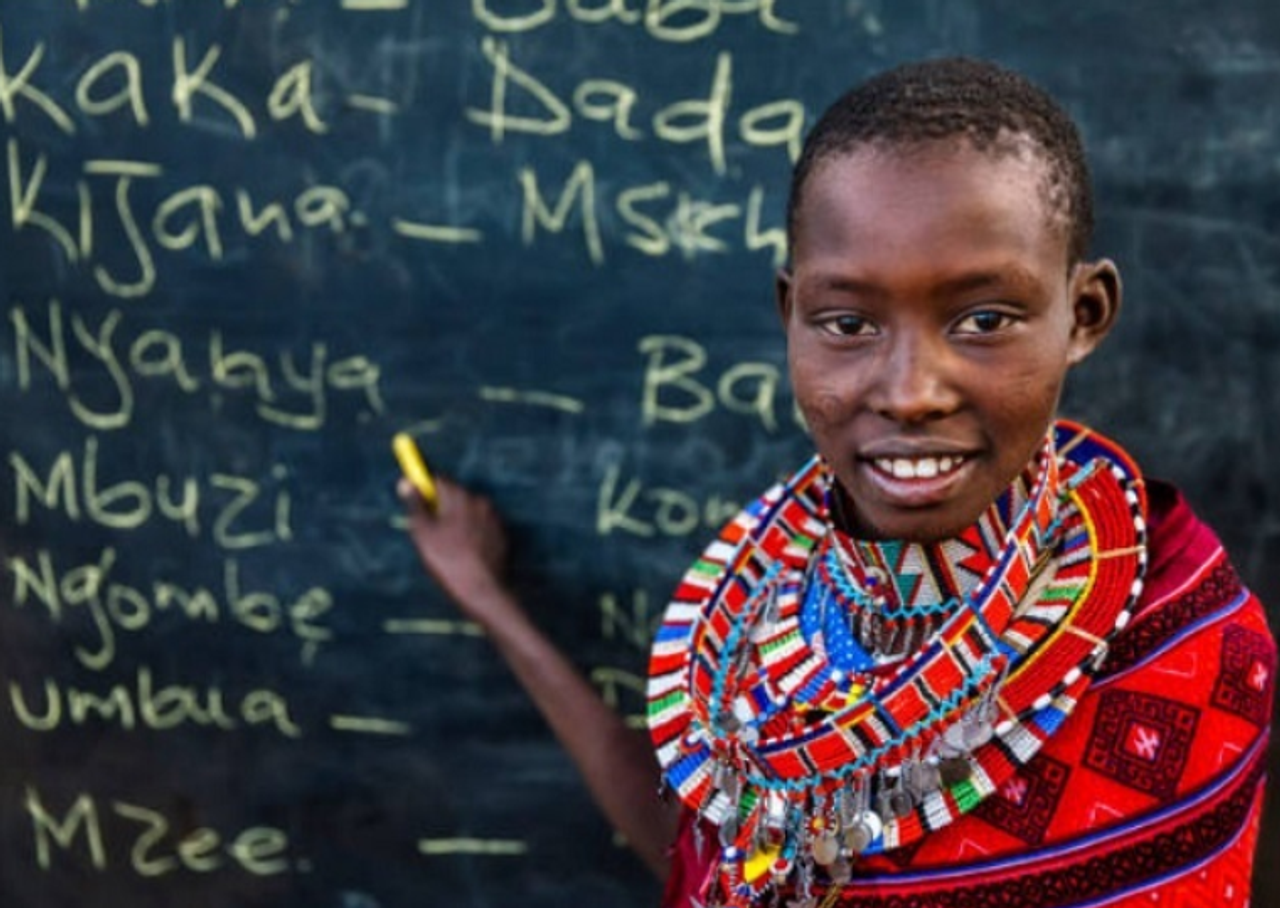
She is the founder of the inaugural Afro-Creole Languages Week, which will run from September 1–8, 2026. The initiative aims to recognise, celebrate and promote Afro-Creole languages across the Black Atlantic, highlighting their shared threads and enduring connections to Africa while challenging perceptions of European linguistic supremacy.
Educators, artists, researchers, policymakers and organisations from around the world are expected to take part, celebrating Afro-Creole languages, advancing language justice and helping ensure that these living languages continue to thrive for generations to come.
Part of Thompson's fascination with the subject was sparked by the work of Kenyan author Ngũgĩ wa Thiong'o.
“In 2017 or 2018, I came across a book by Professor Ngũgĩ wa Thiong'o called Devil on the Cross, which he wrote in his native Kenyan language, Kikuyu, and then translated it into English. I started to get into his work, and what he argued was that you cannot have African literature written only in English because you never have Russian literature written only in Spanish. It doesn’t make sense,” Thompson explains to TRT Afrika.
For Thompson, creating an international week of recognition is also about giving Afro-Creole languages greater visibility.
“Unless you have a week of observation, it doesn’t get global recognition. I’ve been looking at how Black History Month became international, which started as Negro Week by Carter G. Woodson. I'm very big on Afrofuturism and thinking about Black people in the future.”
Creole languages and cultures are already celebrated in different parts of the world. Creole Heritage Month, for example, is observed in October, while International Creole Day is marked annually in October and celebrated through language, history, food and music in communities across the Caribbean and the Americas.
But Thompson's initiative seeks to do something broader: to bring languages across the wider Black Atlantic into conversation with one another and recognise what she sees as their shared histories of Black diasporic movement, adaptation and linguistic creation.
Redefining Creole
The Cambridge Dictionary defines a creole as “a type of language that developed from a mixture of different languages, and which is now spoken by a group of people as their first language.”
Although the term is popularly associated with languages such as Haitian Creole or Louisiana Creole, Thompson hopes Afro-Creole Languages Week will expand the conversation to include other forms of Black speech that she believes share similar histories and linguistic characteristics.
Creole languages generally emerged in contexts where people from different linguistic backgrounds came into contact and needed a common means of communication. Linguists have traced creole and contact-language development to several regions, including the Upper Guinea Coast of West Africa, where Portuguese-based contact varieties emerged centuries before and during the expansion of the transatlantic slave trade.
As African peoples were displaced across the Atlantic, new languages and varieties developed in different societies. These include Caribbean creoles such as Jamaican Patois, West African contact languages such as Nigerian Pidgin, and languages such as Sierra Leonean Krio.
“I don't subscribe to the traditional model, and I would include Black British English and African American Vernacular English within that category, because I don't really feel like they should be separated. I think they come from a specific experience of Black diasporic movement and Black language creation that is unique to Blackness or Africanness. I think that it's particularly important that that is honoured, and that language creation and the way in which we create languages and use language is honoured within that subset,” she explains.




The cost of silence
For Thompson, recognition is not simply symbolic. It could also be critical to the survival of vulnerable languages.
A significant gap remains between the places where creole languages are widely spoken and the places where they enjoy official or constitutional recognition. While creole and contact languages are spoken across dozens of countries, relatively few have been granted full official status.
Without institutional support, education and intergenerational transmission, some languages face the risk of disappearing altogether.
Berbice Dutch Creole, once spoken in Guyana, is one example. The language is now extinct.
“That was the only Creole language that retained 40% of West African language input,” Thompson tells TRT Afrika. “So if we do not make an active effort to ensure these Afro-Creole languages are in the future, they could die.”
That sense of urgency has also shaped her own relationship with language. Thompson has begun learning Haitian Creole and taking Yoruba lessons.
“Now in my adult life, I'm actually paying for Yoruba lessons. I understand Yoruba fluently, but there are some words I have never seen in writing until I started doing Yoruba lessons. I've only ever heard them. So that means that there has to be an active effort to learn Afro-Creoles or Afro-languages, the same way one would learn Spanish, because African people are extremely multilingual.”
Why language justice matters
For Black communities, the struggle for language justice is about more than communication. It is also about identity, power and the freedom to imagine different futures.
Language is rarely neutral. The ways people speak — and the languages they are encouraged, permitted or discouraged from using — can reflect wider histories of colonialism, racism and Eurocentric ideas about whose knowledge and culture are considered legitimate.
Language justice seeks to challenge those hierarchies, including the dominance of European languages and the discrimination often directed at non-standard forms of speech.
Scholar April Baker-Bell, author of Linguistic Justice: Black Language, Literacy, Identity, and Pedagogy, has been a prominent voice in challenging anti-Black linguistic racism and the ways Black language is often marginalised in education and public life.
For Thompson, language justice can take many forms, from reclaiming African names to restoring indigenous identities in spaces shaped by colonialism.
“I'm very much a staunch Pan-Africanist, but also someone who believes in Black Marxism. I think that all of these concepts were alive in those pieces of work, but not explicitly spoken about. So even within the Black Panther movement, you would see a lot of people renaming themselves Yoruba names or Swahili names. That's part of language justice. And I appreciated that, but I guess not as holistically as I could have because of my lack of exposure to language justice,” Thompson says.
Thompson also hopes Afro-Creole Languages Week can encourage greater investment in language education and Pan-African revitalisation, strengthening connections between the continent and its diaspora.
"I believe that Creole languages should be taught in schools across both the diaspora and the African continent. This should build on current initiatives for visa-free travel between Africa and the Caribbean, ensuring that when people return to the continent, they can actively engage in West African languages."
For Thompson, then, celebrating Afro-Creole languages is not just about preserving the past. It is also about ensuring that the voices, identities and linguistic creativity of the African diaspora have a place in the future.