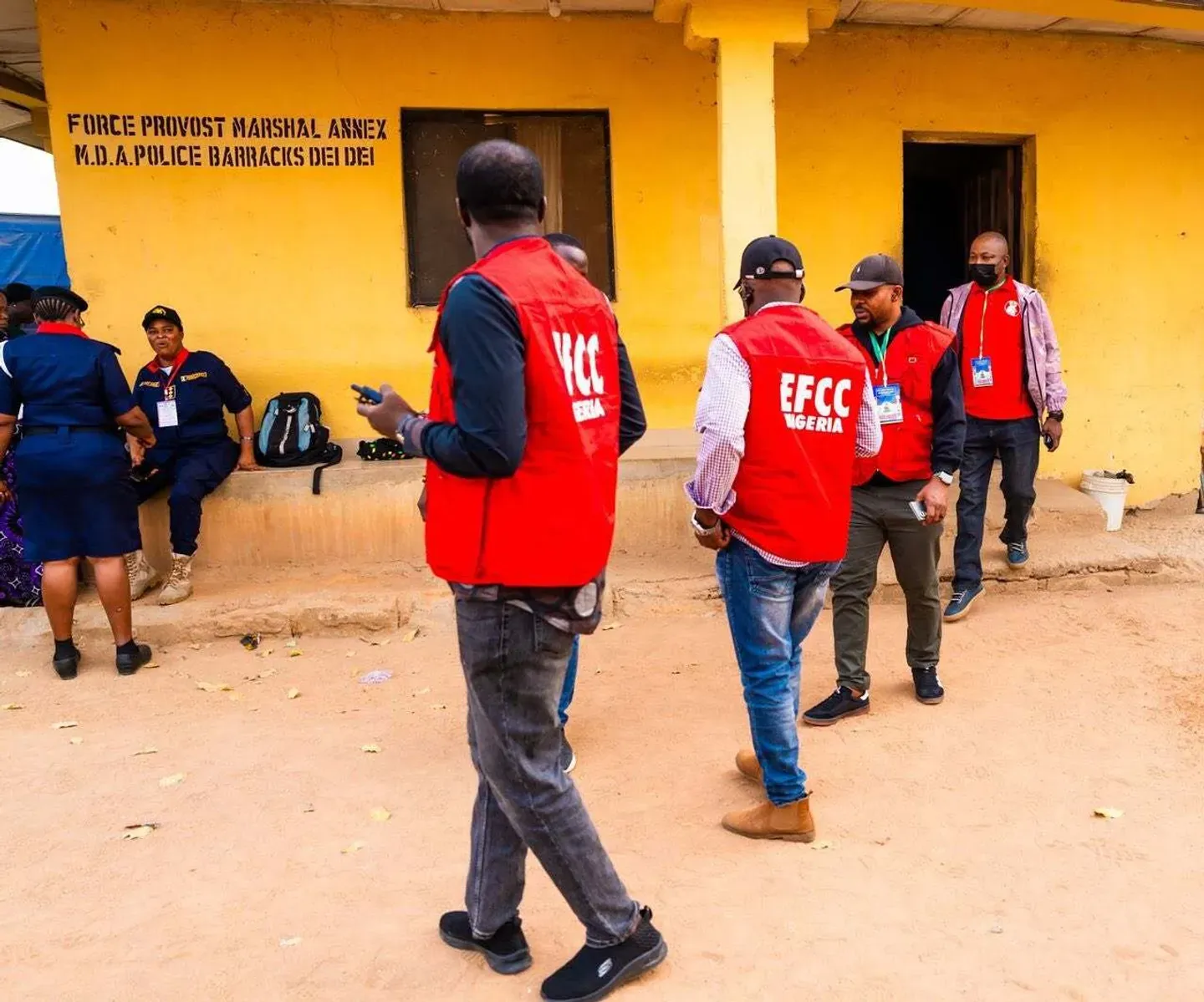
Nigeria's anti-corruption agency has stressed the country’s decade-old policy of paying whistleblowers up to five per cent of recovered funds and assets for tip-offs that help it make successful recovery of proceeds of corruption stashed abroad.
The head of the Economic and Financial Crimes Commission (EFCC) said the initiative was meant to incentivize tipsters to come forward with credible information that could lead to successful recovery.
“I welcome all of you to the world of whistleblowing. If any one of you is privy to where Nigerian assets are stolen or taken to anywhere in the world, we have an incentive for you; between 2.5 per cent and 5 per cent, it’s going to go back to you upon recovery,” Ola Olukoyede said, in remarks made at the 43rd International Symposium on Economic Crime in Cambridge.
“You never know, if you give any information here some of you may leave this place as multi-millionaires,” he said.
Tracing assets
He said the initiative aims to strengthen the agency’s access to credible intelligence in tracing assets moved out of Nigeria through illicit means.
In May 2026, the agency successfully prosecuted the country's former minister of power, Saleh Mamman, who was sentenced to 75 years in jail over corruption linked to major hydroelectric power projects.
Mamman and other defendants were found guilty on 12 charges involving the diversion of nearly $25m meant for the Zungeru and Mambilla hydroelectric power projects.
The anti-corruption czar attributed the recent successes to a vibrant judiciary and access to credible intelligence.





He also hailed Nigeria’s non-conviction-based asset forfeiture framework, which he said enabled the commission to pursue suspected proceeds of crime without necessarily waiting for a criminal conviction.
According to him, the framework is similar to approaches used in countries, including Australia and Canada.
Forfeiture of assets
“We have something similar to what is obtainable in Australia and Canada that empowers us to apply the forfeiture to proceeds of what is suspected to be proceeds of crime,” he said.
Olukoyede said the mechanism had enabled the government to secure the forfeiture of assets including an aircraft, a university, estates and houses suspected to have been acquired with proceeds of crime.
He cited the recovery of 752 housing units linked to former Central Bank of Nigeria Governor, Godwin Emefiele, as well as an ongoing investigation involving former Attorney-General of the Federation and Minister of Justice, Abubakar Malami (SAN).
The 43rd International Symposium on Economic Crime brings together anti-corruption experts and practitioners from different parts of the world.
The whistle-blowing policy was first launched in December 2016 during the administration of late President Muhammadu Buhari as a measure to strengthen efforts towards recovering looted public funds. However, analysts say little progress has been made in its implementation so far.