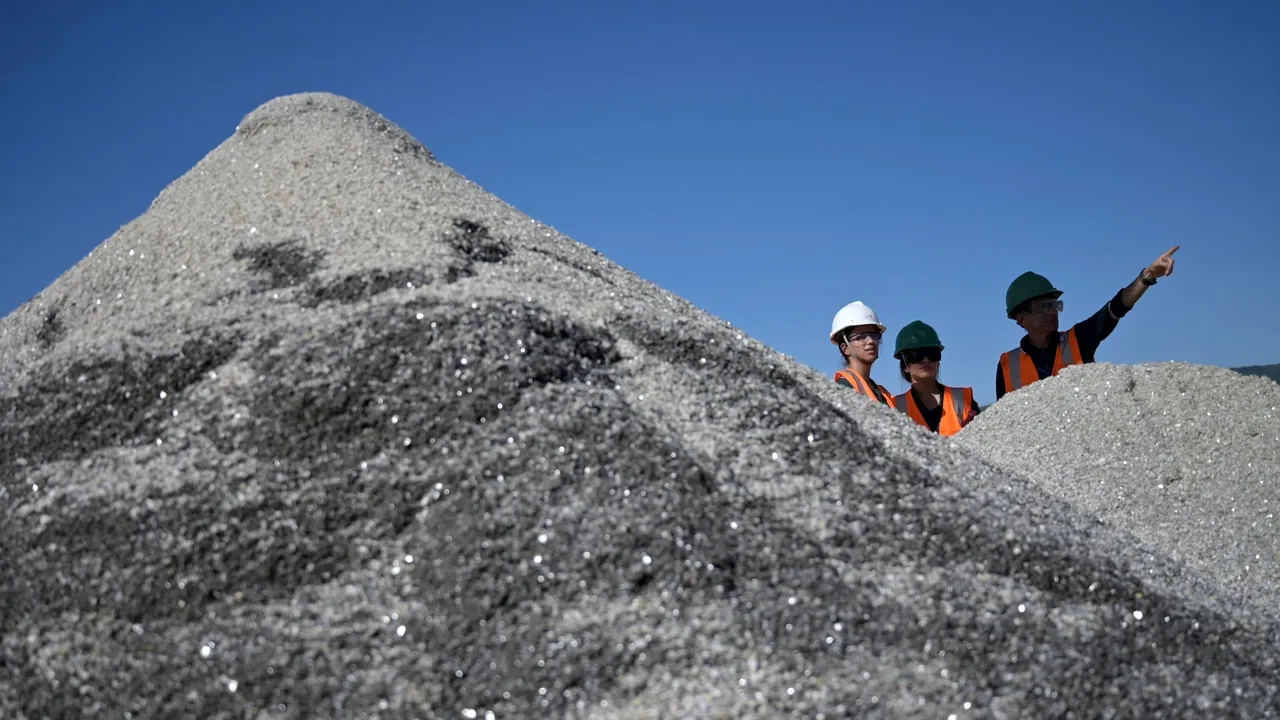
Zimbabwe fast-tracked the entry of a ban on raw lithium exports last week after mining companies engaged in an "unacceptable scramble" to export ahead of the planned entry into force, the government said on Tuesday.
Securing access to rare earths and other strategic minerals has become a global priority given their batteries, green energy systems, military equipment and many other goods.
This has prompted many exporting nations to tighten controls, in part to capture more economic value by processing the minerals.
Zimbabwe last Wednesday announced an immediate ban on exports of all raw minerals and lithium concentrates until further notice.
'Unprecedented scramble'
The export ban had originally been scheduled to start in January 2027, a deadline the government hoped would push mining companies to begin processing and refining the mineral locally.






"Regrettably, in the period following that announcement, we witnessed an unprecedented and unacceptable scramble," the information ministry's Nick Mangwana said following a cabinet meeting.
"Instead of preparing for value addition, some actors engaged in a frenzy of mining activity, seeking to extract and export as much raw lithium as possible before the deadline," he said in a statement on social media.
The government also received reports that large quantities of lithium has been "illicitly stockpiled in a neighbouring country", he added, denouncing a "plunder" of Zimbabwe's "economic future."
Among world's largest lithium producers
Zimbabwe is Africa's largest lithium producer and has among the world's largest reserves, according to the US Geological Survey (USGS).
The Southern African nation's exports of lithium concentrate – mainly to China – rose to 1.5 million metric tonnes last year, generating government revenue of $571.6 million, the Minerals Marketing Authority of Zimbabwe (MMCZ) announced in early February.