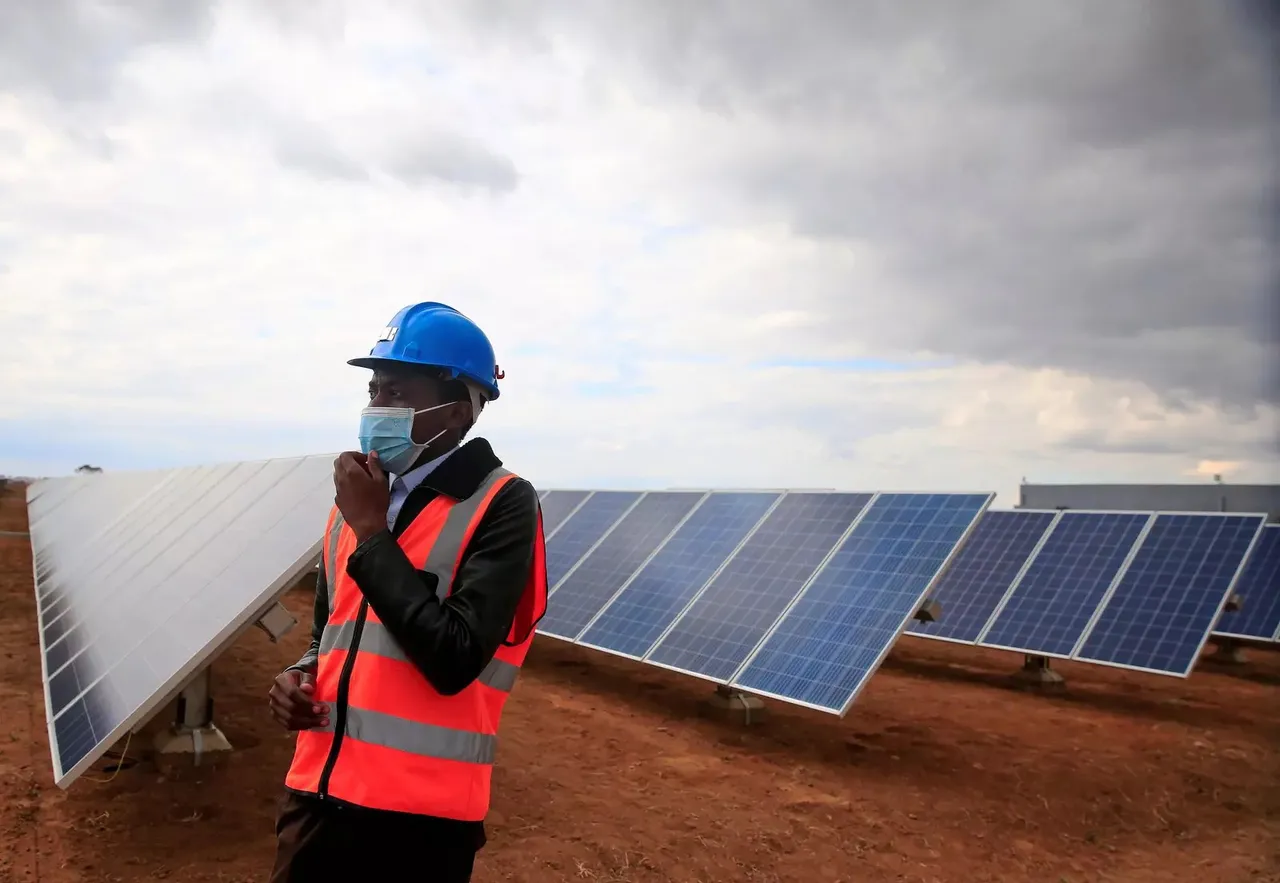
Africa was the world’s fastest-growing solar market in 2025, defying a global slowdown and reshaping where the momentum in renewable energy is concentrated, the Africa Solar Industry Association says.
The report revealed the continent's solar installed capacity expanded 17% in 2025, boosted by imports of solar panels from China. Global solar power capacity rose 23% in 2025 to 618 GW, slowing from a 44% increase in 2024.
“Africa's growth is driven by changing policies and enabling conditions in a number of countries, "said John Van Zuylen, CEO of the Africa Solar Industry Association.
“Solar energy has moved beyond a handful of early adopters to become a broader continental priority,” he said recently on the sidelines of the Inter Solar Africa summit in Nairobi. “What we are seeing is not temporary. It is policies aligning with market dynamics.”
Market surge across Africa
Historically, South Africa dominated solar imports in Africa, at one point accounting for roughly half of all panels shipped to the continent.
The latest data show its share has slipped below a third as demand surged elsewhere. Last year, 20 African nations set new annual records for solar imports, as 25 countries imported a total of at least 100 megawatts of capacity.
Nigeria has overtaken Egypt as Africa's second-largest importer as solar energy and battery storage provide a practical and affordable alternative to diesel generators and unreliable grid power. In Algeria, solar imports soared more than 30-fold year-on-year. Imports also surged in Zambia and Botswana.
At least 23 African countries, including South Africa, Tunisia, Kenya, Chad and the Central African Republic, are now generating over 5% of their electricity from solar energy, the report said.
Dropping prices








Prices have fallen both for solar panels and batteries, mostly from China, enabling households and businesses to rely on solar plus batteries for round-the-clock electricity, the report said.
Battery storage costs in Africa fell to $112 per kilowatt-hour in 2025 from an average of $144 per kilowatt-hour in 2023 as improved technology made storage systems more flexible and longer lasting.
“This ever-decreasing price of storage has game-changing implications for Africa, which has a dire need for stable and baseload power,” said Van Zuylen.
The gradual removal of diesel subsidies in Nigeria in the past two years also has helped accelerate adoption of solar energy, analysts say.
Role of policies
The policy was implemented sector by sector to cushion its impact, making diesel increasingly expensive and nudging businesses and households toward solar.
In September, Nigeria announced plans for a 1 GW solar panel factory, the largest in West Africa. Similar facilities are under construction in Egypt, South Africa and Ethiopia.
“The solar jobs boom is occurring in services including installation, maintenance, distribution and financing, where thousands of small and medium enterprises are emerging to meet rising demand,” Van Zuylen said.
However, uncertainty over policies remains a challenge. Solar firms operating across Africa say unpredictable tax regimes, shifting import duties and unclear long-term energy plans undermine investor confidence.