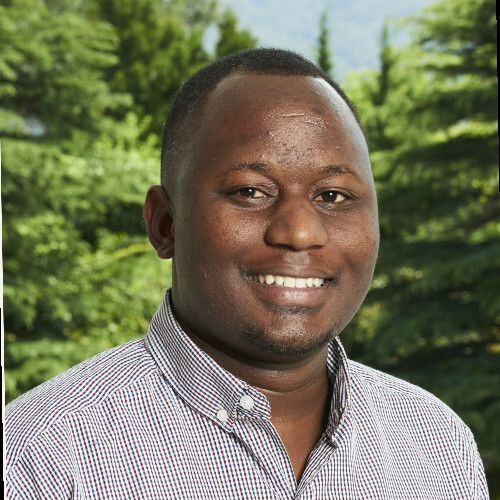
 Dean Bhekumuzi Bhebhe
Somewhere in an African university laboratory, workshop or small business, a young innovator may already be working on an idea that could change how a motorcycle is powered, how a rural clinic stores electricity, how food is processed or what happens to a lithium-ion battery after its first life.
The idea might still be little more than a prototype sitting on a workbench. It might be buried inside a postgraduate thesis. Or, as the Future of Energy Conference in Accra demonstrated last month, it might already be quietly solving a problem while waiting for the rest of us to notice.
That was the possibility and vision behind the AfroHackathon, hosted by Africa Change Lab in collaboration with the Africa Centre for Energy Policy (ACEP) as part of FEC 2026 on 25–26 August under the innovation challenge.
The initiative began with a simple question.
What if Africa’s role in the clean-energy revolution did not stop at digging resources out of the ground?
It is an increasingly important question, one that encourages us to think differently about strategic green minerals, innovation and Africa’s economic future. That future must not be defined simply by the resources we possess beneath our soil, but by the value we are capable of creating from them.
Africa possesses many of the minerals needed for batteries and other clean-energy technologies, yet the continent continues to occupy the lower end of global energy value chains.
Possessing the ingredients and owning the recipe are two very different things.
African Union's Green Minerals Strategy recognises precisely this challenge: Africa must move beyond exporting raw minerals towards beneficiation, manufacturing, integrated value chains and industrialisation. The ambition is not merely to extract more efficiently, but to capture more of the knowledge, technology, manufacturing and economic value generated by the energy transition.
That old economic model is painfully familiar. Something valuable is discovered beneath African soil. It leaves as a commodity and eventually returns as something considerably more expensive.
The AfroHackathon was an attempt to interrupt that journey.
And perhaps the most compelling illustration came not from a theoretical discussion about industrial policy, but from a young African entrepreneur.
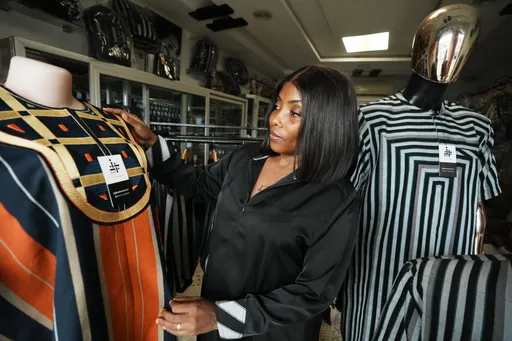
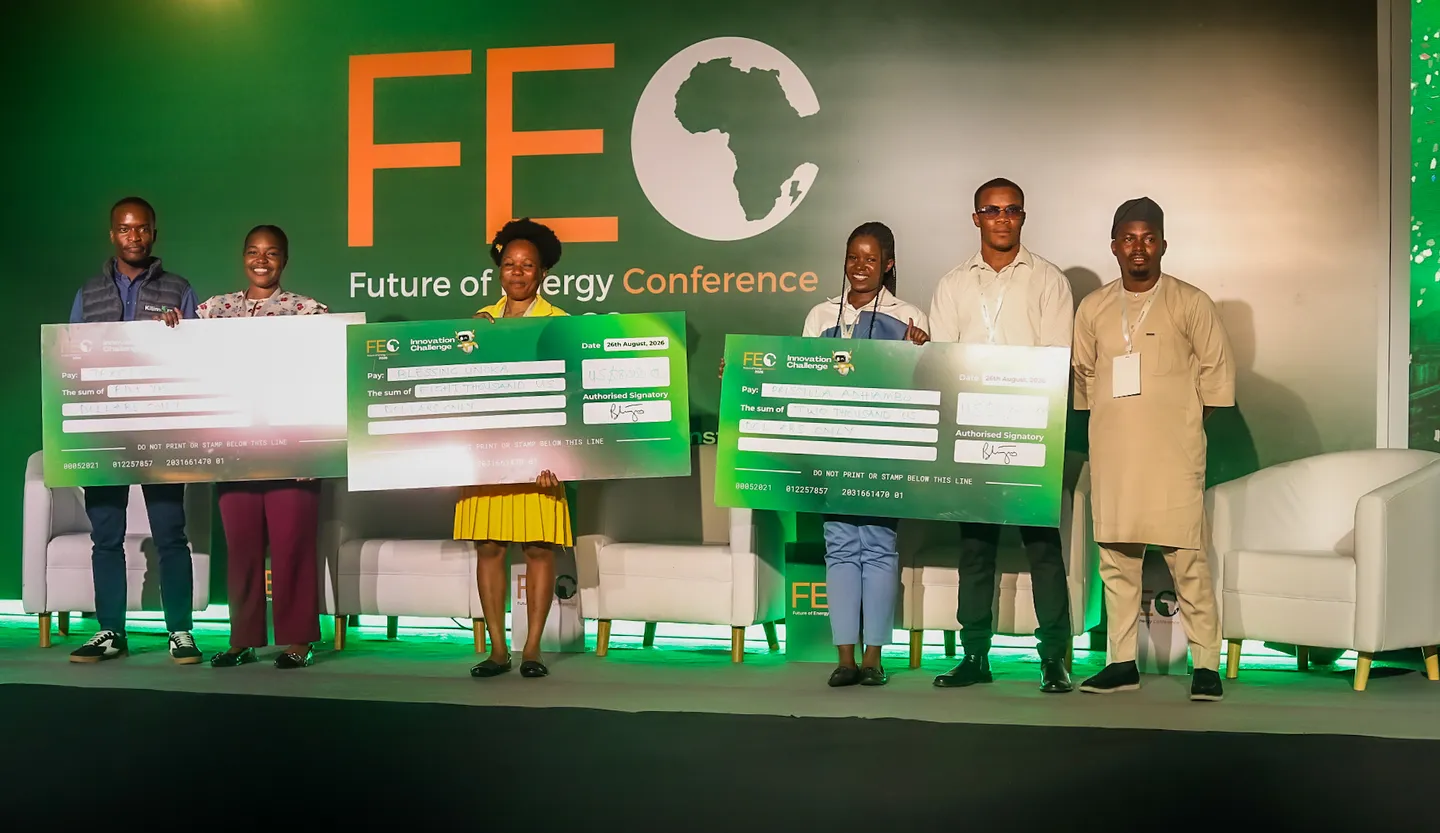
Blessing Unoka, founder of Sambal Enterprise in Nigeria, emerged as the winner of the 2026 Innovation Challenge (AfroHackathon) after the finalists gathered in Accra to present their solutions. Her innovation demonstrated something important.
The African green industrialisation agenda does not have to remain an abstract policy ambition. It can begin with someone identifying a problem, developing a solution and stubbornly refusing to accept that the technology or business model must come from somewhere else.
Her story matters because it gives the broader idea of African-led innovation a human face.
And she was not alone.
The finalists selected for the FEC 2026 Innovation Challenge brought forward solutions ranging from the recovery and second life of retired lithium batteries to closed-loop battery recycling, solar-powered battery-swapping systems and second-life battery modules for off-grid cold storage. They came from Nigeria, Kenya, Ghana and Tanzania, demonstrating the geographical and technological diversity of Africa’s emerging clean-energy innovation ecosystem.
What made these ideas interesting was not simply their technical ingenuity.
They pointed towards a much bigger question.




Can Africa build an economic system around the energy transition in which its young people are not simply workers in somebody else’s value chain, but researchers, inventors, patent holders, manufacturers and founders?
Because the bigger picture for Africa is not only whether Africa has lithium, cobalt, manganese, graphite, sunlight or wind. The more consequential question is whether African innovators can turn resources, knowledge and local problems into technologies, businesses and intellectual property that remain anchored on the continent.
But there is another side to this story.
Last month, Reuters reported from South Africa on opposition among farmers and communities to expanding lithium mining. Prospecting covers approximately 73,000 hectares, much of it farmland, raising difficult questions about agricultural livelihoods, environmental impacts and who ultimately bears the costs of supplying minerals for the global energy transition.
It is an important reminder that a mineral does not automatically become green simply because it is destined for a battery.
If Africa simply replaces exporting fossil fuels with exporting critical minerals, while communities absorb environmental costs and most intellectual property, manufacturing and profits accumulate elsewhere, we will have changed the commodity without fundamentally changing the economic model.
That is why what happened in Accra should matter beyond the conference itself.
The real measure of an innovation challenge is not the applause when a winner is announced. It is whether promising ideas survive after the conference banners have come down.
Can a prototype become a patent? Can a patent become a company? Can that company manufacture at scale in Africa? Can African universities become places where commercially valuable technologies are created rather than institutions that primarily train graduates to operate technologies developed elsewhere?
The AfroHackathon offered no easy answers to those questions. But it demonstrated why we need to start asking them.
The bigger ambition must be to build an African innovation ecosystem in which responsible extraction is connected to research; research to intellectual property; intellectual property to manufacturing; manufacturing to African enterprises; and those enterprises to the capital required to scale.
That is a much more ambitious vision of Africa’s energy transition.
It is one in which communities benefit, universities generate commercially valuable knowledge, young engineers and researchers become founders, recycling reduces pressure for new extraction, and African capital helps African technology grow.
Perhaps Africa’s next major clean-energy company will not begin in a mine.
Perhaps it will begin with a young African innovator, a stubborn idea and a problem that refuses to go unsolved.
The author, Dr Dean Bhekumuzi Bhebhe, is the Director of Africa Change Lab
Disclaimer: The views expressed by the author do not necessarily reflect the opinions, viewpoints and editorial policies of TRT Afrika.