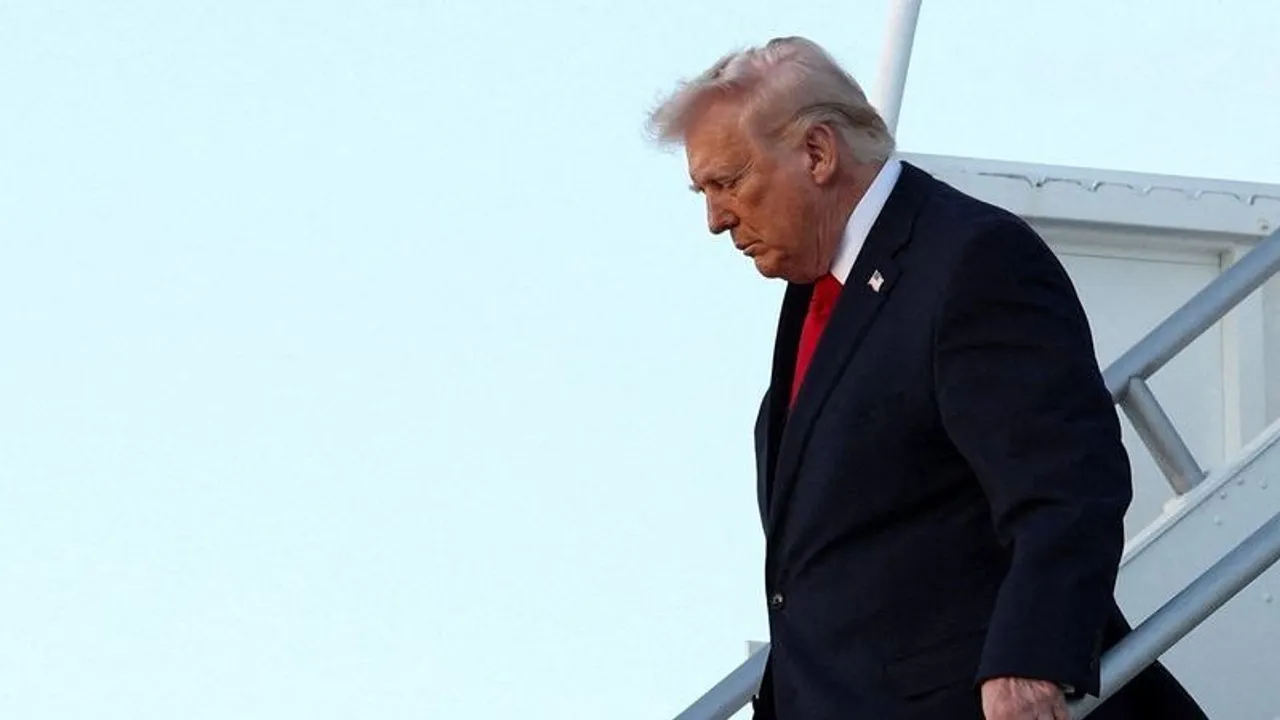
President Donald Trump has ordered a US naval blockade of the Strait of Hormuz in response to what he termed Iran's "unyielding" refusal to give up its nuclear ambitions during peace talks in Islamabad.
“The blockade will begin shortly. Other countries will be involved in this blockade. Iran will not be allowed to profit off this illegal act of extortion,” Trump said on his Truth Social media platform on Sunday.
While acknowledging that the marathon talks in Pakistan had gone "well" and "most points were agreed to”, Trump said Tehran had refused to concede on the issue of its nuclear programme.
"Effective immediately, the United States Navy, the finest in the world, will begin the process of blockading any ships trying to enter or leave the Strait of Hormuz," Trump said.
Trump said he had instructed the Navy to interdict any vessel in international waters that has paid a toll to Iran for passage through the Strait of Hormuz.
He also said US forces would begin destroying Iranian mines in the strategic waterway, warning that any Iranian who fired at US vessels or commercial shipping “will be blown to hell".
Deploying minesweepers
Trump reiterated his naval blockade order in an interview with Fox News, saying it “will take a little while".
Trump also said his recent social media post threatening that “A whole civilisation will die tonight, never to be brought back again,” helped pressure Tehran back to negotiations.
He also claimed “nobody did anything” to the two US warships that transited the strait on Saturday as part of initial mine-clearing operations.




The US Centcom on Saturday said that two US Navy warships transited the Strait of Hormuz to clear the strategic waterway of mines laid by Iran.
The Iranian state TV reported that Tehran issued warnings to the US military ship that it would be attacked within 30 minutes if it crossed the Strait of Hormuz. The US, however, denied receiving any warnings.
Trump said the United States was also deploying more traditional minesweepers to the area, and several other countries were ready to send minesweeping vessels as well.
According to Trump, numerous countries are expected to support the operation, and NATO “now also wants to help” secure the strait.
Iran and the United States failed to strike a deal in Islamabad, but there was no immediate return to hostilities, and world leaders quickly urged both sides to pursue the diplomatic route to peace.
US Vice President JD Vance left Pakistan after the talks and warned that Washington had made Tehran its "final and best offer" for a deal.
"We leave here with a very simple proposal," he said. "We'll see if the Iranians accept it."
Iran's parliamentary speaker, Mohammad Bagher Ghalibaf, said his negotiating team had "put forward constructive initiatives, but ultimately the other side was unable to gain the trust of the Iranian delegation in this round of negotiations".
Iranian and US reports said the two sides were unable to agree on who would control the Strait of Hormuz or on whether Tehran would have the right to enrich uranium under any deal.