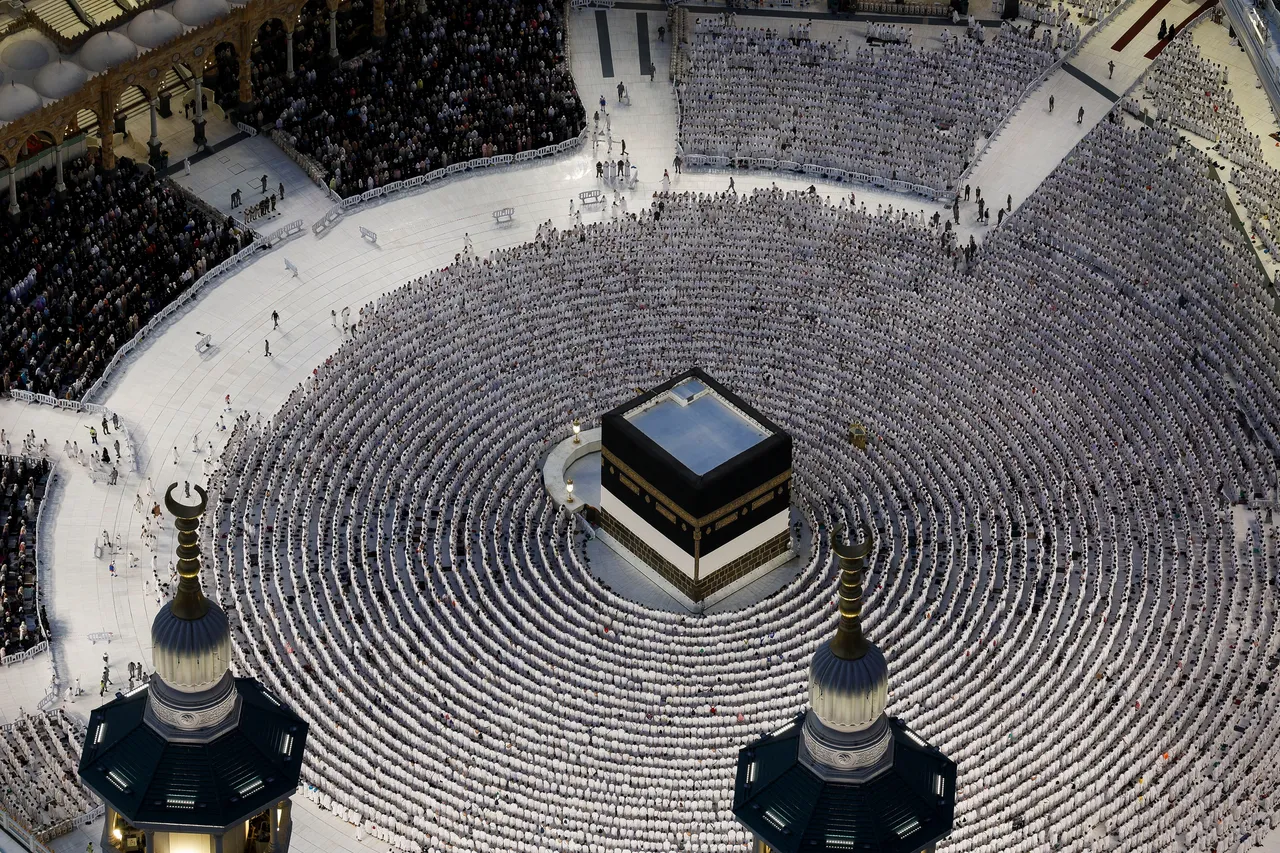
As dawn broke on Monday, pilgrims began flowing into the sacred site of Mina west of Mecca, marking the beginning of what is considered the most significant spiritual journey for Muslims around the world.
Nearly 2 million Muslims are expected to perform Hajj in 2026 as Saudi Arabia continues to record rising pilgrim arrivals and intensifies preparations for the annual pilgrimage season.
Pilgrims arriving in Mina on Monday will observe the Day of Tarwiyah, the first stage of the pilgrimage within the holy sites and the official beginning of Hajj rituals.
The Day of Tarwiyah is traditionally said to derive its name from the idea that pilgrims spiritually “nourish themselves” with faith and piety in preparation for standing at Arafat, considered the most important ritual of Hajj and observed on the ninth day of Dhul-Hijjah, which falls on Tuesday.
During the Day of Tarwiyah, pilgrims spend their time in supplication, remembrance, and reflection while reciting the Talbiyah prayer.
Pilgrims also perform the five daily prayers in Mina in shortened form without combining them and spend the night there before departing for Arafat after sunrise on the ninth of Dhul-Hijjah.
Mina’s religious significance
Mina serves not only as the starting point of rituals during the Day of Tarwiyah but also as a site where pilgrims return on the Day of Sacrifice -- the first day of Eid al-Adha, which falls on Wednesday and includes ritual animal sacrifice -- and during the Days of Tashreeq, the three days following Eid.
Located between Mecca and Muzdalifah, approximately 7 kilometres (4.3 miles) northeast of the Grand Mosque, Mina spans about 16.8 square kilometres (around 6 square miles) within its designated religious boundaries.
The area is a valley surrounded by mountains on both its northern and southern sides and remains inhabited only during the Hajj season.
According to historians, the name Mina is derived from an Arabic root meaning “to shed blood,” reflecting the large number of sacrificial animals traditionally offered there.
Another explanation, referenced in the book Atlas of Hajj and Umrah: History and Jurisprudence, suggests the site was named Mina because Prophet Adam wished for Paradise there or because it became a place where people gathered, according to information reported by the Saudi Press Agency.
Mina also holds deep religious significance because it is associated with Prophet Ibrahim, known as Abraham, who was commanded to sacrifice his son before receiving divine intervention in the form of a ram substitute.
The site is also known for several major Hajj landmarks, including the three pillars used during the symbolic stoning ritual: Jamrat al-Aqaba on the 10th of Dhul-Hijjah and the three Jamarat rituals conducted during the Days of Tashreeq on the 11th, 12th and 13th.
Mina also contains Al-Khaif Mosque, where Prophet Muhammad delivered his Farewell Sermon.








Historically, Mina also witnessed important events in early Islamic history, including the First and Second Pledges of Aqaba during the 12th and 13th years after Hijra, when groups of Ansar pledged allegiance to Prophet Muhammad.

Expanded infrastructure and climate measures
Spokesperson for Saudi Arabia’s Hajj and Umrah Ministry Ghassan Al-Nuwaimi said on Sunday evening that more than 25 development projects had been implemented at the holy sites, representing a 100 percent increase compared with last year.
“The projects included increasing Mina’s capacity, preparing more than 54,000 tents, and expanding the Green Holy Sites initiative by planting over 60,000 trees,” he said.
The Green Holy Sites initiative, launched in 2025, seeks to increase green areas and vegetation across the holy sites to improve air quality and enhance pilgrims’ experiences.
According to the Saudi Press Agency, planting more than 60,000 trees will triple green spaces in the holy sites.
The agency also reported that several previously underused and limited-use areas within the holy sites were converted into operational environments, increasing total developed-site capacity to approximately 209,000 pilgrims across three consecutive Hajj seasons with annual increases of around 70,000 pilgrims.
It said about 87,000 pilgrims are benefiting from capacity expansion projects during this year’s Hajj season.
The Saudi Hajj and Umrah Ministry announced on Sunday that preparations for the Day of Tarwiyah had been fully completed, with operational and field systems prepared for transporting pilgrims to Mina.
Authorities said the integrated system includes managing pilgrim movement into camps, monitoring service quality, and coordinating operations with relevant agencies.
The ministry said its work includes monitoring pilgrim transportation from accommodation sites to Mina, facilitating smooth camp entry, providing guidance and awareness services, and assisting pilgrims in reaching designated locations in line with approved operational plans.
Separately, the Saudi National Centre of Meteorology announced readiness for the Day of Tarwiyah, including weather awareness services in five languages for pilgrims and field teams.
The centre forecast temperatures in Mina reaching highs of 113 degrees Fahrenheit and lows of 82 degrees Fahrenheit during the Day of Tarwiyah, with northwesterly to northerly winds reaching 35 kilometres per hour (21.7 mph), humidity levels reaching 50 percent, and partly cloudy conditions with occasional dust storms.