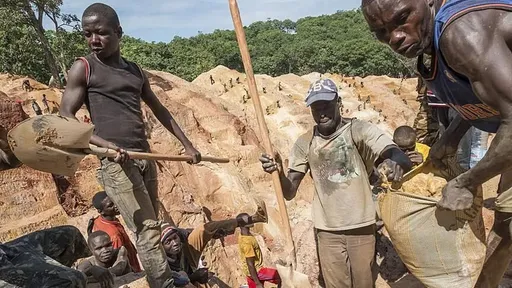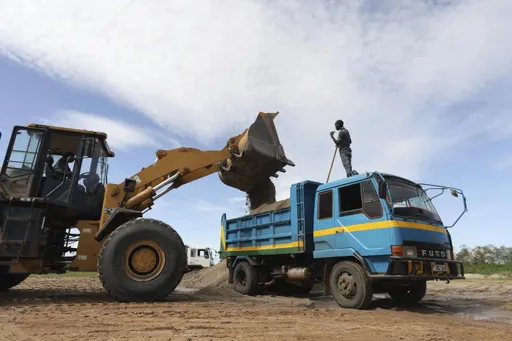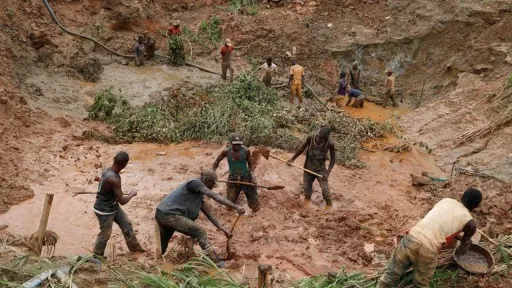
Fifteen rare-earth minerals have reportedly been discovered in Botswana, a development that may significantly improve the Southern Africa nation's fortunes.
A Canadian company called Tsodilo Resources Limited had explored potential mineral sites in the country.
The company reported in late February 2026 that there were positive signs that all the 15 rare-earth minerals listed on the United States Geological Survey's 2025 Critical Minerals List were present in Botswana.
Tsodilo Resources Limited said that "high-grade" mineral elements were located between 20 and 50 metres below the earth's surface. This is particularly important because shallower deposits are less expensive to mine.
Commercial value
Tsodilo only identified the rare-earth mineral sites in Botswana as C26 and C27 in the Gchwihaba Metals project in the country's northwest.
The firm said that should further research be conducted, the minerals could offer Botswana significant commercial value.
Rare-earth minerals are essential in the production of motor vehicle batteries, cell phones, electronic defence systems, telecommunications infrastructure, and wind turbines.
Currently, China leads globally in rare-earth mineral production, at 44 million metric tonnes.
China's dominance in rare-earth mineral production






The Asian nation also accounts for 70% of the world's supply of rare-earths from mines and processing almost 90%. This means China is importing these materials from other countries and refining them.
Western officials have repeatedly stated that Beijing's dominance in the rare-earths supply chain is a strategic challenge, given that critical mineral demand is expected to significantly grow in the years ahead.
Tsodilo further stated that other critical minerals, including copper, cobalt, nickel, vanadium, and silver, were also discovered during the exploration in Botswana.
If fully confirmed, the discovery of rare-earth minerals in Botswana would provide the country a much-needed break from dependence on diamonds, whose prices have tumbled globally in recent times and, consequently, left Botswana's economy severely exposed.
Diamonds play an integral role in Botswana's economy
The collapse in natural diamond market is due to a surge in demand for lab-grown diamonds, which are 30-70% cheaper than natural ones per carat.
Diamonds account for approximately 80% of Botswana's export revenue and 25% of its gross domestic product (GDP).
President Duma Boko's government says it is prioritising exploration for base metals, coal, and critical minerals to reduce reliance on diamonds and to attract foreign investment.