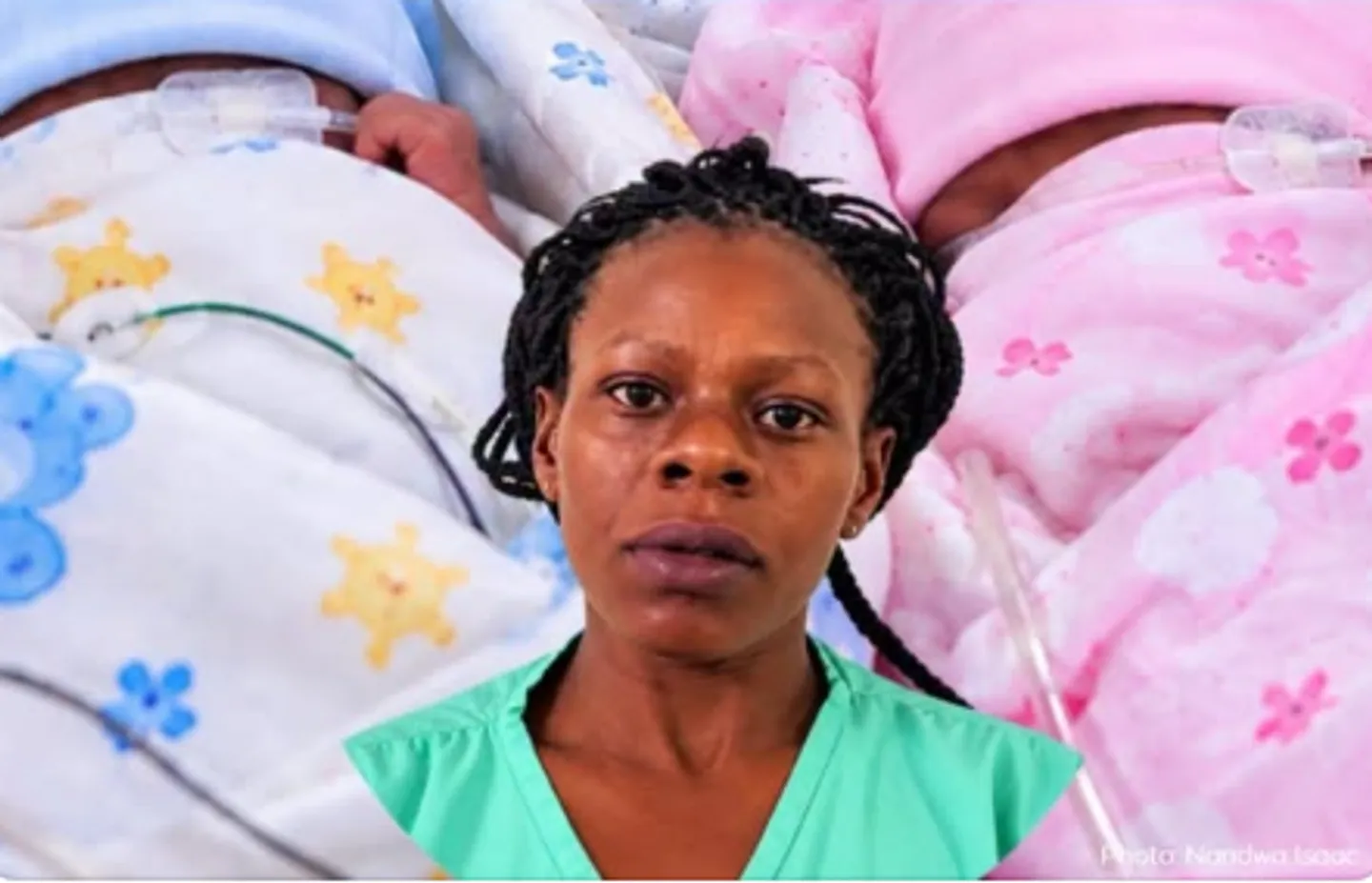
For 28-year-old Mercy Kanini Mutiso, di birth of her pikin dem start as big joy.
She bin dey expect four. Instead, she born five — four girls and one boy — for Thika Level Five Hospital for Kiambu County, Kenya.
But di celebration quick turn to grief, as Dr Frederick Kireki Omanwa, president of di Kenya Gynecology and Obstetrics Society, describe am as incomprehensible.
Di pikin dem born about 25 weeks, weight between about 630 and 800 grammes, and dem transfer dem go Kenya top referral hospital, Kenyatta National Hospital (KNH), for special care.
Four of the newborns, all girls, die one after the other within hours after dem reach. Di boy wey remain still dey critical condition, KNH talk so.
As e talk to TRT Afrika, di KOGS president talk say Kanini suppose don dey under care for KNH from di beginning.
Ideally, di best way be say dem go transport di babies together with di mother while dem still dey womb, he explain.
This one be because extremely premature babies dey very sensitive to temperature changes and dem need special support from di minute dem born.
Dem dey lose heat quick because dem no get enough padding — dat na di fat wey dey under di skin, Omanwa explain.
And di way dem carry dem go, di papa carry one or two for chest and dem tell am make e cover dem with coat (kangaroo care) and so on. That one no good enough for dem.
If di mother don reach di national referral hospital before she deliver, doctors for fit do things wey go increase di babies chances to survive.
For example, antenatal corticosteroids fit help make di pikin lung develop faster before dem born too early, and other drugs fit dey give to protect di pikin brain.
Access to these interventions, and specialists wey sabi handle extremely premature births, dey more available for high-level referral hospitals.
Na wetin make timing and di place wey care dey so important.
When babies show before dem ready
Baby wey born before 37 complete weeks pregnancy na premature. If e born before 28 weeks, World Health Organization classify am as extremely preterm.
At about 25 weeks, like for Kanini case, di newborns dey face big physiological wahala. Dem organs never mature and no fit work well on top their own after birth.
Di biggest problem dem get na breathing, Omanwa talk. Dem lungs no dey expand as e suppose.
This one because dem underdeveloped lungs never produce enough surfactant — di substance wey help keep di small air sacs for lungs open.
So if dem born extremely preterm, neonatologists go need give dem dis chemical first. Then dem go put dem on machine wey go help dem breathe because dem no sabi breathe well.
But breathing na only start. Extremely premature babies fit struggle to control body temperature, fight infections, maintain blood pressure and tolerate feeding.
Di earlier di birth, di more intensive di medical support wey dem need — and di space for mistakes small.
A rare birth, but bigger wahala
Dis case draw attention because quintuplet birth na rare thing, but e show one bigger problem wey health systems for Africa dey face everyday.
How we go protect mothers and babies when pregnancy get more than one fetus, especially when dem come too early?
Multiple pregnancies get higher risk pass single pregnancies. Research show as number of fetuses increase, risk of complications like preterm birth, low birth weight, fetal growth restriction, stillbirth and admission to neonatal intensive care dey rise.
Di difference fit big. Data from 30 countries for sub-Saharan Africa show say twin pregnancies get infant mortality rate about five times wey singleton pregnancies get.
And as di number of babies wey woman carry increase, e hard pass to keep di pregnancy go long enough make dem develop well.
"Di womb basically design for carry one, maximum two babies," Omanwa explain.
If dem get more fetuses, di uterus fit stretch pass wetin e suppose, and dat fit make contractions start early and cause very early delivery.
Physiologically, once e don stretch reach one level, e send signal go brain say di baby don near ready — brain no sabi say dem be five — and dis one fit trigger contractions wey lead to premature birth.
When birth happen extremely early, di way and di place wey dem deliver dem babies fit decide life or death.
Catastrophic, no be heroic
For extremely premature babies, delivery na only the beginning of medical emergency.
Omanwa talk say di condition of delivery matter well well, because di fragile newborn fit suffer trauma and complications during labour.







"For such extreme, preterm babies to be born vaginally, na no be heroic. Na catastrophic," e stress.
Di best way to deliver dem na by C-section because then doctors fit control di pressure for di baby's head and deliver dem gently.
Around 25 weeks, bones and skull still dey very fragile, and di baby fit suffer from di mechanical forces for labour.
Di pressure for birth canal fit make blood vessels for brain burst — doctors dey call dat intraventricular haemorrhage.
When dis one happen, di babies fit go into coma and sadly many of dem go die. For those wey survive, di problems fit long last — cerebral palsy, developmental and cognitive difficulties fit follow.
Survival no be just to take di baby through di first few hours. E fit mean weeks or months for intensive care and, for some survivors, lifelong medical and developmental needs.
"Sometimes we happy we don save life. But di mother fit end up with pikin wey get handicap for the rest of him or her life," Omanwa talk.
To save such babies you need di right conditions: right equipment, trained staff, medicines, blood products and neonatal intensive-care capacity from di moment of delivery.
Na why to carry high-risk pregnancy go correct facility before labour start fit make big difference.
Africa dey carry disproportionate burden
Di problem pass multiple births. Africa already get highest number of newborn deaths for di world.
WHO talk say about 1.1 million newborns die for di African Region in 2022 — nearly half of di global total. Prematurity, birth complications, infections and lack of oxygen cause most of dem deaths.
For multiple pregnancies, these pressures fit multiply. One mother fit need specialist obstetric care while many babies fit need incubators, breathing support, medicines, monitoring and neonatal intensive care at once.
E need more than bed for hospital — e need functioning chain of care.
Omanwa point to shortages of blood, trained medical personnel, intensive-care beds, equipment and medicines, and long distances to specialist facilities as some reasons wey Africa neonatal mortality high.
Early detection fit change di matter
Preparation start during pregnancy. Omanwa recommend pre-pregnancy health checks where possible, and early ultrasound once pregnancy don confirm.
Ultrasound around seven to eight weeks fit show where di pregnancy dey, how many babies dey and any other potential concerns.
To sabi early say woman dey carry twins, triplets or more go make health workers monitor am well and plan for possible premature delivery.
For extremely premature newborn, specialised care no finish once di baby born. Dem need immediate stabilisation, temperature control, respiratory help, infection prevention, careful feeding and continuous monitoring.
Transporting such babies between facilities na special job too. Na why referral networks matter as much as individual hospitals.
Health system need know where high-risk mothers fit go, how quick dem fit reach, and whether di receiving facility get staff and equipment to care for both mother and babies.
Ideally, di mother go identify as high risk early enough to reach that facility before labour begin. For less equipped systems, transfer fit happen only after emergency don start, and by then precious time don lost.
A rare birth wey raise one familiar question
Mercy quintuplets na extraordinary case. Most African maternity wards no go ever see five pikin arrive at once.
But twins and other multiple pregnancies dey common, and dem get higher risk of premature birth and newborn complications.
Di lesson no be say multiple pregnancy na tragedy wey go happen. Na say di earlier you sabi say woman carry more than one pikin, di more time you get to prepare for di risks.
For mothers, dis mean early and regular antenatal care and delivery planning with the right skilled teams. For health systems, e mean to invest in functioning referral networks, trained obstetric and neonatal staff, blood supplies, neonatal intensive-care capacity, medicines, equipment and reliable transport.
WHO say over 70% of newborn deaths for di African Region fit prevent if quality care dey before, during and after birth.
Mercy Kanini Mutiso story begin with rare arrival of five pikin and end with heavy loss.
But beyond di heartbreak of one family, e raise question wey touch many countries: When woman carry more than one baby, African health systems ready for wetin fit happen next?