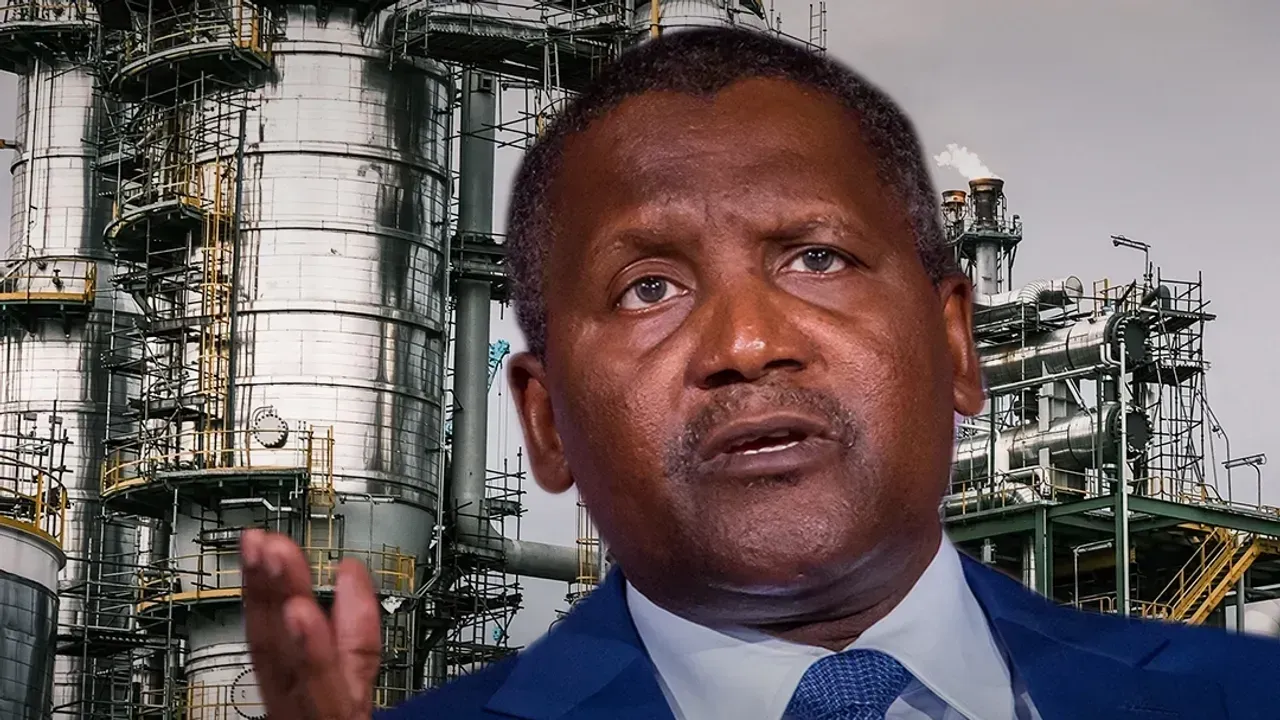
Nigerian billionaire Aliko Dangote has said he prefers building a mega oil refinery in Kenya, and not Tanzania — the initial site proposed by Kenya's President William Ruto in late April 2026.
Sixty-nine-year-old Dangote, who is Africa's richest person — and 65th in the world — with a net worth of nearly $36 billion, according to Bloomberg, has expressed an interest in constructing a large refinery in East Africa.
He says the facility, if approved, will be similar in size to the 650,000-barrel-per-day oil plant he built in Nigeria's Lagos city at a cost of $20 billion. The refinery officially began operations in January 2024.
In an interview published by The Financial Times on Sunday, May 10, Dangote said he prefers setting up a similar plant in Kenya's coastal city of Mombasa, instead of Tanzania's Tanga city, which had been proposed by President Ruto on April 28.
Kenya has 'larger and deeper port'
According to Dangote, Mombasa has a "much larger and deeper port", which makes it more feasible.
Oil refineries often require large seaports because crude and refined fuel are moved most efficiently by sea.
A large refinery, like the one Dangote owns in Nigeria, processes hundreds of thousands of barrels of oil per day. This means that it needs a constant flow of incoming crude and outgoing finished products, such as petrol, diesel, jet fuel, and chemicals.
Kenya's Port of Mombasa is the largest and busiest seaport in East Africa.
The numbers game
The port's official data shows that in 2025 it handled a total container throughput of 2.1 million twenty-foot equivalent unit of containers, translating to over 45 million tonnes of cargo.
The harbour's main access channel has been dredged to a depth of 15 metres, or 49 feet, and has a width of 300 metres, allowing it to accommodate large ships.





Tanzania's Tanga port handled slightly over 9,000 twenty-foot equivalent unit of containers in 2025, translating to slightly over 1.4 million tonnes of cargo.
Tanga port's depth is 13 metres, or nearly 43 feet, which was increased from 3 metres, or 9.8 feet, in recent years.
Kenya consumes more fuel: Dangote
Besides having a larger seaport, Dangote said Kenya offers a robust fuel market because it is a "larger economy" that consumes more fuel than Tanzania.
Annually, Tanzania consumes approximately 3.5 billion litres of fuel, including petrol, disesel, and kerosene. Kenya, on the other hand, consumes more than 4 billion litres of fuel yearly. These figures are drawn from the respective countries' energy consumption reports.
Dangote estimates that the cost of constructing a refinery in Kenya will be between $15 billion and $17 billion.
The billionaire told The Financial Times that it is now up to President Ruto to make the final decision on welcoming his proposal.
Ruto initially considered Tanga for refinery project
Dangote was among the chief guests when Kenya hosted an infrastructure summit on April 28, bringing together Presidents Ruto and Yoweri Museveni of Uganda.
It was during the meeting that the idea to build an oil refinery in East Africa was mooted.
Though President Ruto proposed Tanga as the refinery's site, Tanzania's President Samia Suluhu Hassan recently expressed concern for being excluded from the talks.