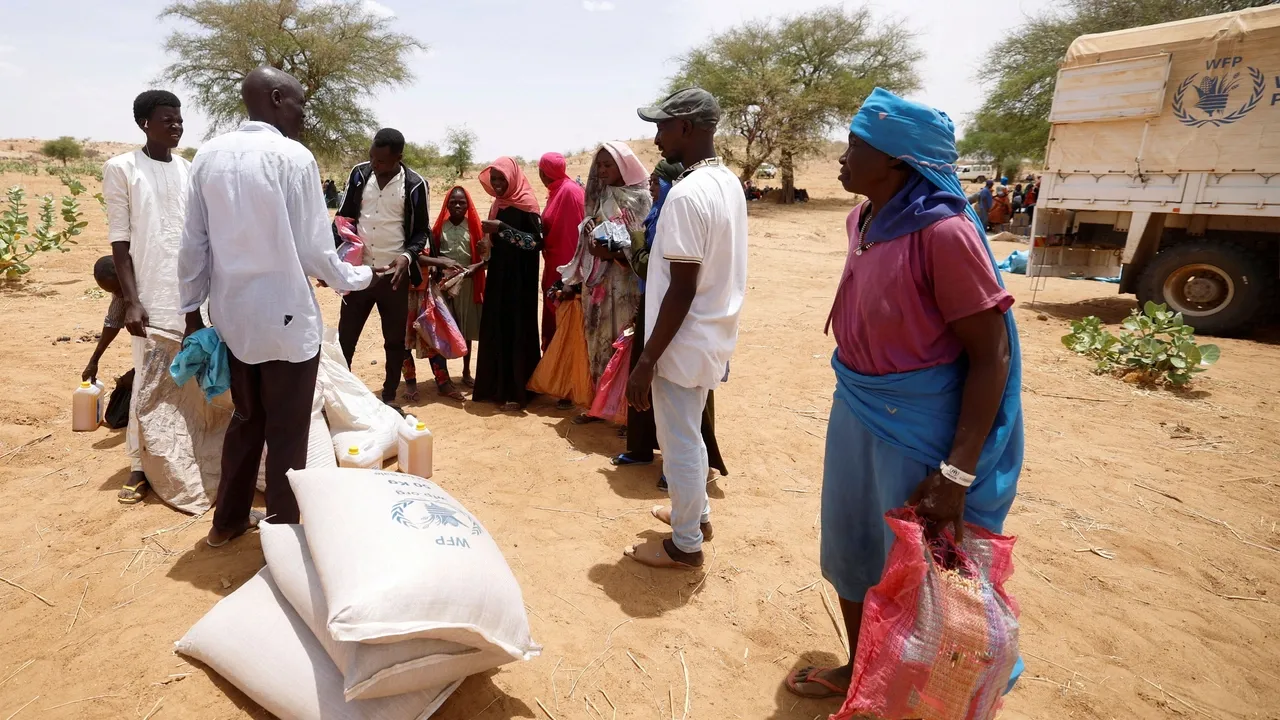
More than 300,000 refugees in Chad risk losing access to food, healthcare, and education as a funding crisis threatens registration and other critical protection services, the UN refugee agency warned on Tuesday.
Dominique Hyde, UNHCR's director of external relations, told journalists in Geneva that 319,000 refugees face delays in registration, leaving them without vital documentation needed to access basic services and potentially exposing them to a greater risk of detention.
The funding shortfall could also leave up to 200,000 women and girls without access to safe spaces and programmes designed to prevent and respond to violence, while as many as 233,000 children could lose access to child protection services.
Hyde warned that programmes aimed at helping refugees become self-reliant are also under threat.
Impact of funding crisis
In Chad, livelihoods, vocational training and business development opportunities are at risk for nearly 400,000 refugees and members of host communities, she said.








"These programmes, they matter because that humanitarian assistance was never intended to be permanent," Hyde said.
She stressed that allowing refugees to work, earn an income, and participate in local economies helps them support themselves and contribute to host communities, freeing humanitarian assistance for those who need it during the first days of an emergency.
The impact of the funding crisis extends beyond Chad. UNHCR said the cuts come amid a broader funding crisis, with its income falling from $5.2 billion in 2024 to $3.9 billion in 2025. By the end of July, the agency had received only 32% of the funding it requires for 2026.
UN workforce cuts
The agency also cut its workforce by 33% last year, closed 140 offices, and generated $135 million in efficiencies as it reduced costs and prioritised critical activities.
"Prioritisation has limits," she warned, adding that an increasing share of the funding UNHCR receives is tightly earmarked.