Sitting on the terrace of a famous café in Bamako, the capital of Mali, Malé Konaté waits somewhat impatiently for what he affectionately calls his “potion”.
About 10 minutes later, a cup of coffee is placed in front of him.
The effect is almost immediate. Malé’s face, and especially his mood, brightens even before he takes his first sip. The aroma fills the air around him as he enjoys his coffee without sugar.
“To kick off the day, there’s nothing like a good Robusta coffee. That smell, that flavour — mmm, I can tell my day is going to be great!” he says with a smile.
The Robusta coffee that puts Malé in such a good mood each morning was grown and processed in Uganda.
In recent years, Uganda, alongside Ethiopia, has emerged as one of Africa’s leading coffee producers.
But four decades ago, Madagascar was itself a major name in the continent’s coffee industry.
The island was known for the quantity, quality and variety of its coffee. Arabica and Robusta helped build the country’s reputation until the early 1990s, during what became something of a golden age for Malagasy coffee.
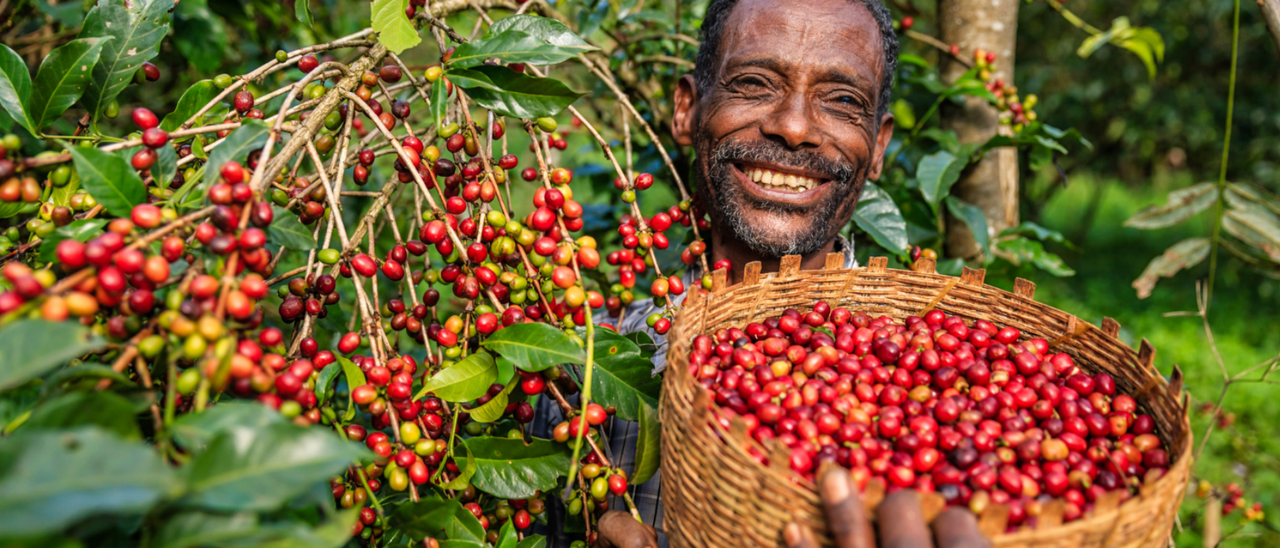
At its peak, Madagascar produced as much as 62,000 metric tonnes of coffee cherries a year.
Those cherries are the starting point for the coffee consumed by billions of people around the world.
Today, Madagascar is seeking to reclaim some of that lost ground.
The government and thousands of coffee producers are looking to revive the sector and restore its contribution to the country’s economy.
And science is playing an increasingly important role in that effort. At the heart of this push is biotechnology.
Harnessing Madagascar’s genetic diversity
Dr Santatra Ravelomanantsoa is the scientific director of FOFIFA, Madagascar’s National Center for Applied Research in Rural Development, headquartered in the capital, Antananarivo.
A specialist in plant breeding and plant health, she oversees research aimed at addressing some of the country’s biggest agricultural challenges.
“My responsibility is to guide FOFIFA’s research towards solutions that concretely address Madagascar’s priorities: improving agricultural production, strengthening resilience to climate change, preserving our genetic resources and, above all, transforming research results into real benefits for farmers and the rural economy,” Dr Ravelomanantsoa told TRT Afrika.
When it comes to coffee, one of Madagascar’s greatest assets lies beneath the surface: its extraordinary genetic diversity.
The country is home to wild coffee species found nowhere else in the world.
Among them are species belonging to the Mascarocoffea group, some of which have distinctive characteristics, including differences in caffeine content, resistance to certain stresses and adaptation to specific environments.
For researchers, this genetic heritage provides a valuable pool of material for developing coffee plants better suited to Madagascar’s conditions.
“Madagascar has a very rich genetic heritage, one of the rarest in the world,” says Dr Ravelomanantsoa.
That diversity could prove crucial as the country seeks to make its coffee industry more productive and resilient.
From DNA to the coffee field
At FOFIFA, researchers are using a range of techniques to better understand, preserve and improve coffee plants.
DNA analysis, for example, allows scientists to identify and characterise plants at the genetic level.
It can help researchers understand the characteristics of different plants, identify disease and select healthy plant material for propagation.
“We have collections, breeding programmes and crossbreeding efforts — notably the Ratelo coffee plants, which are the result of a breeding programme aimed at combining desirable traits from different genetic materials,” Dr Ravelomanantsoa explains.
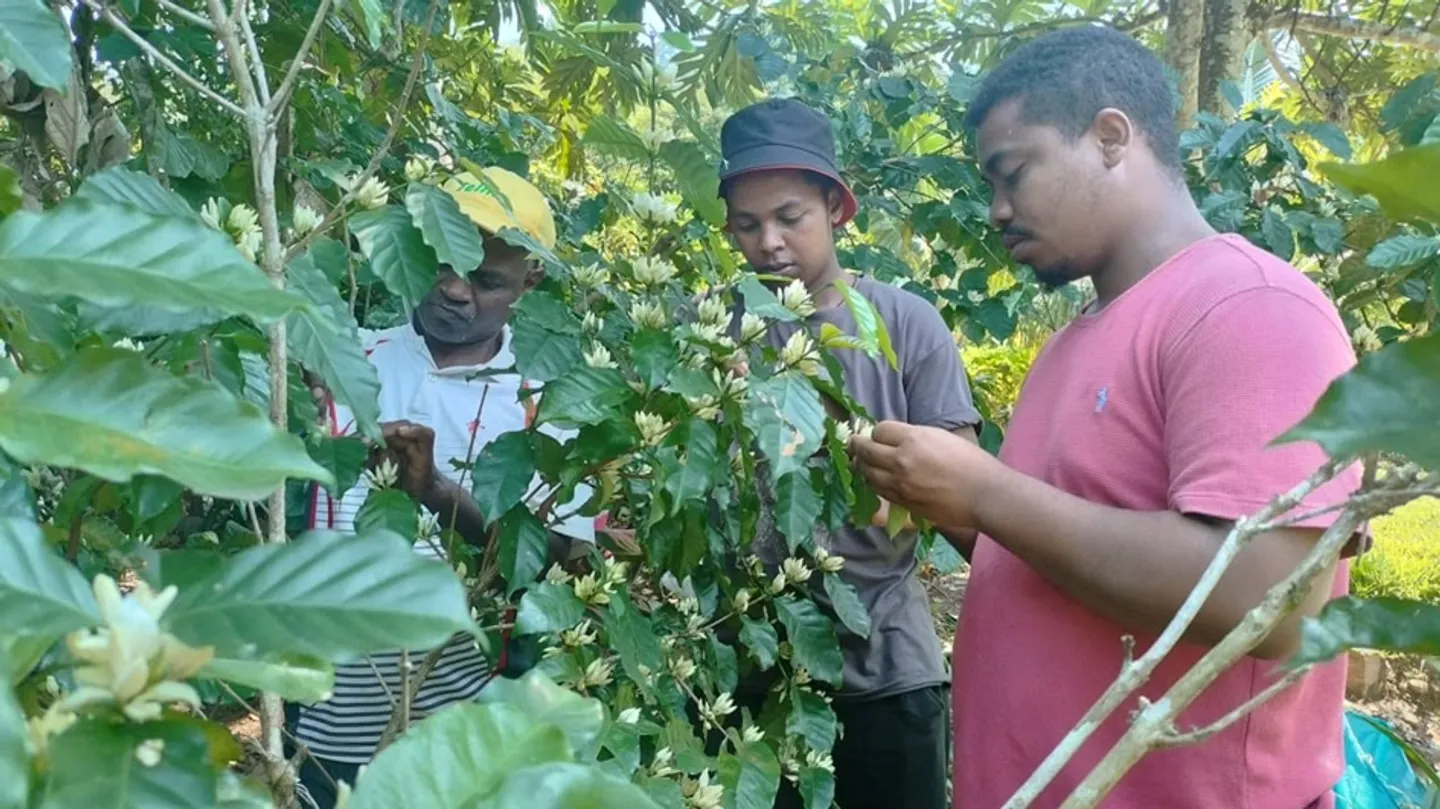
The researchers also evaluate coffee plants in different environments to determine which varieties perform best under Malagasy conditions.






“Today, biotechnology allows us to take a new step forward: better characterising this diversity, identifying desirable traits much more quickly, diagnosing diseases, securing plant material and accelerating breeding programmes,” she says.
The aim is to make a process that can traditionally take years more targeted and efficient.
“In other words, instead of simply waiting several years to observe a trait in a plantation, certain tools allow us to search directly within the genetic pool for the characteristics we are interested in,” she adds.
The ultimate goal is to develop coffee plants that are more productive, more resilient and better adapted to a changing climate, while producing high-quality coffee with greater added value.
A living laboratory in Kianjavato
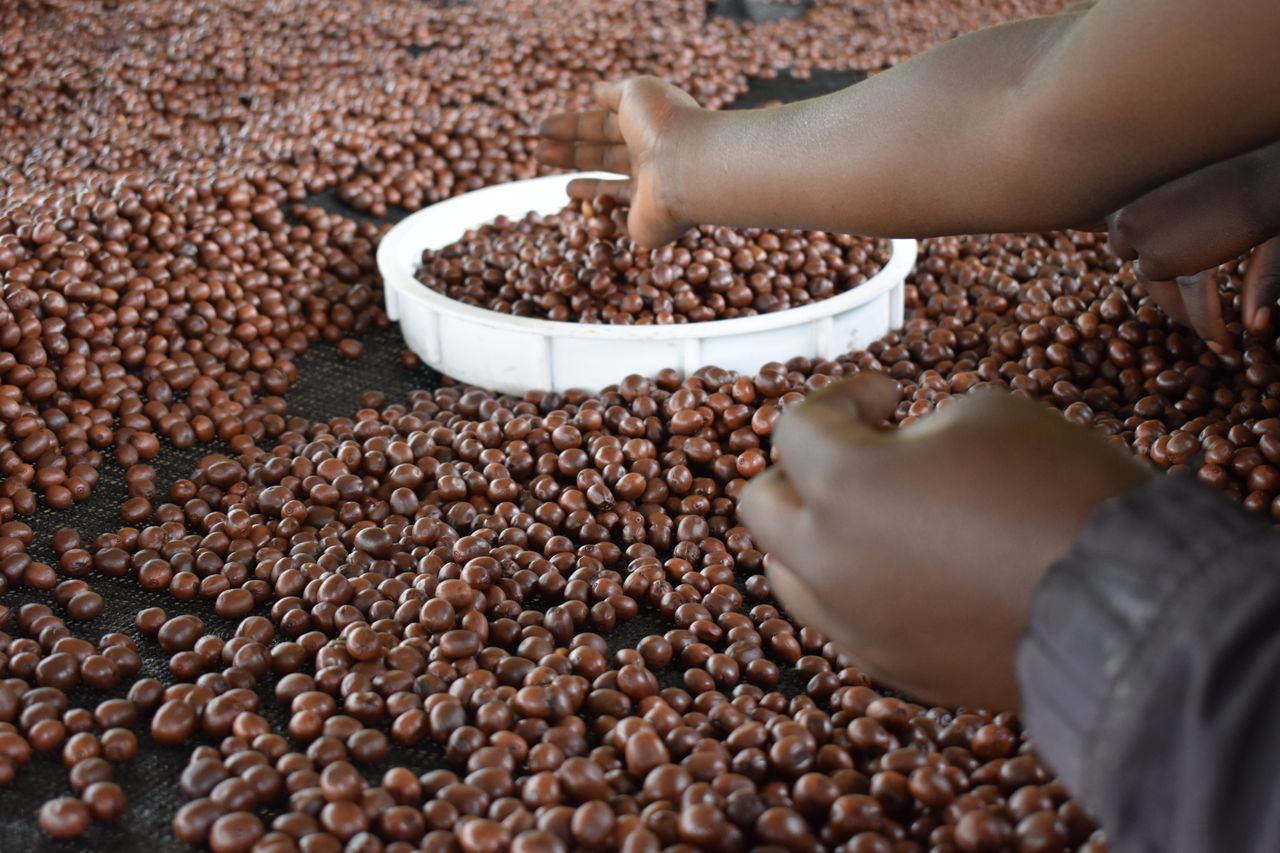
In Kianjavato, a commune in Madagascar’s southeastern Vatovavy region, FOFIFA manages extensive agricultural areas containing a significant collection of coffee genetic resources.
The collection includes cultivated varieties such as Arabica and Canephora, including biclonal material, as well as coffee derived from Ratelo hybridisation.
It also includes Mascarocoffea — wild coffee species endemic to Madagascar.
For researchers, the site is both a repository of genetic diversity and a laboratory for experimentation.
“Building on this rich genetic diversity, we employ several tools,” Dr Ravelomanantsoa says.
These include genetic and molecular characterisation to understand the diversity and relationships among different coffee plants, as well as marker-assisted selection to identify individuals with specific desirable traits more quickly.
FOFIFA also uses molecular techniques to diagnose certain diseases, while in-vitro culture and other propagation methods can help produce and preserve healthy plant material.
But biotechnology is not intended to replace conventional breeding.
“These technologies do not replace traditional breeding. They accelerate it and make it much more precise,” Dr Ravelomanantsoa says.
Researchers combine genetic analysis and biotechnology with crossbreeding, agronomic observation and field trials across different agroecological zones.
“We are also increasingly combining genetics, biotechnology, agronomy and field experience. It is this combination that can enable Madagascar to save several years in the development of new plant varieties,” she says.
From the laboratory to the farmer
For Madagascar’s coffee revival to succeed, however, scientific advances must eventually reach the farms.
FOFIFA is therefore involving producers in field trials and training programmes.
Farmers receive guidance on selecting planting materials suited to different regions, choosing appropriate nurseries and using improved plant materials and techniques.
The research centre is also working to strengthen the production chain through the establishment of coffee seed orchards.
The ambition is not simply to produce more coffee.
Madagascar wants to develop a product that can compete on quality, traceability and added value, and restore the reputation of “Made in Madagascar” coffee.
For FOFIFA, that means combining scientific research with the knowledge and experience of farmers on the ground.
The challenge now is to give that work the technical and financial resources it needs.
For Prof Jean-Michel Leong Pock-Tsy, FOFIFA’s executive director, Dr Santatra Ravelomanantsoa, Dr Nathalie Raharimalala, Arsène Rakotondravao and their colleagues in the laboratory and the field, the objective is clear: develop innovations that can deliver lasting benefits to Madagascar’s coffee industry and agriculture more broadly.
And if the country succeeds, its coffee revival could have significance far beyond its borders.
The hope is that Madagascar can once again make its mark on the global coffee map, this time with science helping to shape what comes next.