 Sylvia Chebet
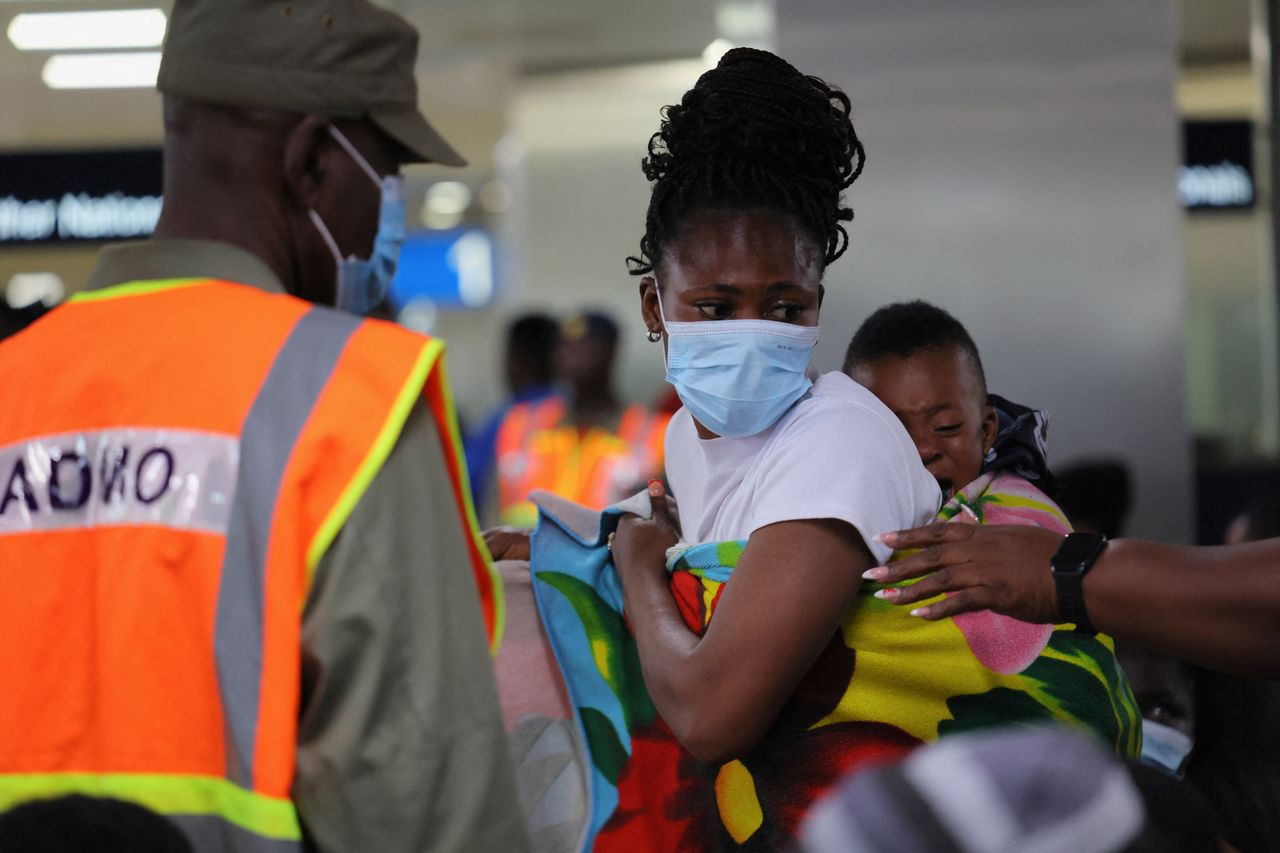
For 22-year-old Sylvester Boakye, the journey home felt unreal.
As the plane lifted off from South Africa and headed toward Ghana, he struggled to process what was happening.
“The time I was in the flight, it's like I was dreaming,” he recalls. “I couldn't imagine that after everything, I was flying from that situation to a peaceful place. Home is very sweet and very amazing.”
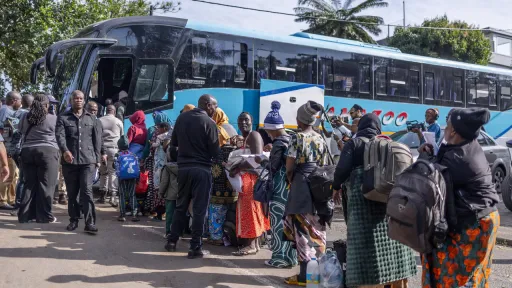
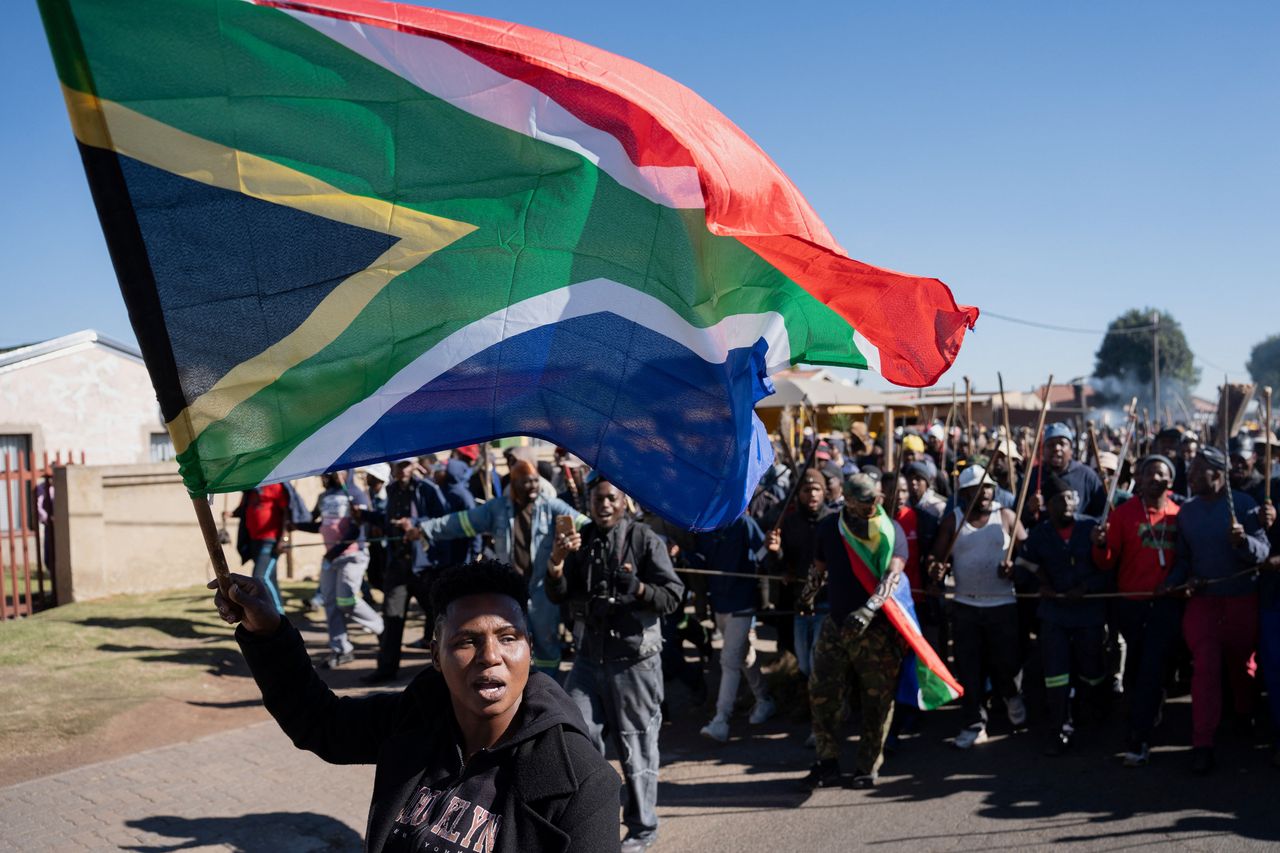
Boakye is among a number of African migrants who recently returned to Ghana amid growing fears surrounding anti-foreigner demonstrations and threats directed at migrants in South Africa.
His story reflects the uncertainty, fear and vulnerability experienced by many migrants caught in the crosshairs of a debate over jobs, immigration and national identity.
Yet according to political analyst Stephen Phiri, the tensions unfolding in South Africa cannot be understood through the lens of xenophobia alone. They are also symptoms of a deeper political and economic crisis affecting not just South Africa, but much of Africa itself.
A life built abroad
Before his return, Boakye was working in Pretoria, where he ran a hair salon business. Like many migrants, he had travelled in search of opportunity, hoping to build a better future through hard work.
But daily life increasingly became defined by fear.
“When you go outside to buy something or foodstuff or to get some fresh air, people are attacking you,” he says. “You'll be scared to go outside.”
One encounter remains etched in his memory.
While walking to buy groceries, he noticed four men approaching. They asked where he was from.
“I said I was a Ghanaian,” he remembers. The response was immediate. The response was immediate.
“They said, ‘You people are taking our jobs. Why are you staying in our country?’”
According to Boakye, the confrontation escalated quickly. The men allegedly threatened him with a gun and a knife before robbing him of his phone, money and belongings.
“They decided to take everything,” he says. “Even my clothes.”
The attack left him stranded and traumatized. “I didn't know what to do. It's like I was blind. Imagine you have been attacked and you don't know where to go.”
His hope was to somehow save enough money to buy a ticket home. Instead, he says, government intervention ultimately made his return possible.
Jobs, desperation and misinformation
At the heart of the debate lies a question that resonates deeply in South Africa: who gets access to scarce jobs?
Phiri rejects the simplistic claim that foreigners are merely “taking jobs” from South Africans.
“No one is taking someone else's jobs,” he says.
However, he acknowledges that economic realities have created tensions. Many South Africans, particularly among the poor black majority, face worsening economic conditions and limited employment opportunities.
“People are becoming desperate,” he explains.
In some sectors, migrants occupy positions that South Africans now seek. Yet Phiri argues the reality is far more complex than popular narratives suggest.
Many migrants have worked legally in South Africa for decades. Others have become permanent residents or citizens.
“You can't just come and push someone out after they've been working for 20 years,” he says.
He points to universities and professional sectors where foreign-born Africans have built careers and established legal status over many years. Yet many demonstrators fail to distinguish between recent migrants, documented workers and naturalized citizens.
“There is a lack of education,” Phiri argues. “People don't understand these structures.”
He also notes that migrants are often employed because they are willing—or forced—to accept lower wages, a dynamic that reflects labour market inequalities rather than competition between communities.
The politics of anger
Phiri believes political leaders bear significant responsibility for escalating tensions.
In conditions of widespread poverty and insecurity, he argues, inflammatory political messaging can easily gain traction.
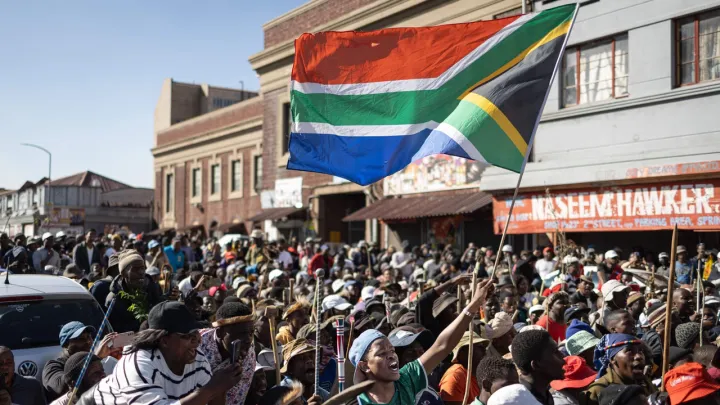




“When people are desperate and someone says something that resonates with their condition, they will believe it.”
According to Phiri, anger visible in many communities does not emerge in isolation. It is often shaped by political narratives that redirect frustration away from government failures and toward vulnerable groups.
“There is a toxic electioneering that is happening,” he says.
Some political parties, he argues, have actively courted anti-migrant groups because hostility toward foreigners can translate into votes.
“If you create hate among the people and promise them a better life when foreigners leave, people will support you.”
He argues that anti-foreigner mobilization has become a recurring feature of South Africa's political landscape during election periods.
According to him, many participants are expressing genuine frustrations about unemployment, poverty and declining economic opportunities. Election periods provide an opportunity for these grievances to be amplified.
Phiri points specifically to the relationship between anti-immigration activists and political organizations, arguing that politicians sometimes benefit from rhetoric that blames foreigners for broader social and economic problems.
Beyond Xenophobia
Despite the violence and hostility experienced by migrants, Phiri cautions against reducing the crisis solely to xenophobia.
“You cannot explain xenophobic or Afrophobic attitudes away,” he says. “But at the end of the day, you realize that we are fighting for the crumbs.”
His argument is that both migrants and poor South Africans are victims of broader structural failures.
“South Africans are feeling the heat of the failure of the post-colonial state,” he says.
In his view, the economic and political systems inherited after independence have failed to adequately address inequality, unemployment and exclusion.
As a result, ordinary Africans increasingly find themselves competing for limited opportunities.
“We are fighting as victims,” Phiri says. “You and I are civil with each other now because we have eaten. But if we are brought together in the same room for one week, starved, and then someone throws in a piece of bread, what will happen?
“The problem is not that we hate each other, but someone has created a situation in which we become so desperate that we end up fighting,” he explains.
A Pan-African challenge
For Boakye, the hairstylist, the answer lies in greater unity across the continent.
“I really like to open our borders,” he says. “No borders for Africans. No hatred toward each other. Let's be one Africa and do everything together.”
It is a vision that resonates with Phiri's own Pan-African outlook.
“The discourses that we have so far are discourses of separation rather than unity,” he says.
Rather than condemning South Africa outright, he believes Africans should seek to understand the country's challenges while engaging in honest dialogue about shared problems.
“We are children of the same mother,” he says, “who happen not to like each other—or who are competing with each other.”
He also points out that many South Africans actively oppose anti-migrant actions. Grassroots organizations and activists have mobilized against xenophobia and in support of migrants.
“The general South African public is not xenophobic,” he says. “There are also groups that are rising up against these actions.”
Searching for a different future
For now, Boakye is safe at home in Ghana. Yet the questions raised by his experience remain unresolved.
Will future election cycles bring another wave of anti-foreigner mobilization? Can governments address the economic frustrations driving public anger? And can Africans find ways to build solidarity rather than division?
Phiri remains cautious. After the latest demonstrations, he predicts, “things will be the same as they were before.”
Still, he believes the crisis presents an opportunity for reflection.
“We have all the answers to our problems,” he says. “The problem is implementation and political will.”
For him, the challenge facing Africa is not merely how to manage migration. It is how to build societies that provide dignity, opportunity and inclusion for all.
Until then, migrants like Boakye—and struggling citizens across the continent—will continue to bear the human cost of failures far larger than themselves.