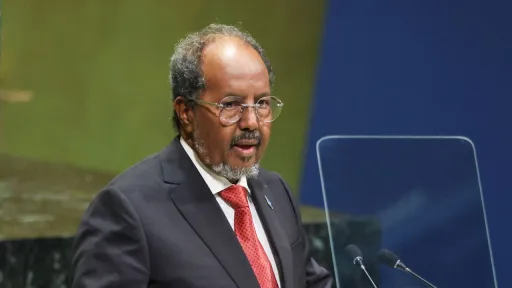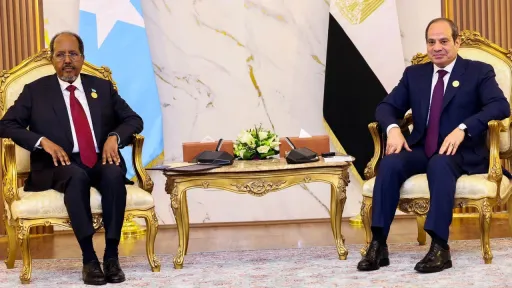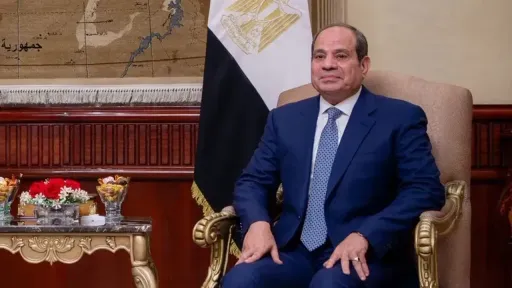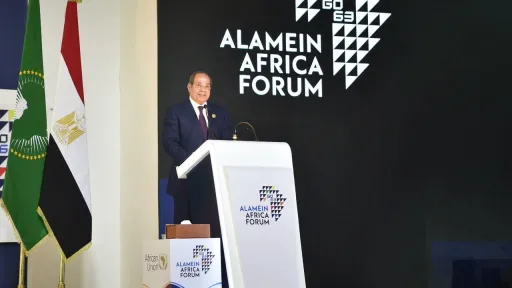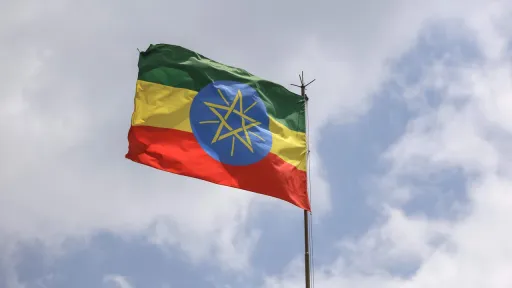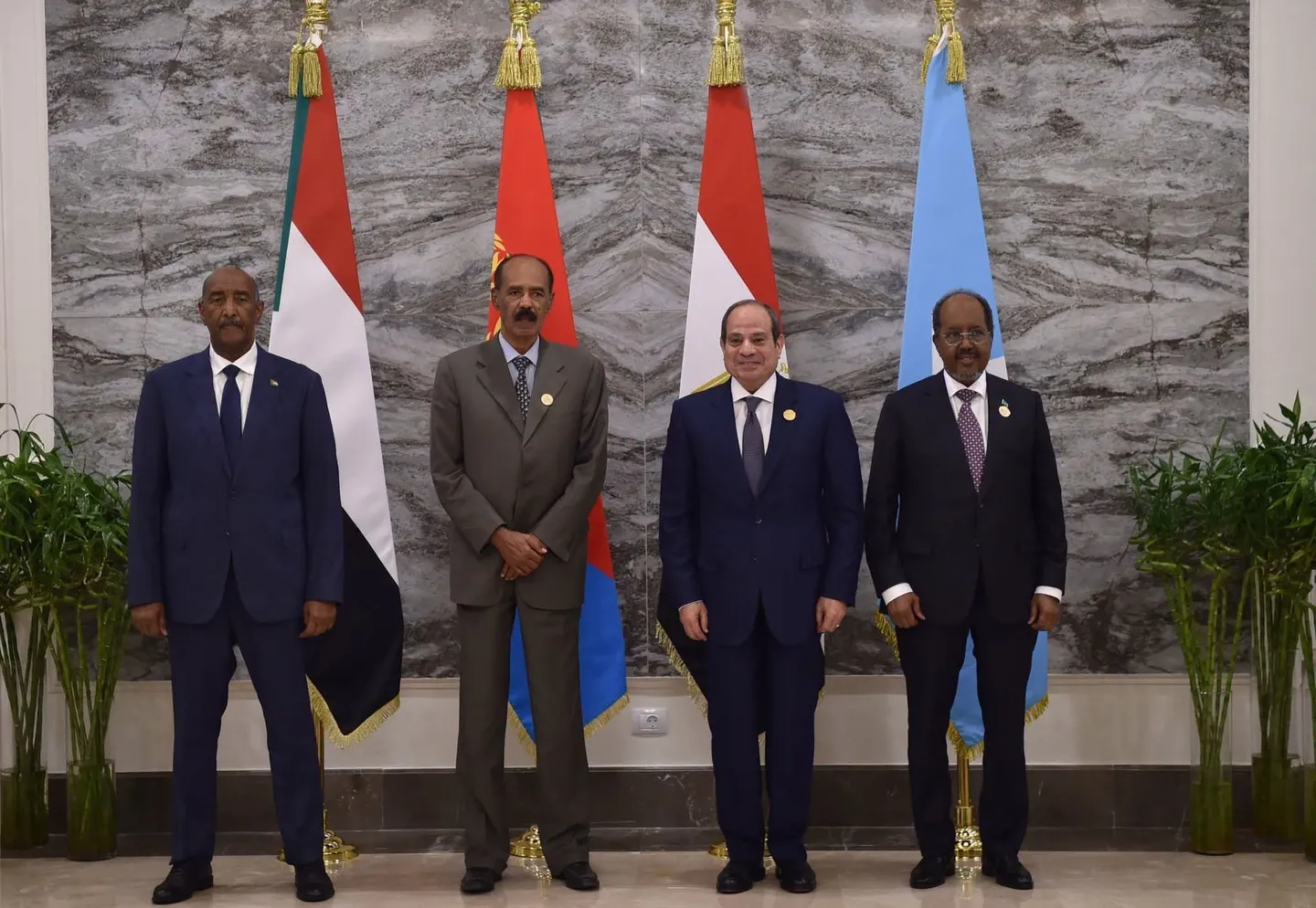
The leaders of Egypt, Sudan, Eritrea and Somalia gathered on Sunday at a summit in Egypt's coastal city of El Alamein, rejecting unilateral measures that could harm Egypt and Sudan’s water rights amid their dispute with Ethiopia over the Grand Ethiopian Renaissance Dam.
Egyptian President Abdel Fattah El Sisi, Sudan’s Sovereignty Council President General Abdel Fattah Al-Burhan, Eritrean President Isaias Afwerki and Somali President Hassan Sheikh Mohamud also rejected interference in the internal affairs of countries in the region "under any pretext", according to the El Alamein Joint Declaration issued afterwards.
The declaration affirmed support for Sudan's sovereignty, territorial integrity and institutions while rejecting "the establishment of any parallel entities".
It also called for the resumption of a Sudanese-owned and Sudanese-led political process, support for national institutions and the rejection of any support for mercenaries.
Territorial integrity
The summit also reaffirmed Somalia’s unity and sovereignty, rejecting any interference that threatens its territorial integrity.
It further rejected any recognition of or support for "so-called Somaliland."
The four countries affirmed the principle of freedom of navigation and said governance of the Red Sea is the exclusive responsibility of its coastal states.
Egypt, one of the coastal states, has repeatedly voiced opposition this year to Ethiopia obtaining a maritime outlet on the Red Sea.
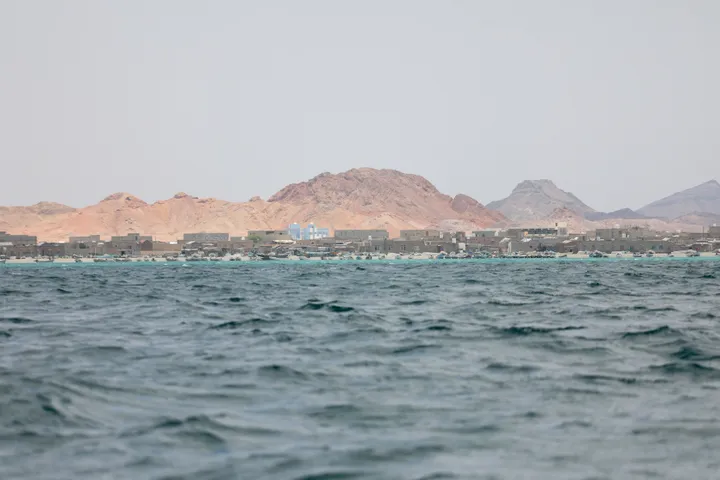


Ethiopia shares land borders with six countries: Eritrea, Djibouti, Somalia, Kenya, Sudan and South Sudan.
Protecting downstream Nile states
The four countries stressed their rejection of “any unilateral measures that harm the existing water uses of the two downstream Nile states.”
Egypt and Sudan, the two downstream countries, are embroiled in a dispute with upstream Ethiopia over its construction of a dam on the Nile and its refusal to sign a binding agreement governing its filling and operation. Egypt fears the project could affect its annual water allocation of 55.5 billion cubic meters.
The four leaders also agreed to hold the summit “periodically, and whenever the need arises, to enhance consultation and coordination among them.”
On Thursday, Ethiopia severed relations with Eritrea and expelled an Egyptian diplomat, prompting reciprocal measures from both countries.
The developments came amid attacks in late September in Ethiopia by the Tigray People’s Liberation Front.
Addis Ababa accused neighbouring Eritrea and Egypt of supporting the group. Both countries have repeatedly denied interfering in other countries’ internal affairs.