This year, for the first time since 2016, the United Nations (UN) dey choose im new United Nations Secretary-General, as António Guterres from Portugal go step down on 31 December 2026 after two terms.
Procedurally, countries dey nominate candidates. Dem dey face interactive dialogues for the UN General Assembly (UNGA), and after dat the UN Security Council (UNSC) dey test support with secret straw polls; candidate need nine votes for the Council, and none of the P5 (China, France, Russia, the UK, and the US) must object (veto) before the General Assembly fit appoint am.
Eight candidates don enter that pipeline.
This fit be one important time for the UN — chance for real change. But make we separate two things.
First, the Organisation dey for wetin Guterres call a “critical new phase” of im UN80 reform drive. Dem don cut about one-fifth of Secretariat jobs and trim the budget — not because UN lose legitimacy, but because the United States sharply withdraw im funding.
Second, deeper problems don dey before and go outlast the US funding shock: other donors no dey pay enough, new wars don spring up again, trade disputes dey, and trust for multilateral systems dey weak.
Guterres’ scorecard
Guterres own record dey hang for this contest. Critics say he don pull back from high-visibility diplomacy: Kofi Annan make 479 trips between 1997 and 2006; Ban Ki-moon do 646. Guterres travel just 163 times in five years, and only 13 trips until May 2026, even as he talk say world dey face the most armed conflict since UN start.
Defenders talk say the office no get power to stop wars, and two Trump presidencies, the Ukraine war, Gaza and the pandemic go hard any leader. Some people point out say Guterres mediate for Cyprus, Libya and early Russia-Ukraine arrangements.
Maybe any Secretary-General for UN go reduce public moves as tensions among the powerful UN members sharpen. Like Guterres, dem fit focus more on humanitarian work and wider advocacy — for example on climate and global finance reform.
This na the central question this write-up dey ask: unfortunately, the selection process fit shape the contest for the next UN Secretary-General more by whose “turn” e be (we go explain am below) and who get veto power, than by any candidate own record or vision for UN.
For African governments and people, three quick questions dey cut through the noise.
https://trt-global.com/en-afrika/article/539f7e235f84
What is Africa’s position?
First question: why Africa no dey present one united candidate? One reason be say informal convention don dey rotate the job between regions since 1950s, and this cycle na the turn of Latin America and the Caribbean — norm wey many African countries dey follow.
That convention no be law — e no dey write for UN Charter — and Guterres own appointment don break am before: Western Europe don already hold the job three times, while Eastern Europe never get am, but people still choose Eastern Europe candidate then.
Second, and more controversial reason: maybe because of that convention, Africa no try hard, and even if dem try dem fit no fit agree inside. Still, some African people enter race.
First African contender na former Senegal president Macky Sall, wey Burundi nominate in March (Burundi then dey chair the African Union) instead of Senegal nominating am. When Burundi try make the AU endorse am with rushed “silence procedure”, 20 of the AU’s 55 member states talk break the silence, and Senegal step back from the bid.
As the Institute for Security Studies argue, this one fit show AU vetting — like wetin happen with Egypt’s Khaled El-Enany at UNESCO in 2025 — rather than wahala or disunity. But for diplomats wey dey look Africa as one block, e still resemble the continent dey talk past itself.
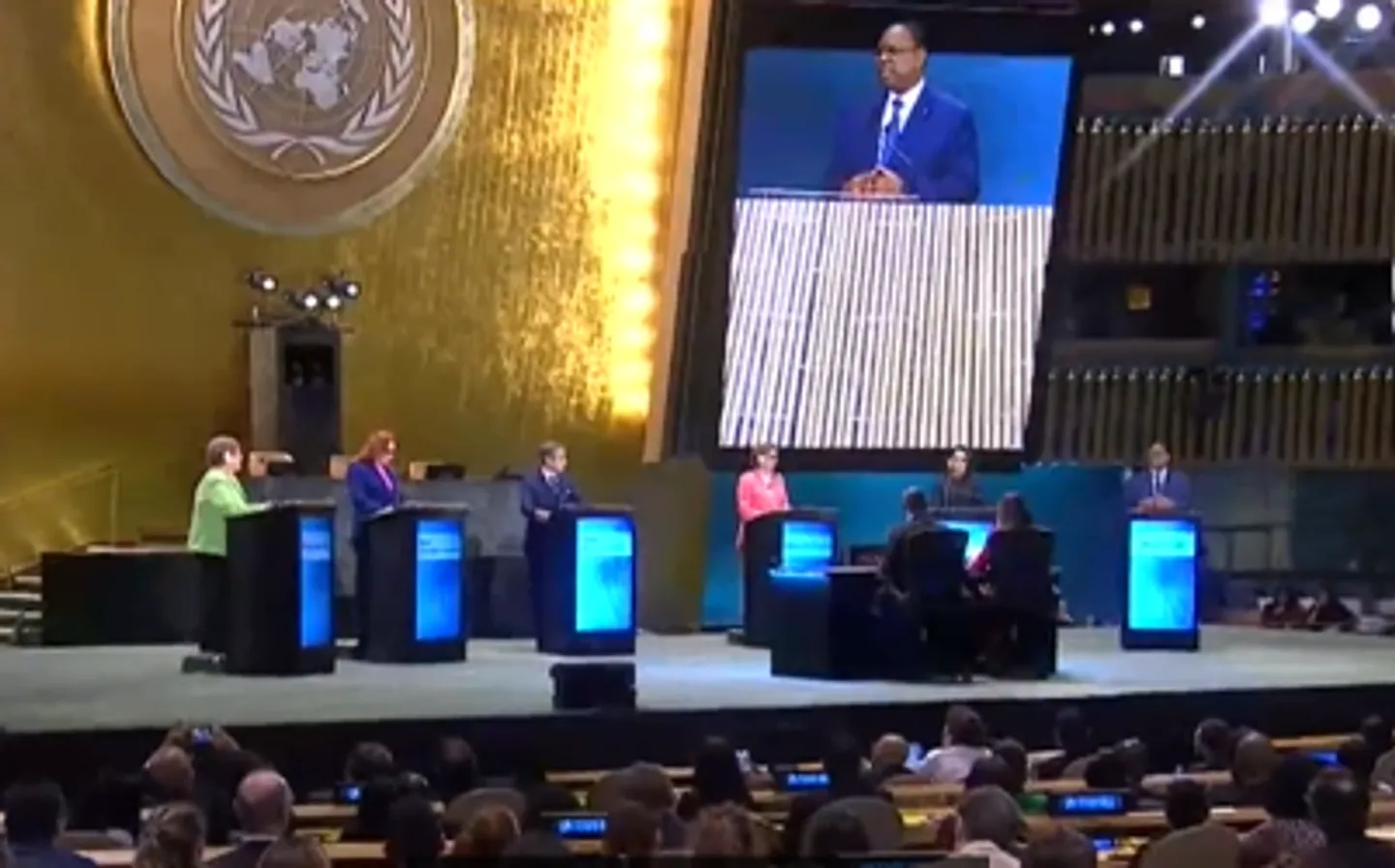
The matter con turn more complex on 24 July, when Uganda nominate Olara Otunnu, 75-year-old former UN under-secretary-general, as the seventh candidate — again without AU mandate, and e too late for am to join the other six for the UN televised “Town Hall” debate on 23 July.
So now only two male African contenders remain, and neither get broad support for the Security Council: Sall collect seven “discourage” votes and Otunnu five for the 21 August straw poll. Another straw poll hold on 18 September; results no public by the time of writing.

First-ever woman UN chief?
Second question: after 80 years and nine men, fit the UN at last get woman leader? People dey whisper say Barbados PM Mia Mottley or Nigeria’s Amina Mohammed (current Deputy UNSG) fit run.
Dem never run, but four other women dey race: Grynspan, Bachelet, Espinosa and Rodrigues-Birkett. Brazilian President Lula tell the outgoing General Assembly president say e time to elect woman.
Of the four, Bachelet support fall — from six “encourage” votes to only two, with six “discourage”, by the second straw poll — leaving Rodrigues-Birkett and Grynspan as the main women contenders.
But some analysts warn about a “glass cliff”: organisations wey dey under crisis dey more likely to pick woman leader, then blame her when things spoil. These analysts say UN in 2026 fit be “perfect glass-cliff territory”, so first woman SG fit inherit blame without real power.
The point no be say woman no suppose win, but breakthrough wey no come with reform and shared accountability fit cause problem.
High stakes for Africa
Third and maybe most important question: wetin Africa want for inside UN? None of the eight candidates’ statements or debates put important African demands first — for example Security Council reform, debt restructuring, and fairer peacekeeping funding.
Even Otunnu platform remain general. The one clear African move about process (not candidacy) come from South Africa in November 2024, during General Assembly debate on UNSG selection, where dem back idea make Council fit recommend more than one name if members no fit unite.
This gap suppose worry African governments and citizens — after all, the UN back decolonisation, help delegitimise apartheid, and still run Africa’s largest peacekeeping operations and much development financing.
That history na why e matter whether the institution and whoever lead am next still dey work for Africa. The continent must ready im asks for whoever win.
The next Secretary-General go steer the UN80 reform agenda, the future of peacekeeping for continent wey host most of am, a financing system African governments don long call unfair, and increasing talk about reparations wey African and Caribbean states don push — now strong pass after CERD’s General Recommendation No. 40 on reparatory justice, adopted 25 August 2026.
African agency dey through institutions as much as candidacies — and right now, no candidate don reach the nine votes needed to move forward without P5 veto.
For now, the world’s selection na, procedurally, the choice of five governments. E no suppose remain so in substance. Africa must work out and push one collective UN agenda to every current candidate and whoever succeed Guterres.
The authors:
Teta Mukulira na policy analyst for the decolonising development team, with background for law and policy. She get LLM for Human Rights Law from the University of Nottingham and BA in Law and Politics from the University of Kent.
Maria Gabriella dey also for the decolonising development team and get background for international relations and strategic communications. She get Master’s in Global Affairs from Tsinghua University as Schwarzman Scholar and BA in International Relations from the Universidade de São Paulo.